Good morning, Slaters!Monday looked like a clean relief rally. The S&P 500 rose 2.4%, the Nasdaq 2.7%, and the VIX fell 22% to near 19.9. Oil helped. Brent fell more than 5% to a two-month low. Now look at the prices that come with a deadline. The two-year Treasury yield rose 5 basis points. Kalshi's December hike contract climbed to 81 cents from 77 by Monday's close. And Nvidia fell 4.3% on a day the chip index jumped 6.9%. So the tape bought the mood, and the dated prices held their ground. Cheaper oil did not buy cheaper money. That argument gets its first hard number this morning, when October CPI lands without its usual annual rate. Let's get into it. 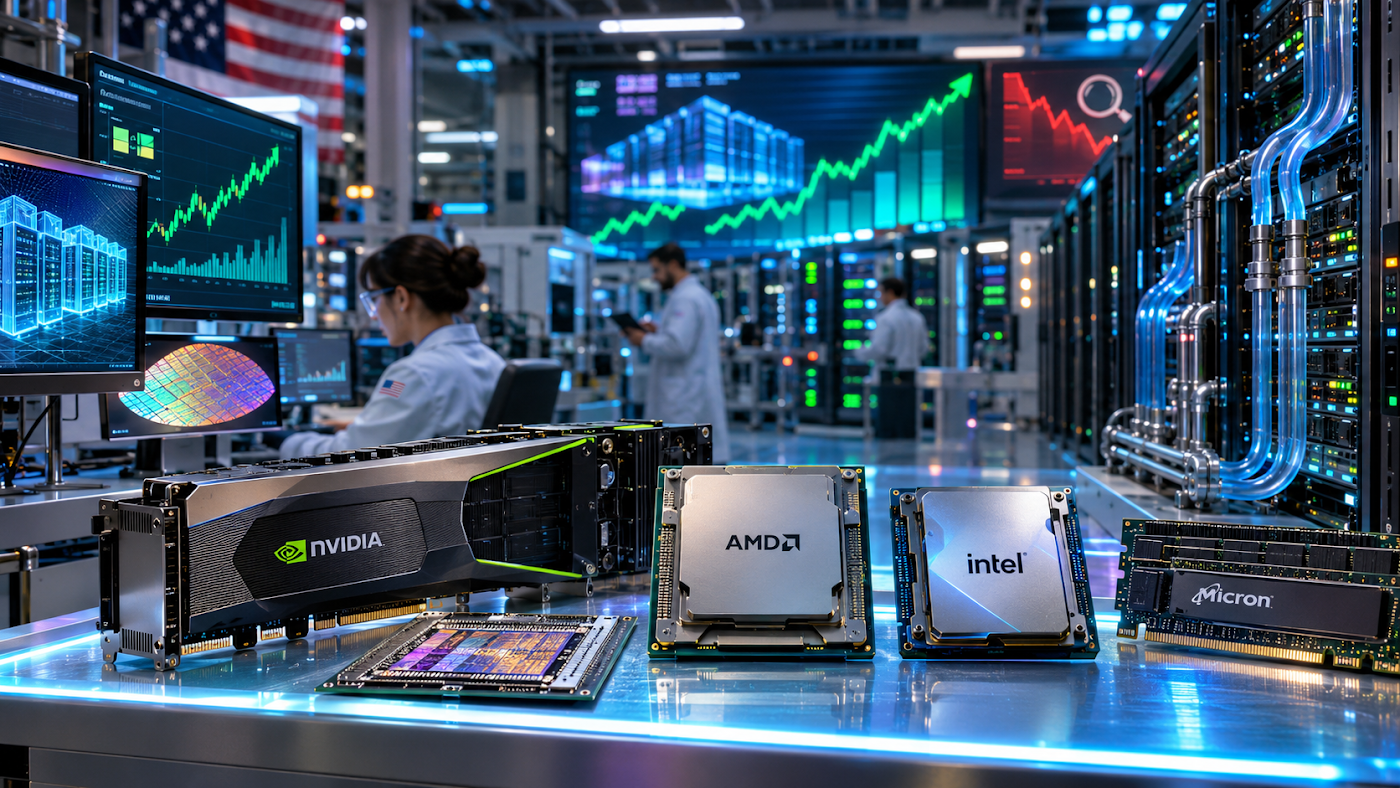
Daybreak Oil fell 5% on a day the Iran talks got worseBrent dropped more than 5% on Monday to below $93 a barrel, its lowest level in two months. If you only saw the chart, you would assume a deal was close. It wasn't. On Sunday, Secretary of State Marco Rubio called Iran's demands "outrageous and ridiculous." On Monday, Tehran pressed its demand that U.S. sanctions and the naval blockade be lifted before talks even start. A senior UAE official told reporters to prepare for a long period of uncertainty. Crude slid to a two-month low through all of it. That is the detail that matters. A price that falls on bad news is not a bet on peace. It is a bet on barrels, or on traders trimming war positions after last week's drop of more than 12%. As we wrote yesterday, Gulf crude keeps finding routes around Hormuz. Monday's tape says the market now believes it. Consumers have not caught up. Households' one-year inflation expectations held at 3.9% in October. And this morning's CPI covers October, when Brent spent long stretches above $100. Monday's slide belongs to later reports, not this one. The market signal? Watch how oil trades the next bad headline. If Brent shrugs off another setback in the talks, supply is setting the price and most of the war premium is gone. That eases headline inflation into year-end. It does little for core prices, which is where the Fed is looking. Cheap oil is a gift to drivers. It is not yet a gift to rates. Pulse Check Monday sold the leader and bought the fieldMoney did not leave AI on Monday. It left its leader. The Philadelphia semiconductor index rose 6.9%. Nvidia (NVDA) fell 4.3% to $178.67, about 11 points behind its own sector. It was the stock's first session since its board opened an independent investigation into reports that Jensen Huang was targeted by a foreign intelligence effort. The board said it has confidence in Huang and no reason to believe national security or company secrets were compromised. The rest of the group ran. AMD (AMD) jumped 13.3% to $508.58 after an Oppenheimer upgrade with a $600 target. It also said its EPYC chips host new Google Cloud TPU systems from Alphabet (GOOGL). Broadcom (AVGO) gained 8.8%, Marvell (MRVL) 9.5% and Applied Materials (AMAT) 11.4%. Now read the bet on Huang himself. Polymarket's contract on his resignation or removal by year-end held near 14 to 15 cents through Monday. The stock fell hard, and the exit odds barely moved. Traders are charging Nvidia for not knowing, not for an expected change at the top. Power producers told the same story from the other side. Constellation Energy (CEG) rose 10.5% and NRG Energy (NRG) 10.3%. Both now sit above their Election Day closes, after falling 9% and 16% in the two sessions after the vote. Constellation earned an adjusted $5.06 a share against about $3.90 expected. Its PJM West reference price averaged about $70 a megawatt-hour, up from $47 a year earlier. NRG set its first 2027 outlook and agreed to sell six gas plants for $4 billion. Earnings came from power already sold, which a pause on new data-center hookups does not touch. The market signal? The AI trade no longer moves as one stock. Monday's buyers paid for things they could count: AMD's Google Cloud news and power already sold at higher prices. They discounted the one name with an open question. That is healthier than last week's blanket selling, but it means each AI name now trades its own calendar. Nvidia's is the busiest: a reply to three House committee chairs Wednesday, results Nov. 17, a requested briefing Nov. 18. Who Moved the Mic? Goolsbee named the problem cheaper oil cannot fixChicago Fed President Austan Goolsbee delivered the line of the day: "we've got to come to terms with this cost side and inflation side failure in the mandate." Notice the timing. He said it on a day Brent fell more than 5%. Richmond Fed President Tom Barkin added that firms are trying to pass on costs they had absorbed until now. Neither put crude at the center. Goolsbee pointed to services prices and to AI spending he said is starting to look like demand overheating. Barkin's list ran from health insurance to memory chips, with gas and diesel one item among many. Those are prices set inside companies, where a cheaper barrel helps only at the margin. Yields rose anyway. The 10-year yield rose 2 basis points to 4.88%. The two-year rose 5 basis points to 4.56%. For most of the Iran war, oil and yields moved together. Last Wednesday, Brent fell almost 9% and the two-year fell 3 basis points. On Monday the link broke, and Kalshi's December hike contract rose to 81 cents. Early Tuesday, Fed Governor Christopher Waller said he leans toward a quarter-point hike in December, and that a half-point move should be considered if October core inflation runs around 0.3% or higher. Shortly after 6 a.m. ET, the Kalshi contract traded near 86 cents. Households see a different risk. The odds they put on higher unemployment in a year rose to 45.3%, the highest since April 2020. Households worry about jobs. The Fed's speakers worry about prices. And this morning's CPI arrives without a 12-month rate, because October 2025 prices were never collected. Traders will work from the monthly number alone. The market signal? Read core, not headline. Goolsbee and Barkin pointed at costs and pass-through, which show up in core prices and in Friday's producer prices, not at the pump. A soft core print tests the hike bet. But if the 10-year holds near 4.88% after a soft number, the hawks are setting the price of money, not the data. This afternoon's $42 billion 10-year sale is the first check. FROM OUR SPONSORS It's not Nvidia. It's not OpenAI. It's not Google. It's a San Francisco AI lab whose technology is used by eight of the ten largest companies in America — and which Bloomberg calls the highest-revenue AI company on earth. Trump banned it from every federal agency and the Pentagon blacklisted it. The reason isn't what you think. Full details here. Beyond the Candles KKR posted a record. The stock trailed the market.KKR (KKR) earned a record adjusted $1.78 a share, against about $1.58 expected. Fee-related earnings rose 27%. The firm expects to return more than $40 billion to clients this year. The shares rose less than 2%, behind the S&P 500's 2.4%. The record sat on top of two weaker lines. Assets under management rose 11% to $804 billion, short of the roughly $817 billion analysts expected. Reported revenue fell to $4.56 billion from $5.53 billion. Insurance revenue, down to $2.80 billion from $3.78 billion, did slightly more than all of the damage. The co-chief executives framed the quarter around cash going out: "we continue to monetize investments and return capital to our clients at record levels." That is the private equity exit logjam loosening. Spread evenly, $40 billion is about $10 billion a quarter. Monday's deal tape showed how buyers are pricing assets. Barings made a firm cash offer for Irish landlord I-RES at €1.386 a share, exactly its reported net tangible assets. Surgery Partners (SGRY) took a raised $25 cash bid from a Bon Secours Mercy Health affiliate over a non-binding $28 proposal from an unnamed party. Its stock closed at $26.45, up 14% and above the deal it just signed. A ticking fee can lift the payout to $26.61 if closing slips toward October 2027. The market signal? Exits are open. The price is the argument. KKR raised $25 billion of new capital in the quarter. Its stake sale in USI to Aon (AON) should add about $2 billion of adjusted net income when it closes this quarter. If new commitments keep pace with payouts, the record is a cycle. If clients take the cash and stay out, it is a harvest. Next quarter's fundraising line decides which. Under the Hood Crypto got new rails. Bitcoin didn't move.Monday was a big day for crypto plumbing. The New York Stock Exchange picked Avalanche as the core ledger for the clearing firm behind its planned 24/7 tokenized-stock venue, pending approval. Coinbase (COIN) announced final approval for a national trust bank that cannot take deposits or lend. PNC (PNC) began a pilot letting corporate clients receive USDC. Schwab (SCHW) added solana, avalanche and chainlink for retail clients. Read the fine print. NYSE said it wanted a ledger that lets it control who takes part. PNC converts the stablecoin into dollars the moment it arrives. Wall Street is adopting crypto's rails on its own terms. Avalanche's token rose about 8%. Bitcoin sat just under $75,000, little changed. The bigger tell sits on one balance sheet. Strategy (MSTR) bought 1,036 bitcoin last week for $81.9 million. It spent $188.3 million, 2.3 times as much, buying back its STRC preferred stock. It paid for both by selling $283.8 million of common stock. The week before, it bought 811 bitcoin and spent $208.2 million on the preferred. The week before that, it bought no bitcoin and spent about $205 million. So the largest corporate buyer is spending more on its own capital structure than on coins. Bitcoin sits just below Strategy's $75,456 average cost. Management says no covenants are tied to that number. The shares still fell 2.6% to $125.59. The market signal? MSCI (MSCI) announces its November index review Wednesday evening. Its earlier test run under a new rule on non-operating companies flagged Strategy. A removal would make index funds sellers of the very stock Strategy issues to fund the coins and the buybacks. Next Monday's filing is the second check. A fourth week of preferred over bitcoin makes it policy, not a phase. New rails bring access. They do not bring a buyer. What's Brewing - Today carries the week. October CPI lands this morning, the last consumer price report before the Fed's Dec. 9 decision. Forecasters expect headline prices up about 0.3% and core up about 0.2%. The Treasury sells $42 billion of 10-year notes this afternoon. After the close, CoreWeave (CRWV) reports. CNBC reported that its five-year default protection sits above 1,240 basis points, up 50% in a month.
- Wednesday brings three deadlines. Huang's reply to the House committee chairs is due. MSCI's index review lands after the close. And a House vote on impeaching Defense Secretary Pete Hegseth could come as early as Wednesday. Polymarket priced impeachment by year-end near 81 cents early Tuesday, while his exit by Nov. 30 sat near 28 cents. Traders expect a vote, not a departure.
- Thursday brings the $25 billion 30-year sale. Friday brings producer prices, the report Goolsbee and Barkin were effectively previewing. Further out, Grand Theft Auto VI is due Nov. 19. Take-Two (TTWO) just posted quarterly net bookings of $1.60 billion, below its own $1.62 billion to $1.67 billion forecast, but kept its full-year bookings outlook. The stock fell 3.5%, then swung both ways after hours.
- The market signal across all three? Today decides whether cheaper oil finally reaches rates. Wednesday tests two key-person stories, one at Nvidia and one at the Pentagon, plus Strategy's index seat. Friday shows whether the Fed's cost worry is in the data. Soft core and a calm auction give the rally real rate support. Firm core and firm producer prices make the hike bet look cheap.
Meme of the Day 
That's it for today's Slate. Monday bought the mood. Today the prices with a deadline get their data: CPI this morning, the 10-year sale this afternoon and CoreWeave after the bell. Stay close to the feed. Today's reply prompt: Which price is right about inflation: Brent at a two-month low or the two-year yield at 4.56%? |