Good morning, Slaters!AI just answered the demand question. Now it has to answer the money question. CoreWeave (CRWV) beat on revenue and raised its outlook after Tuesday's close. Its shares were indicated more than 10% higher before the open, and Nasdaq-100 futures rose about 1.8%. The same report showed an interest bill four times its operating profit. That is the morning's split. Demand for AI looks real. The price of carrying it keeps rising. Traders now price three Fed hikes by mid-2027, and a Fed vice chair just named AI financing as something she is watching. The U.S. bond market is closed today for Veterans Day. The repricing did not wait for it. Japan's 10-year yield jumped 11 basis points overnight, and Australia's rose 6. Everyone agrees the orders are there. The fight now is over who pays for the money. Let's get into it. 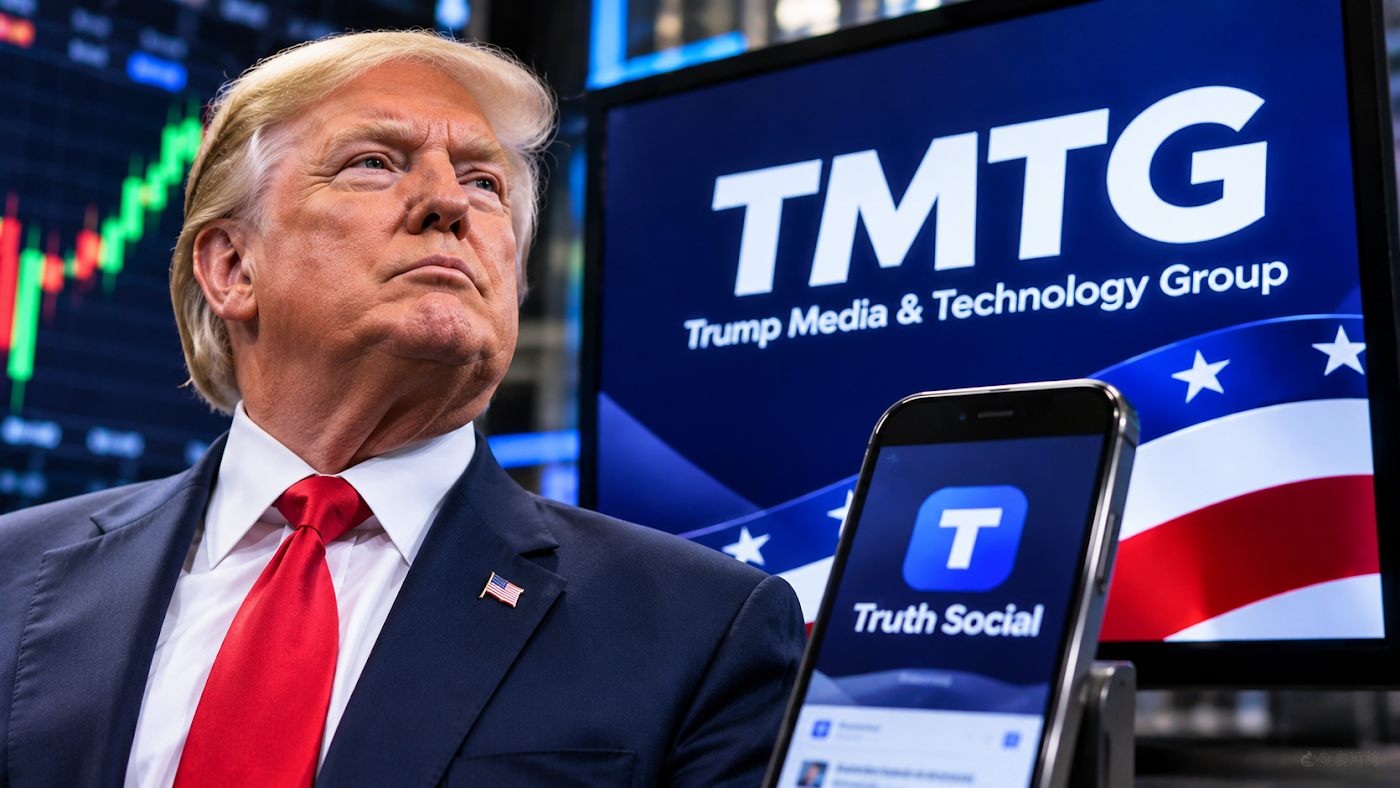
Daybreak CoreWeave won the demand argument. The financing argument is still open.CoreWeave (CRWV) settled one debate fast. Third-quarter revenue rose 168% from a year earlier to $3.66 billion. That beat the roughly $3.55 billion analysts expected and topped the company's own range of $3.45 billion to $3.60 billion. It raised its 2026 revenue outlook to $13.0 billion to $13.3 billion, from $12.4 billion to $13.2 billion. Backlog reached about $132.5 billion, up 138% from a year ago. "This was a breakout quarter for CoreWeave," Chief Executive Michael Intrator said. Revenue grew by more than $1 billion from the second quarter. Now read the cost line. Operating income under standard accounting was $207 million, a 6% margin. Net interest expense was $846 million, about four times that profit. The company lost $709 million, or $1.27 a share. Capital spending hit $14.5 billion in the quarter, against about $2.0 billion of operating cash flow. Its 2030 bonds yielded about 15% before the report. Management's answer is to let customers fund more of the build. CoreWeave expects about $9 billion in customer prepayments and deposits in the next three months. It plans to fund most remaining capex with delayed-draw term loans matched to specific customer contracts. At current yields, it does not plan to issue more parent-level unsecured debt through 2027. There is a second door, too: an at-the-market program for up to 35 million shares, which lets it sell stock into rallies like this one. Fourth-quarter interest is guided to $1.05 billion to $1.15 billion. The market signal? Stock buyers voted before the open. Lenders get their turn Thursday, when the bond market reopens. Watch those 2030 bonds. If their yield drops well below 15%, credit is buying the prepayment plan. If the stock holds its gain while the bonds barely move, shareholders are carrying the financing risk alone, and the share program becomes the release valve. Pulse Check Traders briefly bet on a bigger hike. By the close, they were betting on a longer run.A December rate hike was already all but priced before Tuesday's inflation report, after Fed Governor Christopher Waller spoke in London before dawn. The report moved the debate to size. Core prices rose 0.3% in October, the level where Waller had said a half-point hike "should be considered." The first reaction was to bet bigger. Odds of a half-point move jumped to about 15% from about 1%, CME FedWatch showed. On Kalshi, the quarter-point December contract jumped to 91 cents seconds after the release. It fell to 80 cents within a minute as traders bid up the bigger move. Then the market made a subtler call. By the close, the half-point move sat near 10%, and Kalshi's quarter-point contract was back in the mid-80s. Futures now price three quarter-point hikes by the middle of 2027. The bond market drew the same shape. The two-year yield, the one most tied to Fed policy, rose about 18 basis points to roughly 4.73%. The 10-year rose about 12 basis points to near 4.98%. So the curve flattened. A market bracing for one jumbo hike would pile the move into December. This one spread it across several meetings. Demand for new debt cooled, too. The Treasury's $42 billion 10-year auction cleared at 5.020%. Indirect bidders, a group that includes foreign buyers, took 61.2% of awards, down from 80.3% in October. Primary dealers were left holding 9.8%, up from 2.5%. Gold settled down 2% at $4,030.20. The market signal? The risk has shifted from the size of the next hike to the length of the cycle. That hits anyone who borrows for years, from homebuyers to data-center builders. Thursday's $25 billion 30-year auction is the next test. Another drop in indirect demand would mean buyers want extra pay to lend long. Friday's producer prices then decide whether three hikes is the floor or the ceiling. Who Moved the Mic? Michelle Bowman named two places the bill will show upMichelle Bowman voted to hold rates in October. On Tuesday, the Fed's Vice Chair for Supervision said there is "still work to do to bring inflation closer to 2 percent." She said progress on inflation "has stalled over the past two years or so." She sees "signs that inflation pressures are persisting, while labor market conditions appear to be firming." Unemployment edged down to 4.1% in October. She did not say how big a December move she wants. Then came the line that matters for this issue. "Greater clarity on AI-related financing conditions and the sustainability of AI investments should increase my confidence in future policy decisions," she said. A Fed official is now treating AI credit as a policy input. That puts the bonds of builders like CoreWeave (CRWV) and the Fed's December math on the same desk. She named a second pressure point: housing. She said the recent rise in mortgage rates "appears to be dragging home construction and sales down further." The same day, the New York Fed's household debt report showed mortgage stress rising even before this week's jump in rates. The share of mortgage balances moving into serious delinquency rose to 1.60% in the third quarter, from 1.28% a year earlier. Keep it in proportion. The New York Fed says that rate "remains low by historical standards." Card and student-loan flows improved. Still, total delinquency reached 5.0% of household debt, and that data stops at Sept. 30. The market signal? Bowman just flagged where higher rates could bite first: the most leveraged AI builders and the most rate-sensitive households. Mortgage applications arrive today and existing home sales Thursday. If housing weakens while AI credit stays expensive, the hawks get December but the doves get an argument for stopping early. That tension decides how long three hikes stay priced. World, Uncomplicated Washington's oil forecaster sees $100. Futures sit about $7 lower.Brent settled at $91.49 on Tuesday after touching $89.16 during the session. It traded near $92.69 early Wednesday. U.S. crude was near $86.53. Then the government weighed in. The Energy Information Administration forecasts Brent around $100 a barrel for November and December, about $7 above futures. It said Brent averaged $124 in October. The forecast was completed Nov. 5, before this week's slide. Read the two together and the gap is mostly about timing. The EIA says Middle East shut-ins fell to 2.5 million barrels a day in October, from 10.9 million at the May peak. It expects inventories to start building this quarter, with builds of 3.5 million barrels a day in the first half of 2027. That pushes Brent below $90 by the second quarter of 2027. Futures are already close to that level. Traders have some evidence. Thirty-one loaded LNG tankers left the Strait of Hormuz in October, the most since February, according to S&P Global data. But the danger is rising, too. Thirty-seven ships were attacked in October, the most in any month of the war, by a Washington Institute for Near East Policy tally. Saudi Arabia said an Aramco building in Riyadh was targeted in an attempted attack on Nov. 8. On Tehran's side, Iran's Rezaei says the strait stays shut until a list of conditions is met. One more thing. Cheaper oil has not bought the Fed's patience. Tuesday's repricing followed core prices, which leave out fuel. The market signal? Futures are betting on flows. The forecaster is betting on time. OPEC's monthly report lands today, with weekly U.S. inventory data to follow. If attacks keep climbing while tankers keep moving, that 90 Brent by the second quarter of 2027. Beyond the Candles OpenAI made $10 billion in a quarter. Its loss grew anyway.OpenAI's third quarter shows the whole AI bet in one set of numbers. Revenue reached $10 billion, up about 50% from the second quarter and nearly three times a year earlier. Growth in the second quarter had been about 18%. Chief Financial Officer Sarah Friar called it a "blockbuster quarter" and put the annual run rate near $50 billion. Now the other line. The adjusted operating loss widened to $10.9 billion from $10.1 billion, according to investor documents reported by The Wall Street Journal. The adjusted operating margin improved to negative 109% from negative 150%. In plain terms, on that adjusted measure, OpenAI spent about $2.09 for every dollar it took in. Both numbers are true at once. Each dollar of sales costs less to deliver than three months ago. But every dollar still loses money, so bigger sales mean a bigger loss. The growth mix is the encouraging part. Friar said enterprise sales doubled from the prior quarter and now match consumer sales. Paid subscriptions topped 100 million, and weekly users reached 1.2 billion. OpenAI has also been cutting prices on its newest models to win business customers. The market signal? OpenAI is private, so its losses run on private capital. That capital now costs more, with futures pricing three Fed hikes. The next funding round is the real verdict. If it prices higher despite a wider dollar loss, private investors are still paying for growth. If terms tighten, the pressure moves to the suppliers counting on AI developers to keep spending. Under the Hood Crypto treasuries are learning what their coins are tied toTrump Media & Technology Group (DJT) posted a $409.7 million quarterly profit on revenue of $2.97 million. A $378.1 million gain on digital assets, booked with bitcoin near $84,000 at quarter-end, did most of the work. Here is the detail buried inside the filing. About 73% of its roughly 15,649 bitcoin is pledged to an options program, and the counterparty "can rehypothecate at their sole discretion." In plain English, it can reuse the coins. Nearly all the rest backs $1 billion of 0% convertible notes. Holders can demand cash for those notes on Nov. 30. The notes convert at about $34.72 a share. The stock closed Tuesday at $4.28. That makes conversion pointless and a cash put the likelier path, though the choice is the holders'. The filing lists about $2.33 billion of cash, investments and digital assets against about $977 million of debt. It also warns the company may not have enough cash on hand if holders exercise. Bitcoin traded near $73,590 early Wednesday, about 12% below the quarter-end mark. Bitmine Immersion Technologies (BMNR) shows the same plumbing in ether. It raised $13.2 billion selling stock to build the largest corporate ether treasury. Its annual report shows a $6.31 billion loss, $6.23 billion of it unrealized. Its coins cost about $3,380 each, and ether traded near $2,052 early Wednesday, about 39% below that. Bitmine also said its internal controls over financial reporting are not effective. The market signal? Owning a coin and being free to sell it are two different things. MSCI posts its November index review after 5 p.m. ET today, the first under new rules that make "non-operating companies" ineligible for its global indexes. Strategy (MSTR) was among the names flagged for possible deletion. Then Nov. 30 shows whether Trump Media's noteholders take cash. Both models lean on investors buying new paper. With coins below their marks and rates rising, that bid is harder to count on. SPONSOR SPOTLIGHT If you have any money in the stock market, you may want to pay attention. New research points to a massive market-moving event that could send hundreds of popular stocks into a sudden free fall. Holding the wrong stocks when this hits could erase years of gains. That’s why analysts have now identified a list of stocks investors may want to avoid as this event unfolds. If you want to see what’s coming — and which stocks could be most at risk — Click here to get the full details before it’s too late. What's Brewing - Nvidia (NVDA) owes three House committee chairs an answer today on a requested closed-door briefing set for Nov. 18. One chair has said he is prepared to issue a subpoena if Jensen Huang does not respond. Lawmakers in both parties are also pushing three chip-export bills into the defense package, measures Nvidia has opposed. The stock fell 5.5% to $168.89 on Tuesday and was indicated about 5% higher before the open. Quarterly results follow Nov. 17.
- Thursday brings the AI builders' next test. Cisco (CSCO) and Applied Materials (AMAT) report results the same day the Treasury sells $25 billion of 30-year bonds. Friday brings October producer prices. CoreWeave showed the orders. These show whether suppliers see the same demand at a higher cost of money.
- Prediction markets have their own referee problem. Kalshi confirmed a CFTC warning over how it filed new contracts. Politico, citing one person, reported that charges could follow. The regulator that has backed prediction markets against the states is now examining Kalshi's own filings. Kalshi called it "a procedural error involving the submission of a handful of contracts, many of which weren't live." No charges have been filed. A hearing in the federal case against Utah follows Nov. 20.
- The market signal across all three? Today tests how much Washington can squeeze Nvidia. Thursday tests whether AI demand holds up at a higher price of money. And the Kalshi warning tests the listing process the fastest-growing venues depend on. In each case, the fight is over terms.
Meme of the Day 
That's it for today's Slate. AI demand showed up on schedule. So did the bill for the money behind it. Nvidia's deadline today, the 30-year sale Thursday and producer prices Friday will show who carries it. Stay close to the feed. Today's reply prompt: Is a 15% bond yield on an AI builder a warning or a bargain? The Next AI Race Isn't About the Best Model.Models improve. Computing gets cheaper. An algorithm can be matched.
What's hard to copy is a company's own lab data: experiments run at industrial scale, with every result fed back to make the AI smarter.
In drug development, that loop may become the edge that matters most. Not who has the best model. Who can learn biology fastest.
We profiled 5 companies building that loop in a new FREE Special Report: AI Moves Into the Biotech Lab.
We'll text it straight to your phone. Get the Free Report by Text → |