Good morning, Slaters!Wednesday's rally had one engine. By the evening, the engine had a problem of its own. Chip stocks jumped 5.7% as a group, and CoreWeave (CRWV) rose 24.7% in its first session after results. The S&P 500 gained 1.3%. But homebuilders and banks fell on the same day, with the cash bond market shut for Veterans Day. The rally bought AI demand. It did not buy cheaper money. Then, after the close, The Wall Street Journal reported that the board of Nvidia (NVDA) was preparing to remove its founder and chief executive. The shares were indicated about 7% lower early Thursday. So the market wakes up with two open questions. Who runs the company at the center of the AI trade? And what does the bond market say when it trades again today? Let's get into it. 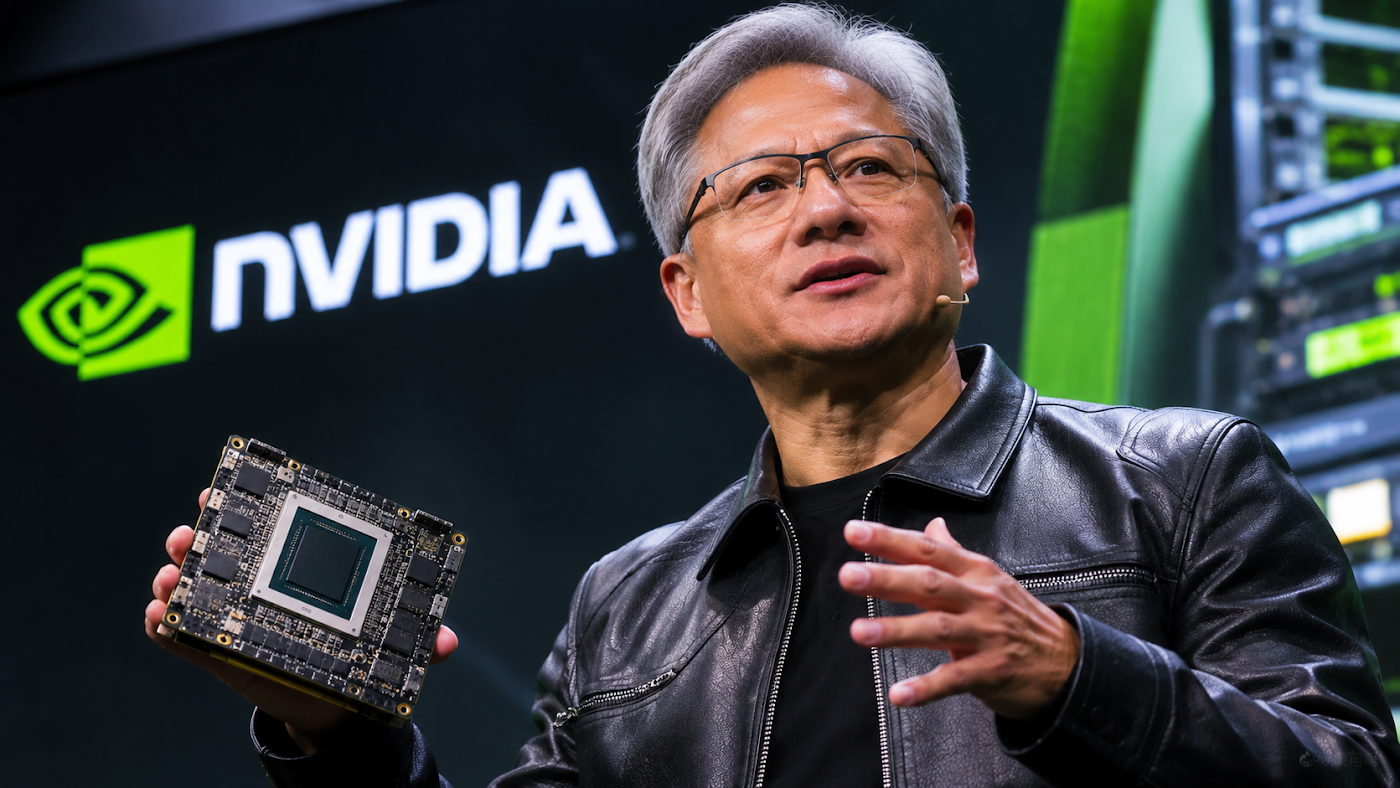
Daybreak Nvidia's board said "confidence" on Sunday. By Wednesday night, it was reportedly weighing a removal.On Sunday, the board of Nvidia (NVDA) said it had "confidence in Jensen and his leadership team." It had just opened an inquiry into reports that Jensen Huang was the target of a foreign intelligence effort. Three days later, the tone changed. After Wednesday's close, The Wall Street Journal reported that the board was preparing to oust Huang. Other outlets reported that directors met that night and have engaged an outside firm to identify possible replacements. The New York Times separately reported a relationship between Huang and an executive who reports to him. Nvidia had announced no decision early Thursday. The mechanics are simple. Nvidia's bylaws let directors remove the CEO "with or without cause" by majority vote. Nvidia has 11 directors and considers all but Huang independent. What is missing is a successor. Huang co-founded Nvidia in 1993, has run it ever since, and has never had a named heir. The stock had just started to recover. It rose 2.9% to $173.73 on Wednesday, its first gain since the weekend. That same day, Baird cut it to neutral and slashed its price target to $200 from $500. It cited Huang's uncertain tenure, export risk and a possible slowdown in AI spending. Morgan Stanley (MS) dropped Nvidia as a top pick after a fall of more than 25%, though it kept its overweight rating. Early Thursday, the shares were indicated near $161, about 7% below that close. Most other chipmakers were indicated lower too, but by far less, mostly 2% to 4%. Now look at the calendar. Results land Nov. 17. House committee chairs want a closed-door briefing with Huang on Nov. 18, and two say they are ready to subpoena him. A leadership change could land between those dates. The market signal? Key-person risk now has a price, and it shows up in one place: the gap between Nvidia and the rest of the chip group. Demand did not change overnight. The leadership question did. If Nvidia keeps trailing its peers while AI orders stay strong, that discount belongs to the boardroom and Washington. A formal announcement starts to close it. Silence into Nov. 17 turns the earnings call into the leadership update. Pulse Check The bond market took Wednesday off. The dollar did its job.Wednesday's gains were big and narrow. The S&P 500 rose 1.3%, the Nasdaq 1.6%, and chipmakers did the lifting. Homebuilders fell about 0.8% and banks slipped 0.2%. Microsoft (MSFT) and Amazon (AMZN) fell too. Those are the groups that gain most if Tuesday's rate shock fades. They did not buy it. On Tuesday, after a hot core inflation report, the two-year Treasury yield jumped about 17 basis points, its biggest one-day rise since April 2025. With cash Treasuries shut for the holiday, the repricing moved into the dollar instead. The dollar index rose about 0.7% to its highest close of 2026. The euro fell to its weakest level in more than a year, and the dollar came within a fraction of 160 yen. After the dollar topped 163 yen in late July, Japan spent a record 15.4 trillion yen defending its currency over three days of intervention. Gold dipped below $4,000 an ounce during the session and was near $3,950 early Thursday. The rate bet has changed shape. Futures put only about a 10% chance on a half-point hike in December, but they price three quarter-point increases by mid-2027. Traders expect a longer cycle, and a longer cycle squeezes long-dated borrowers hardest. Now Nvidia adds a second weight. The Nasdaq-100 fund was indicated about 0.9% lower early Thursday, against about 0.4% for the S&P 500 fund. Cash Treasuries reopen today with a $25 billion 30-year auction. The market signal? Wednesday's rally borrowed against a day with no bond vote. If 30-year demand is soft and long yields rise to meet the dollar, chips lose the cushion that let them ignore rates. If yields hold and homebuilders bounce, the rally has room to extend. Watch homebuilders and banks against the chip group. They will tell you whether the rate shock is fading or just waiting. Who Moved the Mic? Strategy called MSCI's rule "a pretext." MSCI used it anyway.MSCI (MSCI) published its November index review after Wednesday's close. It is the first under a new rule that bars "non-operating companies" from its global indexes. MSCI moved to drop Strategy (MSTR), effective at the close on Nov. 30. Strategy saw this coming and said so. "Based on these criteria, we expect our class A common stock to be excluded," it wrote in its third-quarter filing. In an August letter to MSCI, it called the proposal "a pretext for targeting Digital Asset Treasury Companies." Here is why the words matter. Strategy is arguing the hit is small. It says funds tracking MSCI's indexes hold only 3.1% of its shares. JPMorgan analysts estimated last year that exclusion could drive about $2.8 billion of selling, and as much as $8.8 billion more if other index providers followed. That estimate was built on an earlier MSCI proposal. Removal does not force Strategy to sell a single bitcoin. The real exposure is the funding loop. Strategy sells stock to buy bitcoin, and index funds are among the steadiest buyers of that stock. Lose them, and each new share sale has fewer natural takers. That lands while bitcoin trades near $73,000, below Strategy's average cost of about $75,456 a coin. On the options venue Derive, traders price a 31% chance that bitcoin finishes below $70,000 at Christmas, up from 15% a week earlier, its chief executive said. Strategy closed up 1.1% on Wednesday. Early Thursday, in a weaker tech tape, it was indicated about 6% lower. The market signal? The decision was expected. Its cost is still being priced. Watch the gap between Strategy and bitcoin into the Nov. 30 effective date. If the stock keeps falling faster than the coin, the market is charging more for Strategy's equity, and every future bitcoin purchase gets more expensive to fund. If the gap holds, the index selling was already in the price. FROM OUR SPONSORS 
...the man who called the rise of Nvidia, Apple and SpaceX years in advance, just uncovered Elon Musk’s latest breakthrough idea… And according to James, it’s going to be even bigger than the SpaceX IPO – creating up to 1.8 million new millionaires over the coming years. The pieces behind it are inside this briefcase – which he reveals 100% FREE in this video. Click here now for all the details. World, Uncomplicated Private money paid a premium for control and asked for a discount on liquidity, on the same day.Blackstone (BX) came back for IDP Education a third time. The Australian company places students abroad and co-owns the IELTS English test. The new offer is A$3, after the company rejected earlier offers of A$2.30 and A$2.50 and called their timing "highly opportunistic." This time it will consider the bid. The shares jumped 16% but still sit about 14% below the offer. They are down about 55% this year, as tighter student-visa rules cut the flow of foreign students. That gap says the market doubts a deal at A$3, or expects one to take time. In Britain, KKR (KKR) now owns half of two offshore wind farms RWE is building, an investment RWE puts at about £12 billion. Thirty-five banks are lending £11.1 billion, including £1 billion from Britain's National Wealth Fund. Each project has a 20-year contract that fixes the price of its power. That lets lenders lend against the wind farms themselves, which will not be fully running until 2030. In Tokyo, Bain Capital launched a tender for Hokuriku Electric Industry at a 72% premium, against a median Japanese take-private premium of about 47%. Meanwhile, Blackstone is marketing a fund to buy other investors' real estate fund stakes at a discount. It aims to raise at least $3 billion, according to a report. The market signal? Sponsors pay up where a board or a rival can say no, and they ask for a discount where holders need cash. Both prices carry information. The size of Blackstone's discount fund will show how many investors want out of private property funds. The wind deal shows what still gets financed when rates rise: long-dated income with a contract behind it. Beyond the Candles Charter jumped 10.6%. The real story is where its cash is going.Charter Communications (CHTR) rose 10.6% on Tuesday and added 1.7% on Wednesday. The chart looks like a rebound. The filings show a change in who gets paid first. On Tuesday, Charter offered to buy back up to $1.5 billion of its own long-dated secured bonds. The eight series carry coupons from 3.5% to 4.8% and mature between 2041 and 2062. Now compare that with the stock. Charter bought back $2.1 billion of shares in the third quarter of 2025. In the third quarter of 2026, it bought $19 million. Higher rates make the math work. Low-coupon bonds trade below face value, so Charter can retire debt at a discount. The tender prices on Nov. 17 off Treasury yields plus a fixed spread. The higher yields go before then, the cheaper those bonds are to retire. Leverage explains the rest. Charter ended September at 3.93 times net debt to adjusted EBITDA, on $108.6 billion of debt principal. Its target is 3.5 times within three years of closing the Cox deal. At Tuesday's close, its Class A shares were worth about $15.3 billion, roughly 14% of that debt. With equity that thin, retiring bonds below face value helps shareholders even without a buyback. Keep it in proportion. The tender covers about 1.4% of total principal, and it was only one of several explanations for Tuesday's jump. The market signal? In a market pricing a longer hiking cycle, a company with cheap old debt can return value by retiring bonds below face value. Charter is a clear case of cash moving from shareholders to creditors. Nov. 17 shows how big a discount it locks in. If today's 30-year auction pushes long yields higher, that discount deepens, and bondholders stay first in line for Charter's cash. Under the Hood A prediction market went from 17 cents to 72 in one night of reports. It still needs an announcement.On Wednesday afternoon, Polymarket's contract on Nvidia (NVDA) announcing Huang's resignation or removal by Dec. 31 traded near 17 cents. By early Thursday, after a run of overnight reports on the board, it traded near 72 cents. About $4.1 million changed hands over 24 hours. Read the rules before you read the price. The contract pays Yes only on a public, definitive announcement by Huang, Nvidia or its authorized representatives. Media reports of plans to depart do not count. Neither does administrative leave or a suspension. A board that is "preparing" has announced nothing. That gap between news and wording is how these markets work. Kalshi's December hike contract trades near 86 cents, but it pays only if the Fed raises by exactly a quarter point on Dec. 9. A half-point hike would pay No. Polymarket's contract on impeaching Defense Secretary Pete Hegseth this year sat near 68 cents before the House voted Tuesday to send the articles to committee. It fell to about 3 cents on a procedural vote. The fine print now moves real money. Polymarket says its annual revenue is running above $1.8 billion, up from more than $1 billion in June. Kalshi still handled about 73% of prediction-market volume last quarter, by data firm Predicted's count. The market signal? A 72-cent price is the market's odds on an announcement by year-end. A report can move it. Only an announcement settles it. If the board opts for a leave or a suspension, Yes holders can be right about the story and still wait, or lose, on the wording. Price the rule before the headline. What's Brewing - Cash Treasuries reopen today for the first time since Tuesday's inflation shock, and the Treasury sells $25 billion of 30-year bonds. A string of Fed officials speak, and October producer prices follow Friday. A weak auction would tell stocks the rate shock was only postponed.
- After the close, Cisco (CSCO) and Applied Materials (AMAT) report. Analysts expect $1.33 a share on $18.1 billion of revenue at Cisco and $4.06 a share on $10.3 billion at Applied. Wednesday's rally priced AI demand across the whole chip chain. These two show whether networking and chip-equipment orders back it up at a higher cost of money.
- Oil gets its referee today too. The government's weekly inventory report, delayed a day by the holiday, is due. Brent settled near $92.70 on Wednesday. Iran's army said a tanker struck a mine and caught fire in the eastern part of the Strait of Hormuz, while the U.S. military says the main shipping lanes are clear of mines.
- The market signal across all three? Today tests the price of money in three places: the long bond, the AI supply chain and the oil barrel. Wednesday's rally only had to answer for demand. Thursday asks about cost, with the AI trade's leadership question still open.
Meme of the Day 
That's it for today's Slate. A board that said "confidence" on Sunday, a dollar at its 2026 high and a bond market that finally gets a vote. The 30-year sale and two chip-supplier reports land today. Stay close to the feed. Today's reply prompt: Is a founder worth a premium in a trillion-dollar chipmaker, and how much? AI Moves Into the Biotech LabFor most of the AI boom, the money followed the hardware. Chips. Data centers. Cloud.
Now the algorithms are walking into the lab.
In September, a drug whose target was found by AI, and whose molecule was designed by AI, dosed its first patient in a Phase III trial. A second AI-engineered medicine is in Phase III too.
We profiled the 5 companies leading the shift in a new FREE Special Report: AI Moves Into the Biotech Lab.
We'll text it straight to your phone. Get the Free Report by Text → |