Good morning, Slaters!Nvidia (NVDA) starts the week with its own board investigating its founder. The stock was indicated about 5% lower before the open. Here is the odd part. Nvidia's own filings say the China business tied to the weekend's reports is close to zero. So this morning's drop does not look like a bet on lost China revenue. It looks more like a price on the one input no model carries: the person at the top. That gap between the number and the risk runs through the whole week. Crude fell more than 12% last week, yet the Gulf's fuel exports ran at about 40% of their pre-war pace in September. A December Fed hike trades at 77 cents, and Tuesday's inflation report arrives without its annual figure. Bitcoin closed a fifth straight losing week below the price Strategy (MSTR) paid for its coins. The headline numbers look calm. The parts they leave out do not. Let's get into it. 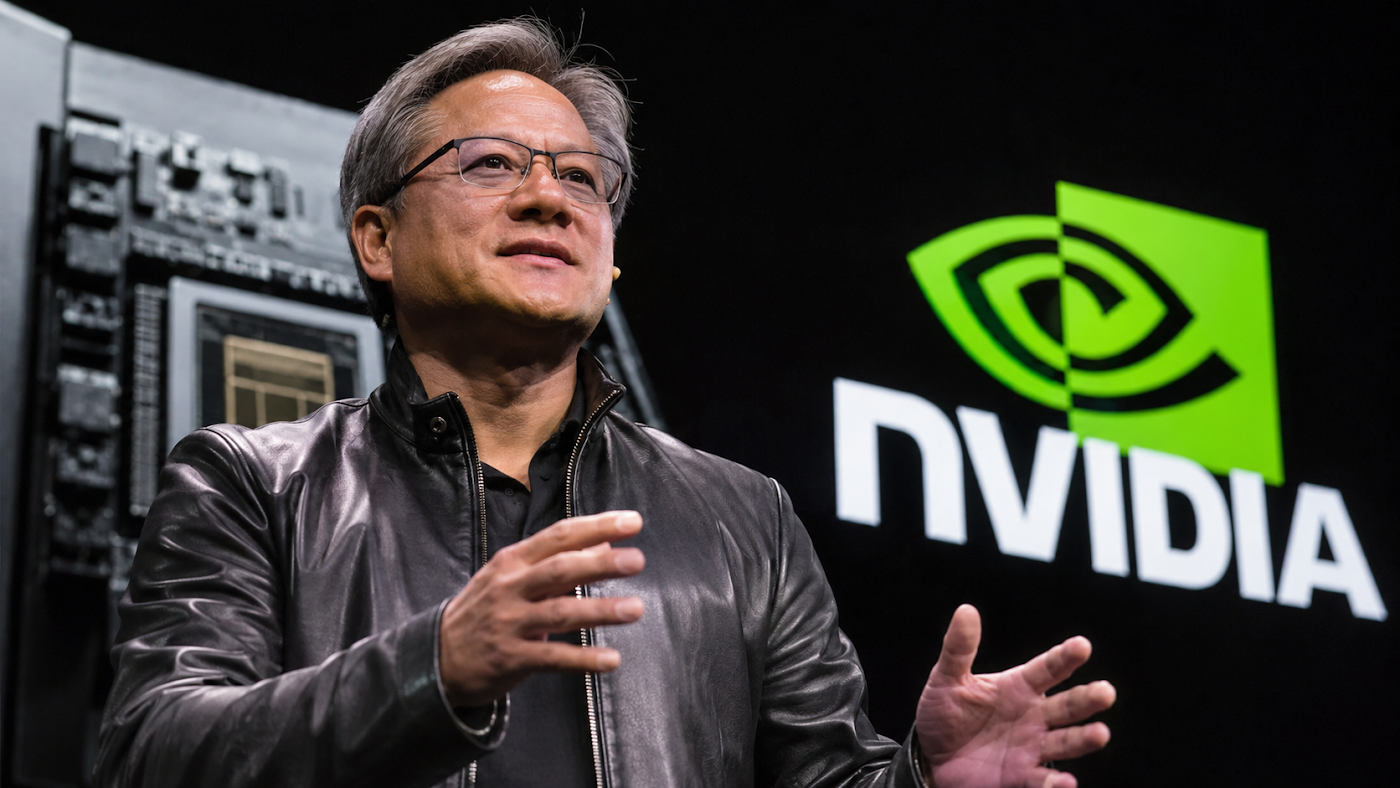
Daybreak Nvidia's China revenue is near zero. Its founder risk is not.On Sunday, the board of Nvidia (NVDA) opened an independent investigation. It cited "recent reporting that founder and CEO Jensen Huang has been the target of a foreign intelligence effort." Independent directors will run it with outside counsel. The board said it has "no reason to believe" national security or company secrets were compromised, and that it has confidence in Huang. In a staff email, Huang admitted an affair, apologized and said he will cooperate fully. The reports behind it landed Friday night. The New York Times and the Financial Times described a U.S. intelligence memo saying an executive at Megaspeed, a Singapore data-center company, was recruited by China's Ministry of State Security. Beijing has denied the claims. Three House committee chairmen had already asked Huang for a closed-door briefing on November 18, with an answer due by November 11. Now read Nvidia's own math. Its filings show how little China data-center revenue is at stake. H200 chips shipped under the China license program were "less than 1% of Data Center revenue" in the quarter ended July 26. Data-center revenue was $89.0 billion, so that slice was under about $890 million. The company's total revenue forecast for the current quarter, $108.0 billion, assumes no China data-center revenue at all. That makes this mainly a governance story for now, and those are harder to price. From the October 28 close, the day before the Times first reported the intelligence concern, through Friday, Nvidia fell 13.3% to $186.64. The iShares Semiconductor ETF fell 21.5%. The stock had held up better than its group. Polymarket listed a contract on Sunday on whether Huang announces a resignation or removal by December 31. It traded near 14.5 cents early Monday. That is a price on a question, not a verdict. The market signal? Three dates settle it: the reply to Congress on November 11, results on November 17 and the briefing on November 18. Watch Nvidia against the chip group, not on its own. If it starts to lag the sector into the 17th, investors are charging a key-person discount. If it holds, they are treating the board's statement as the floor. Any board update before the call is the wild card. Pulse Check A 77-cent hike bet meets a CPI print with no annual numberKalshi's contract on a quarter-point December hike traded at 77 cents all weekend, in a tight 76 to 77 cent range. It has barely moved since Friday's payrolls beat. The 10-year yield ended Friday at 4.859%. Tuesday tests that price with a broken ruler. The October report will arrive without its annual change, a leftover of last year's shutdown. Traders will have to work from the monthly number. Forecasters expect headline prices up about 0.3% after September's 0.6%, and core up about 0.2% after 0.3%. Run those forward. At 0.3% a month, headline inflation compounds to about 3.7% a year. At the 0.2% expected for core, it is closer to 2.4%. One decimal place holds the whole December debate. And this is the only CPI reading the Fed gets before its December 9 decision: November's report lands December 10, the day after. Here is where it gets interesting. Market inflation pricing is moving the other way. The five-year breakeven rate fell to 2.26% on November 5 from 2.46% on October 30. Brent fell about 3% to near $95 after trading reopened Sunday night. President Trump had said renewed strikes on Iran were "highly unlikely" to be needed if Tehran signs "a very strong agreement." The hike bet ignored both. Supply adds a second test. The Treasury sells $58 billion of 3-year notes today, $42 billion of 10-year notes a few hours after Tuesday's report and $25 billion of 30-year bonds Thursday. The market signal? Read core first. At 0.2% or lower, 77 cents looks rich against falling breakevens, and the contract has room to drop. At 0.3% or higher, the hike case no longer rests on payrolls alone. Then the 10-year sale that afternoon decides whether yields near 4.86% push higher. Who Moved the Mic? Mary Daly saw the tech selloff. She still said higher rates are likely.On Friday, San Francisco Fed President Mary Daly said higher rates "are likely to be needed." The same day, she called the tech repricing painful but orderly. Read those two lines together. The Nasdaq had just dropped 5.52% on Thursday. Lenders were demanding more than 16% on CoreWeave's bonds. A Fed official looked at that and called it orderly. That reads like a policymaker telling markets this selloff is not hers to fix. She has company. Dallas Fed President Lorie Logan wants at least two more hikes. October payrolls rose 165,000, far above forecasts, and unemployment fell to 4.1%. The pushback comes from outside the Fed. White House economic adviser Kevin Hassett argued that a strong jobs report does not have to mean a hike. Falling breakevens quietly side with him. The December case now rests on jobs data and officials' words. Today brings more voices. Michelle Bowman, Austan Goolsbee and Thomas Barkin all speak, and Governor Christopher Waller speaks early Tuesday, before the data. The market signal? Listen for "orderly." If today's speakers echo Daly, the Fed is saying stock losses won't enter the December math unless credit cracks broadly. If one of them leans on falling breakevens instead, that is the first dent in the 77 cents, before CPI says a word. FROM OUR SPONSORS A "bloodbath" Is Coming
Silicon Valley billionaires are hoarding guns, gold, and even military grade gas masks... or fleeing the country altogether. What do they know that you don't? This AI insider is stepping forward with this time-critical message: Move your money soon, ahead of the dangerous next phase of the AI market. Here's the one urgent move you need to make with your money immediately. This ad is sent on behalf of TradeSmith at 1125 N. Charles Street, Baltimore, Maryland 21201. If you're not interested in this opportunity, please click here. World, Uncomplicated Hormuz is "closed." Gulf crude is flowing anyway.Iran's army said Saturday the Strait of Hormuz stays closed until Washington accepts its terms. The ship counts back that up. The IMF's PortWatch tracker logged one transit on November 1, against roughly 85 a day before the crisis. Iran's Revolutionary Guard also claimed two tankers hit mines, naming neither. Over the weekend, UK maritime authorities reported a tanker on fire near Khasab, at the strait's Omani tip. Whether it matches any Iranian claim has not been established. Then look at the barrels. Gulf crude has kept flowing by other routes. OPEC output rose 930,000 barrels a day in October to 22.8 million, about 88% of February's level. Saudi exports averaged near 7 million barrels a day, close to pre-war. The IEA counted Gulf crude exports at 13.9 million a day in September, over 75% of normal, with 5.6 million moving through pipelines that skip the strait. That bypass drew fire on Sunday. Saudi Arabia said it intercepted Houthi missiles aimed at Riyadh, and the Houthis claimed a hit on a pumping station on the East-West pipeline to the Red Sea. Saudi Arabia has confirmed none of those target claims. That is one way to read Brent's drop of more than 12% last week, to $98.32: supply has already found its workarounds. It kept sliding when trading reopened. The catch is fuel. Gulf exports of refined products ran at about 1.9 million barrels a day in September, against 4.7 million before the war. Ukraine also hit two more Russian refineries, Saratov and Afipsky. You can reroute crude. You cannot reroute a refinery. So far, U.S. heating oil futures, a diesel benchmark, have fallen at about half crude's pace: down about 7% last week, to $4.33 a gallon on Friday. Goldman Sachs (GS) still raised its December Brent forecast to $105 from $90. The market signal? Watch the gap between crude and diesel, not Brent alone. Weekly distillate stocks, moved to Thursday by Veterans Day, show whether fuel tightens while crude falls. U.S., Russian and Ukrainian officials meet in Abu Dhabi on November 10 and 11. If distillates draw while Brent sits near $95, the inflation relief priced into breakevens is too generous. Beyond the Candles CoreWeave's stock bounced 6%. Its bonds still yield 16%.Friday looked like relief. The Nasdaq rose 1.09%, the VIX fell 9% to 25.64, and CoreWeave (CRWV) jumped 6.28% to $46.40. The bond market didn't join the party. CoreWeave's 9.625% notes due 2032 still yielded more than 16%. Its five-year default protection eased to about 1,155 basis points from above 1,289 on Thursday, still far above its pre-selloff level. SoftBank's protection rose to 466 basis points, its widest since October 2022. A stock rebound says the selloff went too far. A 16% yield says lenders doubt the refinancing. For a company that builds data centers with borrowed money, the second number sets the price of the next dollar. The stress is concentrated, but the direction is broad. Protection on Nvidia (NVDA) rose about 76% in a month to roughly 139 basis points, still priced as a strong credit. Applied Materials (AMAT) closed Friday about 55% below its 52-week high. Christopher Wood of Jefferies (JEF) has told investors to watch for signs that markets will no longer fund the AI build-out, "or to put it more crudely, that the credit card will be taken away." This week the builders report straight into it. Constellation Energy (CEG) goes first, into a selloff that cut Applied Materials in half. It is expected to earn $3.90 a share on $9.23 billion of revenue. Vistra (VST) set the bar Friday, rising 10.55% after saying about 98% of its expected 2027 output is already hedged. CoreWeave follows Tuesday, with Applied Materials and Cisco (CSCO) on Thursday. The market signal? Skip CoreWeave's revenue line on Tuesday. Listen for funding costs and customer commitments, then check the 2032 notes the next morning. If the bonds rally with the stock, last week was a positioning flush. If the stock rallies and the bonds don't, equity buyers are again pricing a recovery that lenders won't finance. Under the Hood Investors want out of two wrappers. The assets inside haven't broken.Publicly registered nontraded business development companies, the private credit funds sold through wealth advisers, raised $1.5 billion in the third quarter. That was the least since late 2020 and down 87% from $11.6 billion a year earlier. Redemptions beat new money by $4.1 billion, the third straight quarter of net outflows. These funds promise periodic liquidity, not daily. Holders asked for 11.5% of assets back. About 40% of requests were paid, leaving roughly $8.2 billion stuck in the queue. At Apollo Debt Solutions, a fund from Apollo (APO), holders tendered 86.7 million shares against a 29.4 million cap. Yet values held steady, and all 24 ranked funds posted positive returns. Bitcoin funds show the same pattern, only daily. U.S. spot bitcoin ETFs started last week $368 million ahead for 2026 and ended it $914 million behind, by SoSoValue's count. The iShares Bitcoin Trust from BlackRock (BLK) made up 89% of Friday's gross redemptions. On Sunday, bitcoin hit its lowest since August near $73,600 as more than $1 billion of leveraged bets, mostly bullish, were wiped out. It traded near $74,500 early Monday, below the $75,451 average cost of Strategy (MSTR). Read the two together. Neither asset has broken. Fund values are stable, and bitcoin still sits above its 200-day average near $73,190. What is cracking is the willingness to hold the wrapper. One warning sign sits underneath: Moody's (MCO) says payment-in-kind income, interest paid with more debt, is about 8% of BDC investment income, up from 5.5% in 2021. The market signal? Watch the queues, not the marks. BDC quarterly filings around November 16 and 17 show bad-loan rates. Fourth-quarter requests near 11% of assets would keep prorations going. In crypto, a single inflow day at BlackRock's fund is the first sign the biggest seller has stopped. Until then, every bounce meets a redemption. SPONSOR SPOTLIGHT What is Elon Building in Texas?
Elon's mysterious Texas project will be 3X the size of Central Park… Cost $122 billion to build… And singlehandedly DOUBLE American chip production. One investment (not Tesla/SpaceX) is at the center of it all. Click here to get its name and free ticker. This ad is sent on behalf of InvestorPlace Media at 1125 N. Charles Street, Baltimore, Maryland 21201. If you're not interested in this opportunity, please click here. What's Brewing - Today, KKR (KKR) and Constellation (CEG) report. Tuesday carries the week. October CPI lands first, the $42 billion 10-year auction follows that afternoon, and CoreWeave and SoftBank report the same day. Core inflation at 0.2% versus 0.3% is the line for the 77-cent hike bet.
- Wednesday brings two deadlines. Nvidia's answer to the House committees is due, and MSCI posts its November review after the U.S. close, with "non-operating companies" now ineligible for its indexes. MSCI's earlier test run flagged Strategy (MSTR). Current members leave only after failing the test in each of their last two annual filings, which could keep it in for now. A removal would make index funds sellers of Strategy's stock, not its bitcoin.
- Thursday closes the loop with distillate inventories, a $25 billion 30-year auction, and Applied Materials (AMAT) and Cisco (CSCO) after the bell.
- The market signal across all three? Each test checks a calm number against the plumbing beneath it. CPI tests whether 77 cents survives falling breakevens. MSCI tests whether bitcoin's biggest corporate holder keeps its index seat with the coin below its cost. Thursday tests whether cheap crude means cheap fuel. Soft answers mean a rates rally and relief for AI's builders. Hot ones mean Nvidia's governance question lands on a market with no cushion left.
Meme of the Day 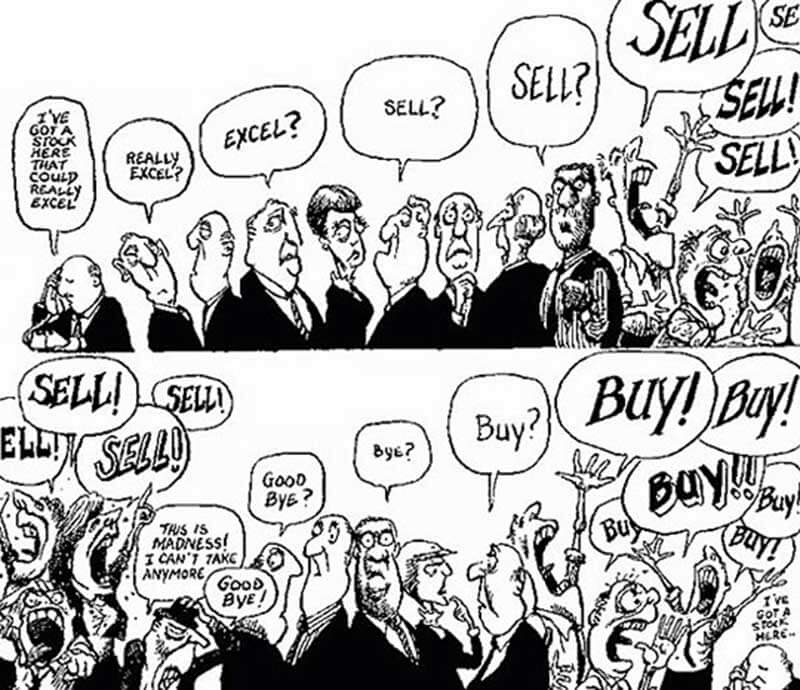
That's it for today's Slate. Constellation and KKR report this morning, three Fed officials speak today, and CPI lands tomorrow. Stay close to the feed. Today's reply prompt: Which calm number is hiding the most this week: Nvidia's near-zero China revenue, Brent near $95 or the 77-cent hike bet? Big Pharma’s new ‘AI co-scientist’ |