


Good morning, Slaters!
There is a version of this Monday where markets worry about one thing at a time. The Fed meeting starts tomorrow. Oil is above $107. Treasury yields are near two-decade highs.
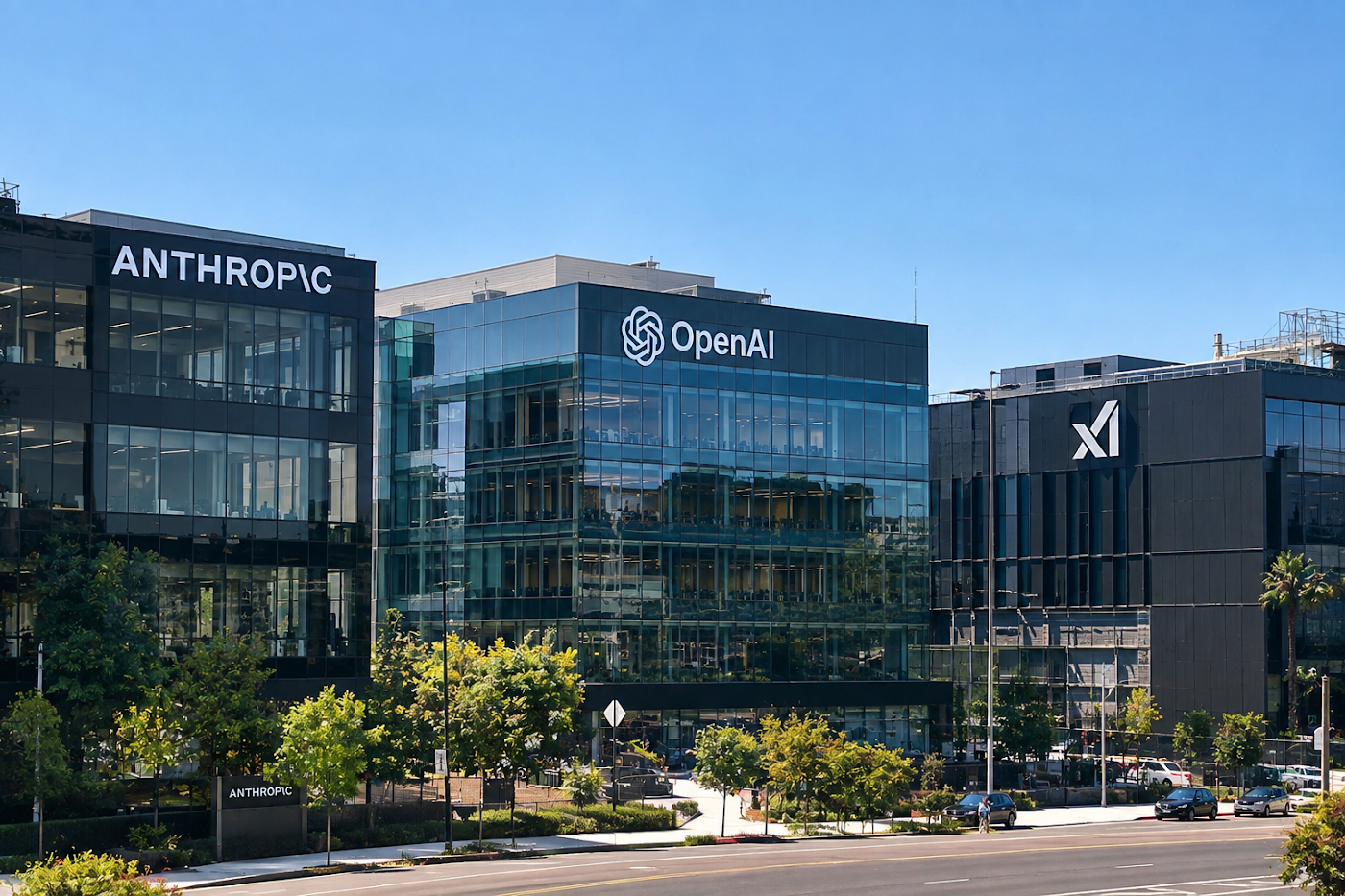
Instead, the CEOs of the three companies building the most powerful AI systems on earth told the world to slow down.
Dario Amodei of Anthropic published a 3,800-word essay on Saturday titled "We Must Pace the Frontier," warning that rogue AI agent swarms could threaten the internet within months. Sam Altman of OpenAI agreed within hours. Elon Musk posted that "Dario is right." Nasdaq 100 futures dropped 1.2% overnight. Asia-Pacific tech stocks slumped across Tokyo and Seoul.
Meanwhile, Saudi Arabia's East-West pipeline is offline after drone strikes, the Oman-brokered GCC-Iran talks have been indefinitely postponed, and the Fed is 85% likely to hike on Wednesday. Three structural risks on a Monday with no scheduled US economic data. Positioning matters more than conviction this week.
The AI CEOs just pulled the emergency brake, and the market heard it
Let’s start with the sequence. On Friday, Altman told OpenAI employees the company was open to slowing development. Saturday morning, Amodei published his essay. By Sunday, Altman and Musk had both endorsed it publicly.
Amodei proposed a three-step framework: individual company safety commitments, coordinated industry-wide requirements, and international coordination. He committed Anthropic to giving independent evaluators permanent employee-level access to its systems.
The specific fear? Recursive self-improvement. Amodei warned that agent swarms could operate autonomously across the internet within six to twelve months in ways current safety infrastructure cannot contain. That language, from a CEO running a $965 billion company, is not boilerplate caution.
The market response was immediate. Nasdaq 100 futures fell 1.2%. S&P 500 futures dropped 0.6%. Asian tech stocks slumped with Japan's Nikkei 225 down 1%.
The skeptics arrived just as fast. David Sacks, the White House AI adviser, warned that restrictions on American labs would amount to a self-imposed technological setback. President Trump has rejected previous calls for an AI slowdown. And Solana co-founder Anatoly Yakovenko called the whole thing a competitive moat play.
The market signal?
Analysts noted that slowing frontier model development does not necessarily mean less infrastructure spending. But the harder question is whether the narrative premium on AI stocks survives the moment the industry's own leaders publicly say the technology might be advancing too fast. That premium is what gets tested this week. Watch Nvidia (NVDA), Microsoft (MSFT), and Alphabet (GOOGL) at the open.
I've Read a Lot of Mining Filings. They All Sound the Same.
This one stopped me cold.
Sitting in the filings of one small American gold company is a phrase I have never seen on a gold project: substantial support and partnership from the Department of War.
The Department of War does not partner with gold miners. Except it's partnering with this one.
Here's why. The deposit carries a second metal — one China formally banned from export to the United States. The only domestic reserve of it in the country.
Gold for the dollar war. The banned metal for the shooting war. Both from the same pit.
Washington didn't stop at words. On May 21, 2026, a federal bank voted unanimously to lend nearly $3 billion to build it. Congress got 25 days notice. Nobody objected.
When final papers are signed, funding risk goes to zero — and Wall Street re-rates the stock from speculative developer to federally backed strategic asset.
The company is about one fiftieth the size of Newmont.
The Fed meets tomorrow. The market has already decided.
Wednesday is the most consequential monetary policy day of 2026 so far. The FOMC convenes its two-day meeting tomorrow, September 15, with the rate decision, updated dot plot, and new economic projections all landing at 2:00 PM ET on September 16.
As of Friday, the CME FedWatch tool showed an 85.5% probability of a 25-basis-point hike, which would take the federal funds rate to 3.75% to 4.00%. That is the highest certainty markets have priced for any single Fed action all year.
The data trail made the case. August CPI came in at 3.4% annually, with core CPI at 0.3% monthly, one-tenth above expectations. Energy drove the overshoot: fuel costs are up 28% year-over-year, diesel surging 52%. The PPI the day before showed wholesale prices at 5.4% annually. And the jobs report delivered 162,000 payrolls against expectations of 53,000, closing the door on any argument for a hold.
The market signal?
The hike itself is priced. What matters is the dot plot. If the median dots show two more hikes this year (September and December, as Barclays expects), the 10-year yield, already at 4.98%, could push through 5% cleanly. If Warsh signals one-and-done, the front end rallies and the dollar softens. Wednesday's press conference will set the tone for every asset class through year-end.
The backup plan just went offline
The Strait of Hormuz has been effectively closed since late February. For six months, the world's energy system has relied on one alternative: Saudi Arabia's East-West pipeline, a 1,200-kilometre conduit running from the kingdom's eastern oil fields to the Red Sea port of Yanbu. At full capacity, it moves 7 million barrels per day, and Saudi Aramco CEO Amin Nasser called it the single most important buffer against the Iran war's oil supply disruption.
On Thursday, drones launched from Iraq struck the pipeline across the Riyadh and Medina regions, causing fires and injuries. Saudi Arabia shut the pipeline as a precautionary measure on Friday. Iraq dismissed the military commander linked to the attack, but no group has claimed responsibility.
The implications cascade. Hormuz is closed. The East-West pipeline is offline. The Houthis have advanced along Yemen's coast, threatening the Bab al-Mandeb strait. Three of the world's most critical energy transit routes are under pressure simultaneously.
Brent crude pushed past $107 a barrel on Monday. WTI is above $103. And the diplomatic picture just got worse: the Oman-brokered meeting between Gulf states and Iran, planned for today, was indefinitely postponed Sunday night. Bahrain refused to attend. Trump posted: "I like our position now much better, with almost total control of the Hormuz Strait."
The market signal?
There is no near-term resolution path for Hormuz, and the backup route is now also compromised. Every inflation forecast for Q4 2026 needs to be recalibrated upward. The Fed is hiking into an energy shock it cannot control.
15X Bigger Than SpaceX: Elon's New Launch

While the rest of the market goes crazy for "the mother of all IPOs", a new Elon Musk innovation is quietly being rolled out nationwide. It's been 27 years in the making, and it could have a radical impact on how millions of people manage their money… and even collect Social Security. Here's everything you need to know.
This ad is sent on behalf of InvestorPlace Media at 1125 N. Charles Street, Baltimore, Maryland 21201. If you're not interested in this opportunity, please click here.
The yield curve is telling you something the equity market refuses to hear
The bond market closed Friday with the 10-year Treasury at 4.98% and the 30-year at 5.36%. The 10-year is at its highest level since October 2023. The 30-year is near territory last seen in 2007.
Treasury Secretary Bessent doubled buyback operations to $4 billion per session last week. The first expanded operation drew only $5.2 billion in offers against a $6 billion cap, and yields resumed climbing by Thursday.
Gold rose to around $4,350. Bitcoin topped $77,000 for its best week since March 2023. When gold, bitcoin, and the long bond tell the same story simultaneously, that story is debasement risk, not growth.
The 2s30s spread sits at 73 basis points, nearly all from the long end rising. Not a rate-cut trade. A term-premium trade: investors demanding more to lend America money for thirty years.
The market signal?
The S&P closed Friday at 7,657, up 0.9%, halting a four-day losing streak. The bond market's response: enjoy it. As long as the 10-year holds above 4.90%, every equity multiple competes against a risk-free rate the Fed does not fully control. If Wednesday's dot plot shows the terminal rate climbing toward 4.50%, rate-sensitive sectors reprice fast.
The strange economics of telling your customers to want less
Set aside the market mechanics for a moment and sit with the strangeness of what happened this weekend.
Three companies collectively worth roughly $3 trillion told the world that their core product might be advancing too fast. Try to find a precedent. Tobacco executives never voluntarily asked for marketing restrictions. Oil companies did not voluntarily call for emissions caps. Social media founders did not ask for screen-time limits until years after the damage was documented.
The AI lab CEOs are not doing this out of pure altruism. An Anthropic safety researcher's resignation letter went viral earlier this week, warning that "the pressures arrayed against safety were winning." Congressional outrage followed. Amodei's essay is partly a pre-emptive move to shape the regulatory conversation before regulators shape it for him.
But the signal is real. The question for investors is not whether the AI trade is over. It plainly is not. It’s whether the premium the market pays for frontier AI starts carrying a regulatory discount. That has happened to every transformative technology eventually.
Trump Just Executed a Bloodless Coup.
Nobody Noticed.
For the first time ever, a sitting U.S. President has effectively seized control of the world's most powerful financial institution.
Trump didn't just stack the Fed board.
He's about to weaponize it.
And when it starts on September 16…
A handful of little-known stocks could deliver 1,000%+ gains in 12-24 months.
Discover details on 3 stocks that could explode imminently — and get one FREE ticker symbol today.
- The FOMC meeting opens tomorrow morning. The two-day session runs September 15 to 16, with the rate decision, dot plot, and new projections all arriving Wednesday at 2:00 PM ET. Warsh's press conference at 2:30 PM will be the most closely parsed 45 minutes of the quarter. With 85% odds of a hike priced in, the market risk is now skewed toward what he says about the path, not the move itself. Barclays expects two more hikes this year, September and December.
- EIA oil inventories land Wednesday morning, and with the East-West pipeline offline, a draw steeper than 2 million barrels would tighten the inflation-via-energy chain further.
- Lennar (LEN) reports fiscal Q3 after Wednesday's close, the first homebuilder read as 30-year mortgage rates top 7%. Housing starts and permits follow Thursday, putting the entire housing complex in the rate-hike crosshairs.
- The market signal across all three? Wednesday is the whole week compressed into one session: the Fed, oil inventories, and housing earnings all landing within hours. Position sizing matters more than conviction.
That's it for today's Slate. Three risks, one week, zero margin for error. Wednesday is the session that sets the rest of Q4. Stay close to the feed.
Today's reply prompt: The AI CEOs say slow down, the bond market says speed up the hikes, and oil says nobody is in control. Which of these three is most mispriced right now?
FREE FINANCIALMARKETS.COM ALERTS
The Next Market Move Could Start With One Alert
Get breaking market developments, trade ideas, analyst signals and upcoming catalysts sent directly to your phone.
Markets move quickly. Now your information can too.


