Good morning, Slaters!There is a version of the American economy where everything is fine. Costco just posted $95.7 billion in quarterly revenue. Comparable sales grew 9.4%. Digital comps jumped nearly 20%. Membership renewal rates remain at historic highs. The American consumer, measured by what they actually buy in bulk on a Saturday morning, is showing up. And then there is the version where the 30-year Treasury yield closed Thursday at 5.44%, a level last seen in 2004. Where Michigan consumer sentiment sits at 47.8, its weakest reading since May's record low. Where inflation expectations have jumped to 4.6%. Where the bond market is telling the Federal Reserve, the Treasury, and every equity investor in America that the price of money is going up whether they like it or not. Both versions are running simultaneously. And today, two data releases will test which one is telling the truth. August durable goods orders land at 8:30 AM. The final September Michigan sentiment reading follows at 10:00 AM. Between them, the market has to process a Costco earnings beat, the final day of the Trump-Xi summit in Washington, and a bond sell-off that has now wiped out three straight sessions of equity gains. Let's figure out what matters. 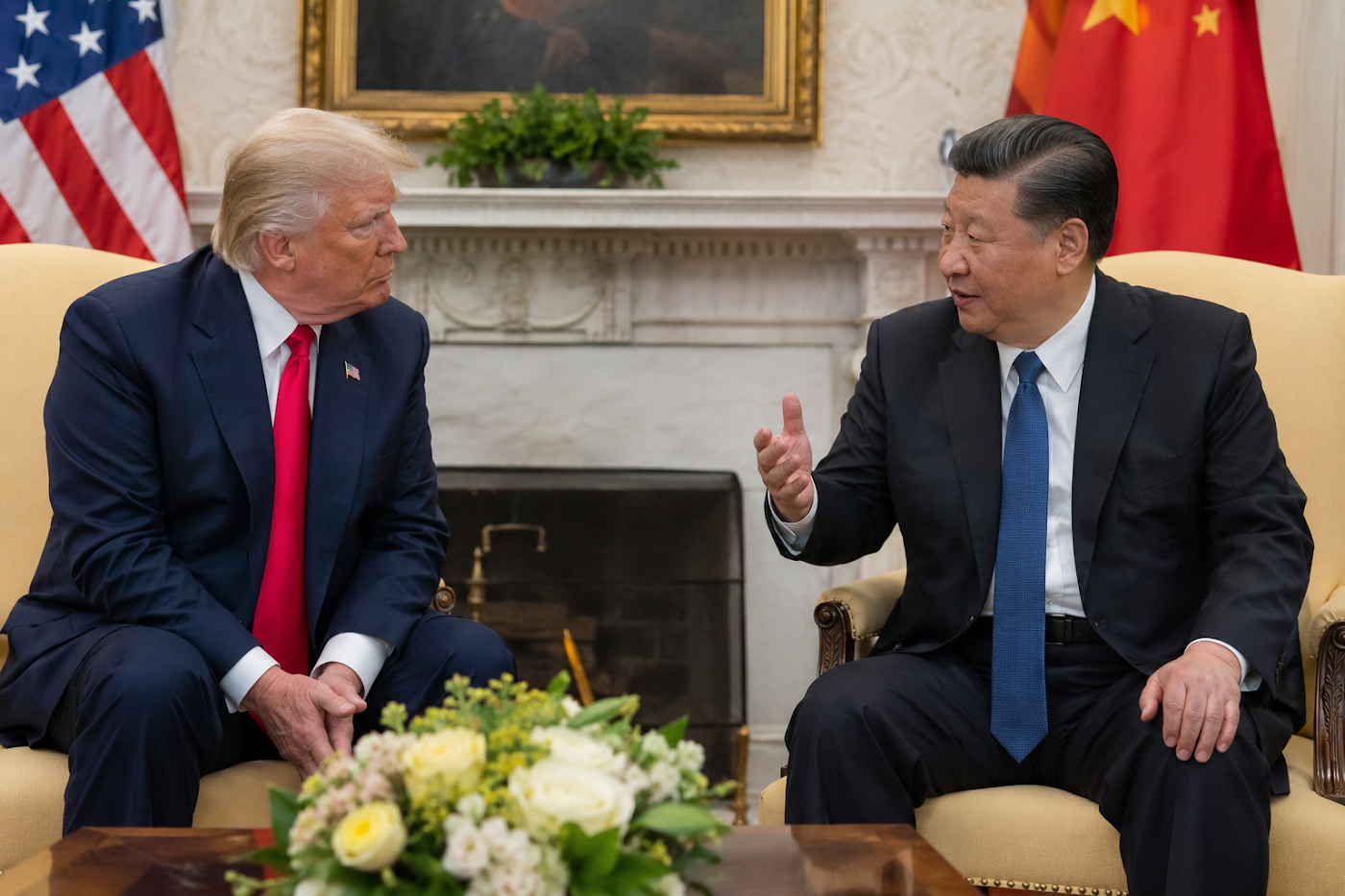
Daybreak Costco beat earnings. But read the fine print.Costco Wholesale (COST) reported fiscal fourth-quarter results after Thursday's close, and the headline numbers were clean. Total revenue came in at $95.72 billion, up 11.1% year-over-year, beating the $94.86 billion consensus. Earnings per share hit $6.75 against expectations of $6.53. Comparable sales rose 9.4% on a reported basis and 6.7% adjusted for gasoline and currency. Digital comparable sales surged 19.5%. For the full fiscal year, revenue crossed $303 billion. Membership fee income grew 7% to $1.85 billion in the quarter alone. Renewal rates held at roughly 90%. Free cash flow expanded nearly 20% for the year. Those are not the numbers of a consumer in retreat. They are the numbers of a company whose value proposition gets stronger the more anxious people feel about prices. When inflation runs hot, Costco's pitch (buy in bulk, pay less per unit, trust the Kirkland label) becomes a survival strategy, not a lifestyle choice. But one line in the report deserves a closer look. Of that $6.75 EPS, $0.15 came from non-recurring IEEPA tariff refunds received during the quarter. Strip that out and the underlying beat narrows from $0.22 to $0.07. Still a beat. But a thinner one. The market signal? Costco is the clearest window into American consumer behaviour right now. The consumer is spending, but spending defensively: groceries over electronics, Kirkland over brands, bulk over impulse. That pattern is consistent with an economy where employment holds but confidence is deteriorating. As long as membership renewals stay above 89%, COST remains a shelter stock. The question for Friday's session is whether the tariff-refund asterisk changes the post-earnings reaction. PREMIER FEATURE I've Read a Lot of Mining Filings. They All Sound the Same.This one stopped me cold. Sitting in the filings of one small American gold company is a phrase I have never seen on a gold project: substantial support and partnership from the Department of War. The Department of War does not partner with gold miners. Except it's partnering with this one. Here's why. The deposit carries a second metal — one China formally banned from export to the United States. The only domestic reserve of it in the country. Gold for the dollar war. The banned metal for the shooting war. Both from the same pit. Washington didn't stop at words. On May 21, 2026, a federal bank voted unanimously to lend nearly $3 billion to build it. Congress got 25 days notice. Nobody objected. When final papers are signed, funding risk goes to zero — and Wall Street re-rates the stock from speculative developer to federally backed strategic asset. The company is about one fiftieth the size of Newmont. Read the filing for yourself Pulse Check The bond market is writing policy nowThursday extended what has become the most consequential bond sell-off of 2026. The 30-year Treasury yield climbed above 5.44%, its highest since 2004. The 10-year held near 5.12%, its highest since 2007. The five-year note auction on Wednesday drew weak demand, accelerating the move. The S&P 500 closed Thursday at roughly 7,600, trimming losses on late reports that US and Iranian negotiators are exploring a phased deal to reopen the Strait of Hormuz. The Dow finished at 51,350, down 0.31%. The Nasdaq Composite dipped to 26,180. What is driving the sell-off is not a single catalyst but a convergence. Oil prices remain elevated, with Brent crude near $107. The September S&P Global PMI showed US business activity at a five-year high, with prices paid accelerating. Fed officials have tilted hawkish since the September 15 rate hike. Traders are now pricing roughly 64% odds of another 25 basis point hike in October and nearly 50% for December. Scott Bessent's Treasury tried to intervene. Earlier this week, buyback operations for longer-dated bonds were expanded. The long end rallied briefly, then gave it all back. Rick Rieder, BlackRock's CIO of global fixed income, captured the mood on Wednesday: "Not a crisis but an eye-opener." The market signal? At 5.44% on the long bond, every growth-stock DCF model in America just got repriced. The AI infrastructure trade, which behaves like a long-duration asset priced in growth-stock clothing, is particularly vulnerable. Vertiv lost $12 billion in market cap last week on no company-specific news, purely a duration repricing. Until the 30-year breaks convincingly below 5.10%, equities are trading against a headwind that the Fed does not fully control. Who Moved the Mic? The summit that was big on pomp and small on substancePresident Trump hosted Chinese President Xi Jinping for a state dinner at the White House on Thursday evening. Jensen Huang and Elon Musk were among the tech executives at the table. Both leaders stressed the importance of AI cooperation. Xi urged the US to oppose Taiwanese independence. Trump called the talks "tremendously productive." Bloomberg's assessment was blunter. The summit has been "heavy on pageantry and platitudes but light on substantive announcements." No trade-war breakthroughs emerged. No timeline on tariff rollbacks. No formal AI cooperation framework. No joint statement on Iran or Hormuz. The visit, Xi's first to Washington in over a decade, concludes today with a final session at the White House before Xi departs. What the summit did produce: a tone. The red-carpet arrival at Joint Base Andrews (the first presidential airport greeting since 1962), the B-1 bomber flyover, the Rose Garden troop review. All of it signalled that Washington wants the relationship to be stable, even if it cannot agree on the terms of stability. The market signal? Traders who positioned for a trade breakthrough are likely to unwind today. The absence of concrete results on tariffs, rare-earth export controls, or AI guardrails leaves the status quo intact: high tariffs, strategic rivalry, and a standstill that benefits neither side's economy. For semiconductor stocks and companies with China-facing supply chains, the summit changed nothing actionable. The real variable for markets this morning is the bond market, not the diplomatic one. FROM OUR SPONSORS The REAL Reason Trump Is Invading Iran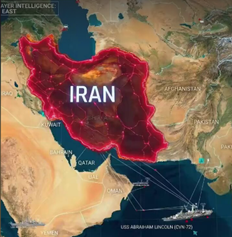
For a moment… Forget about Trump’s ties to Israel. Forget about reports of Iran’s nuclear program. Because my research has led me to believe we’re risking World War 3 with Iran for a completely different reason. Click here to find out what it is. If you have even a single dollar invested in the U.S. stock market, this is going to directly impact you. Discover the reason here. Beyond the Candles Consumer sentiment is about to speak. The bond market should listen.At 10:00 AM today, the University of Michigan releases the final September consumer sentiment reading. The preliminary number, published two weeks ago, came in at 47.8. That was a 7.5% drop from August, well below the 51.0 consensus, and the weakest since May's record low. What made the preliminary read alarming was not the headline but the composition. Year-ahead inflation expectations jumped from 4.0% to 4.6%, the highest since June. Five-year expectations ticked up to 3.4%. The expectations sub-index, which captures how people feel about the future rather than today, plunged 15.7% to 45.8. Survey director Joanne Hsu framed it precisely: consumers anticipate "greater pressures on their pocketbooks to come." Sentiment is now 16% below February levels, before the Iran conflict began, and 13% lower than a year ago. Here is why the final reading matters more than usual. If the 4.6% one-year inflation expectation is confirmed or revised higher, it hands the Fed's hawks their strongest argument for an October hike. The Fed has always said it watches inflation expectations as a leading indicator of actual inflation. A number that shows consumers expect nearly 5% inflation while the policy rate sits at 3.75% is an implicit accusation that policy is too loose. The market signal? A final Michigan print at or below 47 with inflation expectations at 4.6% or above would be the most bearish consumer data point of the month. It would tighten the October hike odds and add pressure to every rate-sensitive sector: housing, autos, consumer discretionary. Conversely, an upward revision toward 50 would offer a modest reprieve. Watch the 10 AM print closely. It lands into a market already softened by three losing sessions. Under the Hood The strange economics of feeding America in wartimeSomething odd is happening inside the Costco earnings report that deserves a second look. Gasoline revenue was a material driver of the quarter's top line. Fuel sales at Costco's 700+ gas stations surged as pump prices climbed, contributing to the headline revenue beat even as unit volumes were roughly flat. This is the Iran war showing up in the most unlikely place: a warehouse club's earnings report. Since the Strait of Hormuz crisis intensified in late August, with the East-West pipeline attack on September 11 shutting down Saudi Arabia's main bypass route, US diesel prices have hit record highs. Brent crude is hovering near $107. Gas prices nationally are approaching $4.50 on average. And Costco, which uses its gas stations as a loss-leader to drive foot traffic, is watching fuel revenue inflate its top line while the underlying consumer is rationing discretionary purchases. The irony is that Costco's strongest quarter of the year is partly a function of the economic pain its own members are experiencing. They are buying gas because they have to. They are buying groceries in bulk because unit economics favour it when prices are rising. And they are cancelling the subscription box, skipping the restaurant, and driving to the warehouse instead. This is what a war-economy consumer looks like when employment is still strong but confidence is collapsing. They are not cutting spending. They are reallocating it, toward necessities, away from luxuries, and into the arms of whichever retailer offers the best unit price. What's Brewing - August durable goods orders drop at 8:30 AM, with July's report showing a 1.1% increase driven by transportation equipment. A strong print would reinforce the manufacturing PMI's message that factories are busy, but the prices-paid component is what the bond market will parse. If ex-transportation orders show softness, it signals that business investment is cooling beneath the headline noise.
- The final day of the Trump-Xi summit wraps this morning with a closing session at the White House. Markets have already discounted the absence of trade breakthroughs, but watch for any last-minute announcement on rare-earth export controls or AI cooperation. Even a symbolic framework could move semiconductor names in the final hour of the visit.
- Brent crude trimmed from $108 to $107 Thursday on reports that US and Iranian negotiators are exploring a phased Hormuz reopening deal. Only 10 commodity vessels transited the strait on Wednesday, well below the 10-day average of 17. If oil breaks below $105, equity markets get a modest reprieve. If it holds above $108, the October hike becomes increasingly difficult to argue against.
- The market signal across all three? This is a morning where the data does the talking. Durable goods at 8:30, Michigan at 10:00, and oil prices in between will determine whether the S&P holds 7,600 or the week's fourth consecutive losing session begins. Position sizing matters into the weekend.
Meme of the Day 
That's it for today's Slate. Data-heavy Friday. Watch the 8:30 and 10:00 prints, then check back tonight for the PM verdict. Today's reply prompt: The 30-year yield or the S&P 500. Which one is lying about where the economy is headed? 3 STOCKS OUR SIGNAL ENGINE SAYS TO WATCH CAREFULLY Three stocks. Three signals. Two weeks later, the story changed.On September 2, we published three market questions around KLAC, HPE and PG&E.
Two weeks later, every one of them produced new evidence. One company delivered record revenue and raised its outlook.
Another saw weakness spread across its entire peer group.
And in the third, a market risk that had only been showing up beneath the surface suddenly became explicit.
Yet none of these stories is finished. That’s why we built Market Tell.
To track the signals that keep moving after the headline is gone — and show you what investors should be watching next. We’ve put the latest analysis into a new FREE Special Report:
3 Stocks at a Major Turning Point See what changed… what still hasn’t been resolved… and the signals we’re watching now. Get the Free Report → |