


Good morning, Slaters!
Tonight, the market gets two answers it has been waiting months for. Both arrive after the closing bell. Both carry the weight of entire investment theses.
Alphabet reports Q2 this evening, the first of the Magnificent Seven to open the books. Wall Street expects roughly $2.89 in EPS on revenue near $117 billion. But the real number is Google Cloud. If Cloud growth holds near the 63% pace it posted in Q1, the AI infrastructure spending cycle gets another quarter of validation.
Then Tesla reports. Record deliveries of 480,000 vehicles are already public. The question is whether Tesla made money on them. Margins, not units, will decide this stock.
Meanwhile, the oil market quietly lost a third chokepoint overnight. Hormuz is contested. The Houthis declared a Saudi blockade. And Kazakhstan halted crude exports through the Black Sea after four tankers were hit by drones in four days.
Three disruptions, three continents, simultaneously. Let's get to the signals.
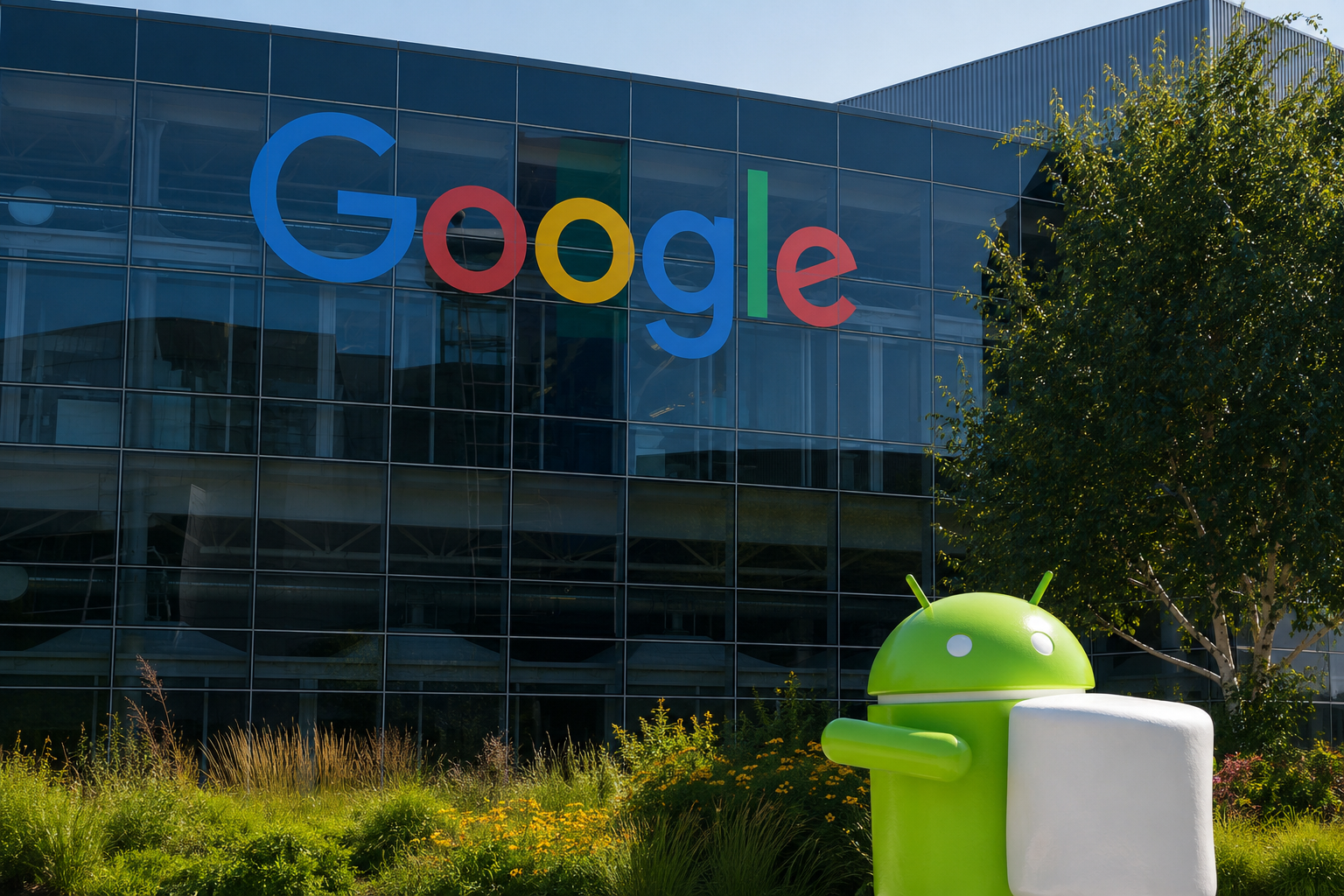
Alphabet's real Q2 number is one most investors won't see coming
Consensus says Alphabet (GOOG) will post about $2.8 in EPS tonight. But at least one major bank expects the reported number closer to $8. The reason: Alphabet's roughly 14% stake in Anthropic has been marked up so sharply since March that the unrealised gain alone could triple headline EPS. Accounting noise, not operating performance. But it will dominate the post-earnings screen.
Strip that away and here is what matters. Google Cloud posted $20 billion in Q1, up 63% year over year, with a contract backlog near $460 billion. If Cloud sustains that pace, it validates every dollar of the $180 to $190 billion in capex Alphabet has guided for the full year. If it decelerates, the conversation shifts to whether $190 billion annually is investment or overshoot.
The stock enters tonight under pressure. A $4.67 billion EU antitrust fine, Gemini 3.5 Pro delays, and last week's tech sell-off have pushed GOOG to $346, roughly 9% below its peak.
The market signal?
If Cloud growth stays above 60%, Alphabet sets a bullish template for Microsoft (MSFT), Meta (META), and Amazon (AMZN) over the next two weeks. If it disappoints, every hyperscaler's spending plan gets repriced by Friday.
The 7 Stocks Built to Outlast the Market
Some stocks are built for a quarter… others for a lifetime.
Our 7 Stocks to Buy and Hold Forever report reveals companies with the strength to deliver year after year - through recessions, rate hikes, and even the next crash.
One is a tech leader with a 15% payout ratio - leaving decades of room for dividend growth.
Another is a utility that’s paid every quarter for 96 years straight.
And that’s not all - we’ve included 5 more companies that treat payouts as high priority.
These are the stocks that anchor portfolios and keep paying.
This is your chance to see all 7 names and tickers - from a consumer staples powerhouse with 20 years of outperformance to a healthcare leader with 61 years of payout hikes.
The report is free for a limited time - go here to get it now.
Tesla's 480,000 cars are already priced. The margins aren't.
Tesla (TSLA) delivered 480,126 vehicles in Q2, up 25% year over year and 74,000 above consensus. Production came in at 451,758, meaning Tesla cleared inventory rather than stacking it. Good. But the stock dropped after those numbers were released. That tells you where the market's attention sits.
Wall Street expects about $0.53 non-GAAP EPS on revenue near $27 billion. The number that matters is automotive gross margin. Last quarter: 4.2% operating margin, down from 5.7% in Q4. BYD sold 557,090 battery EVs in Q2, retaking the global lead. Tesla has to prove that volume growth is not a pricing giveaway.
Options are pricing a 7.6% swing. At a trailing P/E of 349, there is no room for ambiguity.
The market signal?
Watch automotive gross margin and the capex number. Tesla raised 2026 capex guidance to over $25 billion last quarter. Tonight reveals whether that spending is generating returns or buying time.
Trump just slapped 50% tariffs on Canadian milk, hockey sticks, and furniture
On Monday, the White House signed three proclamations under Section 338 of the Tariff Act of 1930, imposing 50% tariffs on a wide range of Canadian goods: dairy, alcohol, construction materials, clothing, furniture, technology, and hockey equipment. Energy, potash, critical minerals, and goods already under Section 232 duties are exempt.
The stated reason: Canada's sustained retaliation. A senior official cited an 81% drop in Canadian purchases of US alcohol since March 2025, Canadian auto tariffs, and restrictive dairy quotas. Canada is now one of only two countries, alongside China, that has chosen escalation over negotiation.
The timing matters. Adding 50% duties on construction materials during an oil price surge and an earnings-heavy week does not make the Fed's inflation math easier.
The market signal?
Watch homebuilder stocks and consumer staples names with Canadian supply chain exposure. These tariffs lock in higher prices on specific consumer categories through year-end.
"A Dangerous Financial Plan Unfolding in D.C. Could Cost You 40% of Your Wealth"
Former Goldman Sachs executive who traded through Black Monday warns this plan is all written down in black and white, spearheaded by a financial insider who infiltrated the Federal Reserve... It's gone "viral" in the hedge fund circles… and yet practically nobody on Main Street understands this financial shock playing out across America. He lays out all the evidence... plus a detailed roadmap for exactly what to do. (And it doesn't require shorting... options... or perfectly "timing the market.")
You must see this critical market briefing today.
This ad is sent on behalf of Stansberry Research, 1125 N Charles St, Baltimore, MD 21201. If you would like to optout from receiving offers from Stansberry Research please click here.
The world just lost three oil chokepoints at the same time
No single headline captures this, because it is happening across three continents at once.
Chokepoint one: the Strait of Hormuz. US forces carried out a tenth consecutive day of strikes on Iran on Monday. Tehran fired back. Roughly 20% of global oil transits Hormuz in normal times. These are not normal times.
Chokepoint two: Bab al-Mandeb. Yemen's Houthis declared a naval blockade on Saudi Arabia on Monday, threatening the southern entrance to the Red Sea. Twelve percent of global trade passes through its 32-kilometre neck. Two Saudi crude tankers reversed course Tuesday.
Chokepoint three: the Black Sea. Four drone strikes hit tankers at the Caspian Pipeline Consortium terminal in four days. Kazakhstan formally halted crude shipments Monday. The CPC carries 80% of Kazakhstan's oil exports and over 1% of global supply.
The standard risk model assumes that when one route closes, oil reroutes through another. But you cannot reroute through the Red Sea when Houthis are blockading it. You cannot reroute through the Black Sea when tankers are getting struck. And you cannot reroute through Hormuz when the US and Iran are exchanging fire daily.
Brent settled at $91.01 on Tuesday, a five-week high. Not a spike. A grind higher reflecting accumulating supply risk without a clean exit. For inflation watchers, this is the variable the Fed cannot control.
I Became a Millionaire Here While I Was Still in College
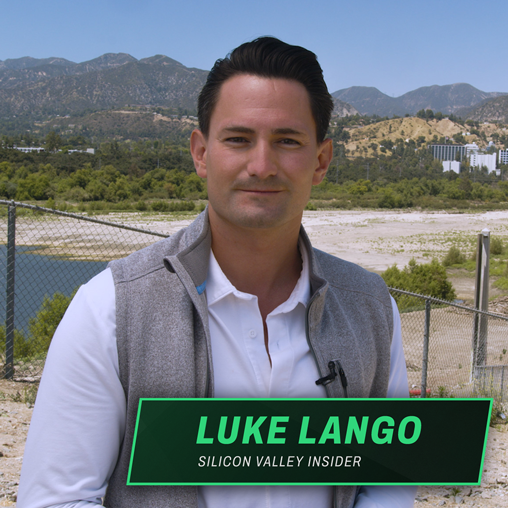
This little-known building in Pasadena is where I learned about a kind of investment most people never get access to. Twenty years later, that same opportunity is wide open again. And it's all because of what's about to happen to OpenAI and Anthropic.
This ad is sent on behalf of InvestorPlace Media at 1125 N. Charles Street, Baltimore, Maryland 21201. If you're not interested in this opportunity, please click here.
- Intel (INTC) announced fresh layoffs in its Data Center and AI Group on Monday, the division that posted 22% revenue growth in Q1 and is Intel's strongest-performing segment. The stock rose 8% on Tuesday. CEO Lip-Bu Tan is cutting headcount in the unit to flatten management layers, not because the business is struggling. Q2 earnings arrive Thursday after the close, and analysts expect $0.22 per share on $14.45 billion in revenue. This is a stock that has tripled in a year. Thursday's print will test whether the turnaround thesis has more room to run.
- The semiconductor rebound on Tuesday was broad and aggressive. Micron (MU) surged 12.2%, Sandisk 14.3% (SNDK), and AMD 8.1%, recovering part of last week's 9% decline in the VanEck Semiconductor ETF. Strong export data from Taiwan and South Korea provided the catalyst, with traders also positioning ahead of Alphabet's Cloud numbers tonight, which serve as a proxy for hyperscaler GPU demand.
- The 10-day ceasefire proposal between the US and Iran is the single most important unsigned piece of paper in global markets right now. Mediators presented the framework on Monday. If it takes hold, Brent drops below $85 and inflation expectations loosen. If it collapses, oil has a clear path above $95. Neither outcome is priced in with conviction.
- The market signal across all three?
- The next 48 hours deliver Alphabet and Tesla earnings, an Intel turnaround test, and a ceasefire deadline. That is as dense an event window as any week this year. Positioning matters more than conviction right now.

That's it for today's Slate. Buckle in for after the bell.
Today's reply prompt: Alphabet or Tesla: which earnings call are you watching more closely tonight, and what's the one number that would change your position?


