Good morning, Slaters!There is an economy where businesses are hiring at the fastest clip in four years, factory output is surging, and services activity just printed its strongest reading since 2021. There is another economy where the 10-year Treasury yield broke above 5.12% for the first time since 2007, stocks sold off sharply, and inflation expectations are climbing again because oil snapped back above $103 on a single defiant speech at the United Nations. Both of these are the same economy. And that contradiction is exactly what makes this week so difficult to trade. Wednesday's S&P Global flash PMI came in at 58.4 for September, the strongest composite reading in over five years. Manufacturing jumped to 57.0. Services hit 58.7. Employment growth reached its fastest pace since mid-2022. Chris Williamson, chief economist at S&P Global, said the data point to annualized GDP growth of roughly 5%. Normally that would be excellent news. But the prices-paid component surged to its highest since October 2022, driven by fuel and transport costs. And the bond market read the whole package as one thing: more inflation, more hikes, longer pain. The S&P 500 fell 0.8%. The Nasdaq dropped 0.9%. The Dow shed 352 points. And this morning, Brent crude is hovering near $102 after Iran's president told the UN General Assembly that Iran "cannot be made to surrender." Today brings weekly jobless claims, Darden Restaurants (DRI) before the bell, and Costco (COST) after the close. Both are consumer-facing bellwethers that will tell us whether the vibepression is finally reaching the register. 
Daybreak The PMI that spooked the bond marketThe S&P Global US Composite PMI jumped to 58.4 in September from 56.0 in August. Manufacturing hit 57.0, the highest since May 2022. Services rose to 58.7, the strongest in over five years. Employment growth reached its fastest since June 2022. Williamson's summary: the data imply 5% annualized GDP growth. But the part that moved yields was the prices component. Input cost inflation hit its highest since October 2022, driven by fuel and transport costs tracing directly to the Hormuz disruption. Supplier delivery times lengthened to their worst since July 2022. Output prices accelerated. The Fed's paradox: activity is hot enough to justify restrictive policy, but the inflation is supply-driven, not demand-driven. Rate hikes do not reopen shipping lanes. The 10-year Treasury yield surged to 5.12%, its highest since 2007. The 30-year sits near 5.30%. Credit-sensitive AI hyperscalers were hit hardest: Alphabet (GOOGL) fell 4.7%, Oracle (ORCL) dropped 3.1%, Amazon (AMZN) lost 2.2%, Nvidia (NVDA) slid 1.5%. The market signal? Futures price roughly 35% odds of an October hike. Until oil prices structurally decline or Hormuz reopens, every strong activity report doubles as an inflation report. The Fed is trapped between the boom and the burn. PREMIER FEATURE 7 AI Stocks to Lead the Next DecadeAI is fueling the Fourth Industrial Revolution – and these 7 stocks are front and center. One of them makes $40K accelerator chips with a full-stack platform that all but guarantees wide adoption. Another leads warehouse automation, with a $23B backlog – including all 47 distribution centers of a top U.S. retailer – plus a JV to lease robots to mid-market operators. From core infrastructure to automation leaders, these companies and other leaders are all in 7 AI Stocks to Invest in Today. Free today, grab it before the paywall locks. Pulse Check Oil snaps back. The ceasefire trade reversed in 90 minutes.For five straight sessions, Brent crude had been falling. Oil dropped below $100 on Tuesday for the first time since early September after Trump called his three-hour meeting with Iranian officials "very productive." Then Iran's President Pezeshkian took the UN podium and erased the optimism in 90 minutes. Iran "cannot be made to surrender," he said. He rejected nuclear constraints and opposed any US military presence. Brent reversed hard, closing up 3.9% at $103. WTI settled at $92.16. This morning, oil is easing but holding above $102. Saudi Arabia is preparing to restart its East-West pipeline to bypass Hormuz. The API reported a 1.8-million-barrel crude stockpile increase. But Bank of America raised its second-half Brent forecast this week, warning prices could hit $150 if hostilities escalate. The market signal? Every session this week has been a coin flip between "deal is close" and "deal is dead." Today brings Trump's meeting with Chinese President Xi, with energy trade a likely topic. Watch whether crude holds $100 on Brent. Below that, the inflation narrative eases. Above it, the Fed's calculus gets harder by the day. Who Moved the Mic? Zuckerberg just turned Muse into a shopping agentMark Zuckerberg took the stage at Meta Connect on Wednesday and made a claim that, if it lands, rewrites the economics of consumer AI: Muse will be free for most users, and Meta Platforms (META) will profit by taking a small transaction fee every time the agent buys something on your behalf. The retail partnerships announced at Connect: Walmart (WMT), Best Buy (BBY), Gap (GAP), Sephora, Wayfair (W), Expedia (EXPE), and soon Instacart (CART). Over 1,500 developers applied to build connectors for Muse in less than a week. Muse can now operate apps on Mac computers autonomously. And a new handheld device called Muse Charm, shipping in December, lets users interact with their agent without touching a phone. The business model shift is the story. Meta generates nearly all its revenue from advertising. Muse opens a second lane: transaction fees. Morgan Stanley estimates Muse could hit $1.3 billion in annual revenue by 2028. The app has overtaken ChatGPT as the most downloaded free app on the US App Store, passing 2.5 million downloads in two weeks. META stock is up more than 20% since Muse launched September 8. Notably absent from the partner list: Amazon (AMZN). Amazon has blocked Muse from browsing its store, setting up what could become the defining platform standoff of the agentic AI era. Amazon controls e-commerce. Meta controls the agent that users increasingly trust to shop for them. Walmart's decision to partner with Muse instead of waiting looks like a deliberate flanking move. The market signal? If Muse's transaction-fee model works at scale, it fundamentally changes the competitive math for Google Search, Amazon's marketplace, and every performance-marketing company built on click-based advertising. The first real revenue data will not arrive for quarters. But the platform dynamics are reshaping right now. Beyond the Candles Costco and Darden: the consumer's report card lands todayTwo companies report today that together tell you almost everything you need to know about the American consumer right now. Darden Restaurants (DRI) reports Q1 FY2027 before the open. Analysts expect $2.05 EPS on $3.21 billion in revenue, representing roughly 5% growth. Darden operates Olive Garden, LongHorn Steakhouse, Ruth's Chris, and Cheddar's Scratch Kitchen. This is the casual dining bellwether. In Q4, LongHorn anchored performance with 9.5% same-restaurant sales growth. The question today: did that hold through August as gasoline prices climbed and consumer sentiment stayed near record lows? Costco (COST) reports Q4 FY2026 after the close. Consensus is $6.53 EPS on $94.86 billion in revenue. The stock has pulled back 18% from its May highs. Net sales already came in at $93.9 billion, up 11.3%, so the suspense is profitability, not revenue. Membership fee revenue hit $1.33 billion last quarter, up 14%, with renewals near 92%. These two reports together answer a specific question: is the consumer trading down (good for Costco, bad for casual dining), or is discretionary spending holding across both tiers? The market signal? If Darden's same-store sales decelerate meaningfully while Costco's traffic accelerates, the trade-down thesis firms up, and that has direct consequences for department stores, apparel, and mid-tier restaurants heading into the holiday quarter. Under the Hood Japan just reminded the world what a bond-market accident looks likeWhile American investors were watching PMI data, something happened in Tokyo overnight that deserves attention. Japan's 10-year government bond yield jumped to a 30-year high as markets reopened Thursday after a three-day holiday, tracking the Treasury rout. Japan is the largest foreign holder of US Treasuries at roughly $1.1 trillion. When Japanese yields rise, there is a structural incentive for institutional investors to repatriate capital, selling Treasuries and buying domestic bonds. That selling pressure lands on top of already-difficult US supply dynamics. The Bank of Japan is caught in its own version of the Fed's trap. Domestic inflation is above target. Raising rates too aggressively could crash a bond market the central bank spent a decade propping up. The yen is near a three-week low. The market signal? The bond sell-off is not American. It is coordinated. US, UK, Japan, and eurozone long-end yields are all surging simultaneously. The common denominator is not any single central bank. It is the global repricing of sovereign risk and inflation expectations. That repricing is not done. SPONSOR SPOTLIGHT Satellite Confirms: Elon Musk Activating Strange 'Dark Energy' Across U.S. South
Confirmed by satellites 300 miles above the Earth's surface... Elon Musk is rolling out a breakthrough technology that could replace our need for foreign oil and ignite a $10 trillion boom a small group of stocks. Click here to learn how you can invest in this before it becomes mainstream. What's Brewing - Weekly jobless claims land at 8:30 a.m. ET this morning. Last week's print came in at 196,000, the lowest since a 60-year record of 189,000 in July. The four-week average has broken below 205,000. If today's number stays under 200,000, it hands the hawks another data point and makes the "full employment" case impossible to argue against. A surprise above 215,000 would be the first counter-signal in weeks.
- Trump meets Chinese President Xi at the UN today with trade expected to dominate the conversation. Canada-US tariff escalation is already live. A China trade de-escalation signal from the Xi meeting would be bullish for industrials and bearish for the dollar. No progress means the two-front trade war narrative hardens heading into midterms.
- McDonald's (MCD) led the Dow's declines Wednesday, falling 4.9%, on what appears to be a consumer pullback from fast-food price increases. That is the kind of company-specific datapoint that tells a macro story. If McDonald's, the most price-accessible restaurant chain in America, is seeing demand destruction, the consumer is weaker than aggregate spending data suggests.
- The market signal across all three? The labor market is airtight. The geopolitical calendar is stacked. And the consumer may finally be cracking at the edges. Today's earnings from Darden and Costco will tell us whether that crack is widening or holding.
Meme of the Day 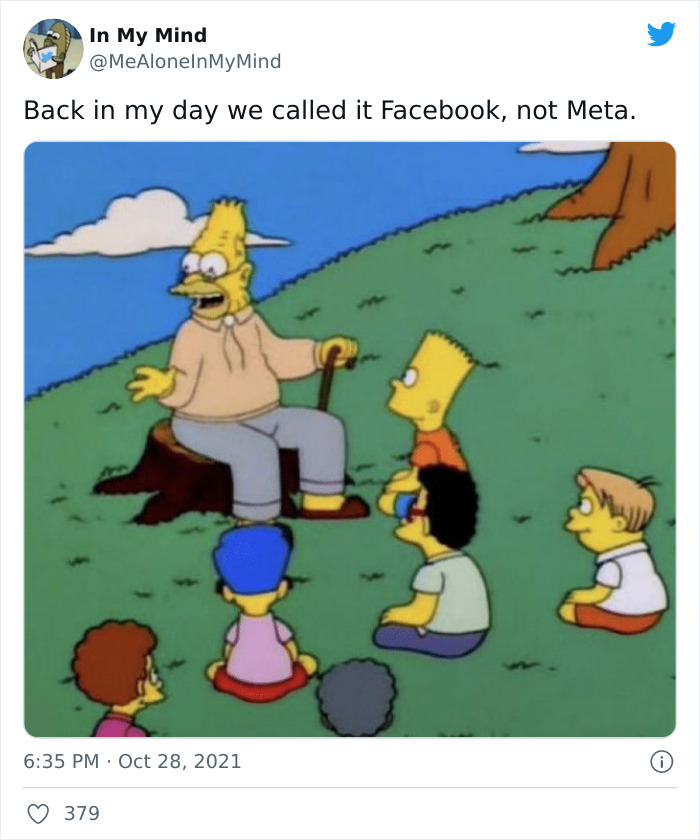
That's it for today's Slate. Stacked session ahead. Jobless claims at 8:30, Darden at the open, Costco after the close, and Trump-Xi at the UN. Stay close. Today's reply prompt: Costco or Darden: which report tells you more about where the consumer is headed? 3 Stocks at a Major Turning PointSomething unusual is happening beneath the surface of three widely followed stocks.
In each case, the fundamentals are saying one thing... while institutional activity, management signals or the options market are saying something else. That kind of disagreement can matter. Because when the evidence stops lining up, the next move in the story often comes down to a handful of signals most investors never think to watch. Our new FREE Market Tell Special Report breaks down three of these situations, and shows you exactly what we’re watching next. Get the Free Report: 3 Stocks at a Major Turning Point → | 


