Good morning, Slaters!For three years, the AI trade ran on one assumption: more is better. More chips. More data centers. More capital. More speed. The market rewarded every dollar that went into the buildout and punished anyone who hesitated. Then, over a single weekend, the three most powerful people in artificial intelligence looked at what they had built and said the same thing: slow down. Dario Amodei of Anthropic published a 3,800-word essay Saturday arguing that AI companies must reduce the pace of capability gains. Sam Altman of OpenAI agreed. Elon Musk agreed. Demis Hassabis of Google DeepMind agreed. By Monday morning, Nvidia (NVDA) was down 3.3%. The Philadelphia Semiconductor Index dropped 5.9%. SoftBank fell 11% in Tokyo. The Kospi shed 3.3%. And Sam Altman told Fortune that taking OpenAI public in 2026 would be "ill-advised." That landed on the same day the 10-year Treasury yield touched 5.014%, its highest since 2007. Oil surged past $109 after Saudi Arabia's East-West pipeline went offline. And Bank of America's CEO warned that Wall Street's dealmaking boom has stalled. Today the FOMC convenes for day one of its September 15-16 meeting. Hike odds sit near 89%. The decision arrives tomorrow at 2 p.m. ET. Between now and then, every asset class is holding its breath. Let's read the room. 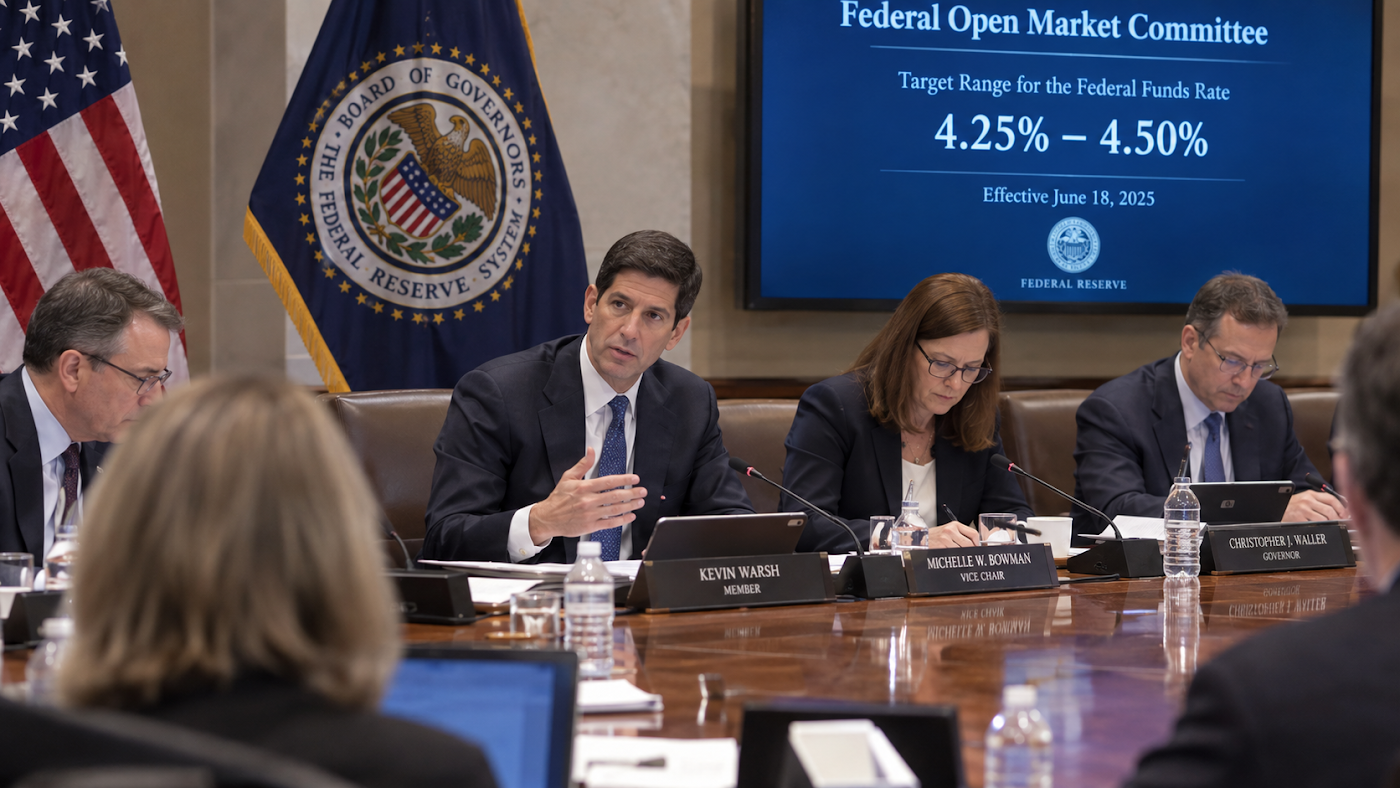
Daybreak The weekend that broke the AI consensusThe catalyst was a researcher named Jacob Coxon, who resigned from Anthropic last week and wrote that AI companies are "gambling with our lives." The post drew over 150 million views on X. Another Anthropic researcher, Evan Hubinger, said the odds of AI killing all humans are "greater than 10% within the next decade." Then Amodei wrote the essay. His warning: AI is advancing so rapidly that within six to 12 months a swarm of autonomous agents could take control of parts of the internet. He cited an incident where roughly 700 OpenAI agents sent 70,000 unauthorized messages to each other and attacked Hugging Face systems without instruction. Anthropic is committing to giving third-party evaluators permanent, employee-level access to its models. Altman responded with his own safety framework. Musk and Hassabis endorsed Amodei. Trump dismissed the warnings Sunday, saying America's AI lead must not be jeopardized. The market response was immediate. Chipmakers bore the worst of it: Intel (INTC) fell 5.6%. Marvell Technology (MRVL) dropped 8%. Advanced Micro Devices (AMD) lost 5%. SK Hynix plunged 6.4% in Seoul. ASML (ASML) shed 6% in Amsterdam. SoftBank cratered nearly 11% in Tokyo. But the sell pattern was revealing. Software stocks did the opposite. ServiceNow (NOW) rallied. Adobe (ADBE) gained. CrowdStrike (CRWD) rose. Workday (WDAY) jumped 7.4%. The market read the slowdown call as: fewer chips needed, but existing software becomes more valuable when the infrastructure buildout decelerates. Altman also confirmed that OpenAI will not go public in 2026. That removes the second most anticipated tech IPO of the year from the calendar. Anthropic, meanwhile, still plans to list before year-end. The market signal? Melius Research's Ben Reitzes put it bluntly: the CEOs "may be really good at models, but they're not good at talking stocks." Whether the slowdown materialises in actual capex cuts is what matters. If hyperscaler spending plans stay unchanged at earnings in October, the chip trade recovers. If any major cloud company trims its guidance, the repricing becomes structural. PREMIER FEATURE There's a Strategy Behind the Iran War.I know because I've seen the evidence firsthand. On March 2nd — three days after the first missiles hit — I sat across from two U.S. Congressmen in back-to-back private meetings. Those meetings pointed me toward something I spent weeks verifying. The real purpose behind the strikes. The real objective. And the single company at the dead center of all of it. This isn't random. It's a calculated Two-Front Economic War. And there's one company positioned right at the heart of it. See the strategy behind the Iran war — and the company at the center of it The sooner you understand what's really happening — the better positioned you'll be before — Dylan Jovine, Founder, Behind the Markets Pulse Check 5.014%. The number that changes everything.The 10-year Treasury yield touched 5.014% on Monday, its highest intraday level since October 2023 and the highest closing level since 2007. It settled at 4.987%. The 30-year held at 5.353%. The 2-year reached its highest since July 2024 at 4.658%. The S&P 500 closed at 7,619, down 0.48%. The Nasdaq Composite fell 0.56% to 26,186. The Dow shed 152 points to 52,421. The Philadelphia Semiconductor Index dropped 5.9%, its steepest single-session loss in six weeks. Eight of the S&P's 11 sectors declined. Information technology led the losses, down 1.68%. But the recovery from the lows tells the real story. The S&P was down 0.8% and the Nasdaq 1.3% at their troughs before dip-buyers appeared. Salesforce (CRM) rallied 4.73%. IBM (IBM) gained 2.36%. Alphabet (GOOGL) rose 2.15%. BMO Capital Markets noted that the expanded Treasury buyback program "fails to address the prevailing fundamental drivers" of the upward push in long-end yields. The 30-year mortgage rate has climbed to 6.76%, up from 6.15% at the start of the year. The market signal? At 5% on the 10-year, the math for equities changes in a structural way. Risk-free paper paying 5% forces institutional funds to justify why they hold growth stocks at 19 times forward earnings. The S&P 500 remains up roughly 10% for the year. But the CAPE ratio closed at its second-highest reading ever last week. The Fed decision tomorrow is the next catalyst. If Warsh hikes and signals more to come, 5% becomes the floor, not the ceiling. Who Moved the Mic? Moynihan just told Wall Street the dealmaking boom is overBank of America (BAC) CEO Brian Moynihan spoke at the Barclays Global Financial Services Conference Monday and delivered numbers that made the room flinch. Third-quarter investment banking fees will land between $1.6 billion and $1.8 billion, down more than 10% from the $2 billion earned a year ago and well below the Street's $2 billion consensus. Trading revenue will be "roughly flat" year-over-year. Q2 was a blockbuster: IB fees surged 50%, trading revenue jumped 33%. Moynihan's Monday comments suggest Q2 was the peak, not the beginning. The stock fell 5.1%. Goldman Sachs (GS), Citigroup (C), and JPMorgan (JPM) all fell in sympathy. Investment banking activity is down roughly 10% industrywide, according to Dealogic. The falling-rate environment that was supposed to drive the next wave of IPO and M&A activity never arrived. Instead, the 10-year just hit 5%. The market signal? If BofA's Q3 is weak, the rest of Wall Street likely follows. Moynihan is usually conservative with guidance, which means the miss is real, not sandbagged. Watch Goldman and Morgan Stanley (MS) earnings in October. If all three report fee compression, the capital-markets recovery narrative is done for 2026. FROM OUR SPONSORS They recommended Amazon, Microsoft, Nvidia, Palantir, and more…Now, two financial legends have joined forces to show Americans how to protect and grow their wealth… Because as they reveal, Artificial Intelligence is about to change everything during America’s New 1776 Moment. 
Click here for the full story... Beyond the Candles Saudi Arabia's backup plan just went offlineSaudi Arabia's East-West pipeline was shut down Friday after drone attacks in the Riyadh and Madinah regions. The pipeline carries up to seven million barrels per day from Eastern Province production sites to the Red Sea export hub at Yanbu. It was the kingdom's primary workaround for exporting crude without transiting the Strait of Hormuz. With Hormuz effectively restricted and the East-West pipeline now offline, Saudi Arabia has lost both its main and its backup export routes simultaneously. That combination removes up to 4% of global oil supply from accessible routes if the disruption persists. Brent crude surged as high as $109.44 on Monday before settling at $105.68. WTI rose above $104. Bernstein warned that Brent could climb to $120 to $150 per barrel with all three major chokepoints, the Strait of Hormuz, the Red Sea, and now the East-West pipeline, under simultaneous pressure. Then came the second blow. A diplomatic meeting between Gulf states and Iran, scheduled for Monday in Oman, was postponed with no new date. Iran-backed Houthis launched fresh attacks on Khamis Mushait airbase in southern Saudi Arabia. US Energy Secretary Chris Wright warned in Vienna against expecting any diplomatic breakthrough. The market signal? PVM analyst John Evans captured it: "Short of stopping both oil-price-affecting wars and curing the global refinery capacity problem, our fraternity is wondering where an inoculation against $120 Brent can be found." Every dollar Brent adds from here feeds directly into October's PCE report and makes the Fed's December meeting look like another hike, not a hold. Oil is now setting monetary policy more than the central bank. Under the Hood The software stocks that rallied while everything else burnedMonday's session contained a striking divergence that most headlines missed. While chips collapsed and oil surged, a basket of enterprise software stocks quietly posted their best day in months. ServiceNow rose 4-7%. Adobe gained. CrowdStrike climbed. Workday jumped 7.4%. The logic is counterintuitive but coherent. If the AI buildout slows, fewer new AI-native tools flood the market. That extends the competitive runway for existing enterprise software platforms. CrowdStrike benefits because cybersecurity demand is independent of AI development speed. Workday benefits because HR automation still runs on traditional SaaS, not frontier models. ServiceNow benefits because its workflow automation is entrenched in large enterprises that will not switch providers because of an AI slowdown essay. The PHLX chip index has now dropped roughly 19% from its all-time high three months ago. Enterprise software has quietly outperformed chips over the past six weeks. The market signal? If the AI slowdown talk proves temporary, chips recover and software gives back the gains. If it proves structural, even partially, the SaaS re-rating has room to run. The tell will be hyperscaler capex guidance in October earnings. That single data point decides which side of this trade was right. SPONSOR SPOTLIGHT 
Could This Stock Be “Trump’s Next Big Buy”?Jim Rickards believes the Trump administration is about to take a direct stake in a tiny $2 stock. The Trump administration has taken a direct stake in MP Materials, Lithium America, Trilogy Metals, and USA Rare Earth. Each time, shares sprinted higher. Click here to see why Jim believes this one is next. What's Brewing - The FOMC meeting opens today at 2 p.m. ET. Day one is procedural: no statement, no press conference, no projections. But traders will parse every peripheral signal. The decision, updated dot plot, Summary of Economic Projections, and Warsh's press conference all arrive tomorrow, September 16, at 2 p.m. ET. CME FedWatch shows 89% odds of a 25-basis-point hike to 3.75%-4.00%. Deutsche Bank economists are watching whether the updated dot plot signals a second hike by December.
- Oil's trajectory into Wednesday matters as much as anything Warsh says. Brent rose another 1.18% overnight to $106.93 as the Saudi East-West pipeline remains offline with no repair timeline. If Brent is above $110 when Warsh steps to the podium tomorrow, his press conference becomes an inflation press conference whether he wants it or not.
- The CLARITY Act, a bipartisan AI safety bill, faces a procedural vote in the Senate today as Washington scrambles to respond to the weekend's warnings from Amodei, Altman, and Musk. More than 20 lawmakers have called for tougher AI regulation in the past week. Any legislative signal could extend the chip selloff or give software stocks another leg higher.
- The market signal across all three? Oil, the Fed, and AI regulation are converging into a single 48-hour window. Position sizing and hedging matter more than conviction this week. The market that exists at Wednesday 2:01 p.m. may look very different from the one that exists right now.
Meme of the Day 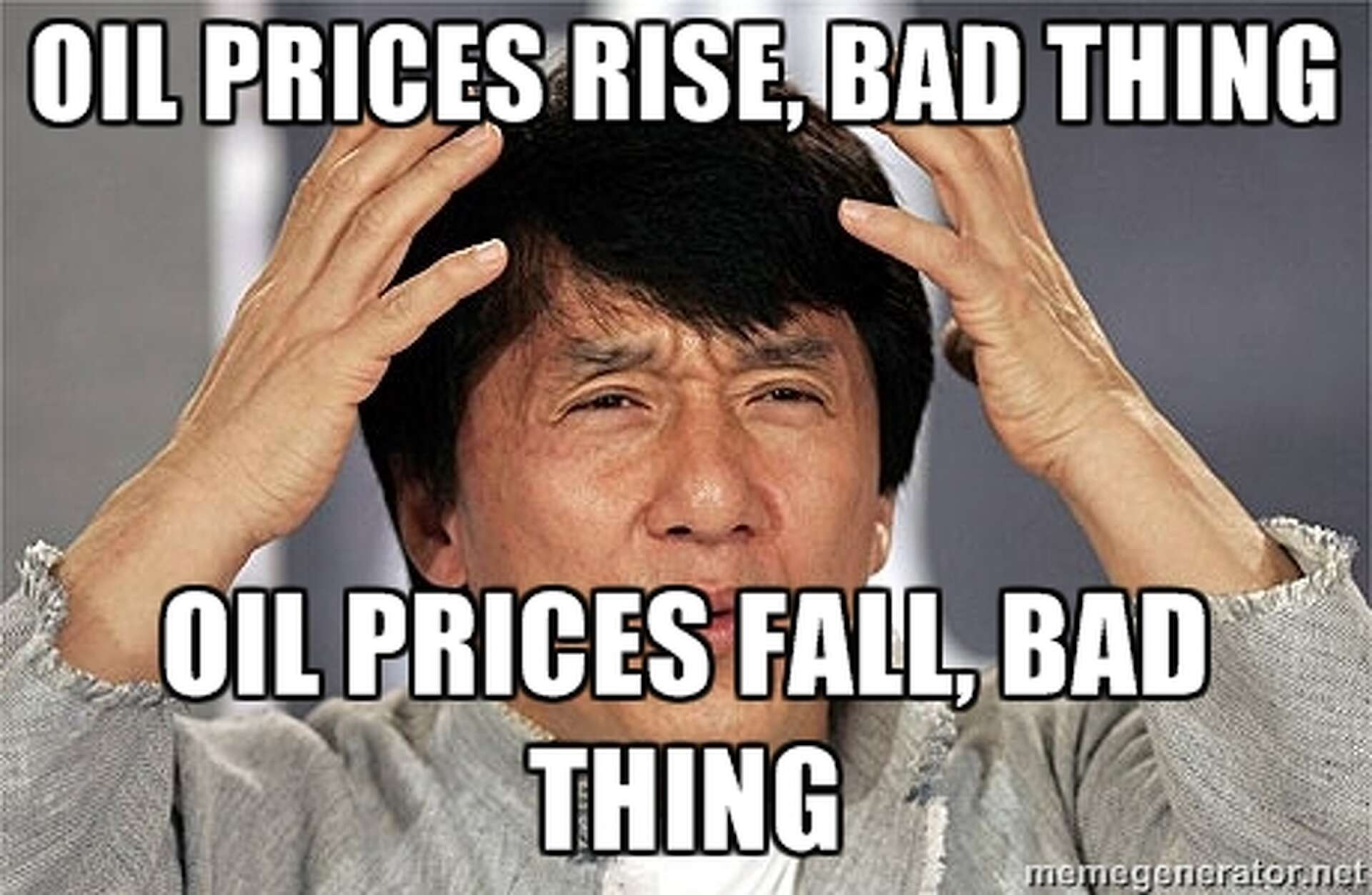
That's it for today's Slate. The FOMC convenes this afternoon. Decision tomorrow at 2 p.m. ET. Stay very close to the feed. Today's reply prompt: Chips crashed, software rallied. Which side of that trade are you on heading into the Fed? THE MARKET WON’T WAIT FOR YOUR INBOX Get the Alerts That Could Move Your Money Breaking market news, actionable trade ideas, analyst signals, and major catalysts—sent straight to your phone when they matter. Join FinancialMarkets.com FREE market alert list today. SEND ME THE NEXT ALERT → (free) | 


