Good morning, Slaters!Congress changed hands overnight. Markets took two different messages from it. Democrats won both chambers of Congress. Bonds and the dollar moved as if that meant restraint: fewer big tax cuts, less new debt. The 10-year slipped toward 4.92%, the dollar index fell about half a percent, and gold jumped back above $4,000. Stock futures read it as risk. Nasdaq 100 futures fell more than 2% as results came in, with AI oversight among the worries. Then they turned higher before dawn. AMD (AMD) was part of that turn, at least overnight. It guided about $800 million above forecasts. Its free cash flow fell 64%. Meta (META) paid up to 7.53% to borrow $15 billion the same evening. AI demand passed its tests last night. The bill keeps growing, and Congress may now want to read it. Let's get into it. 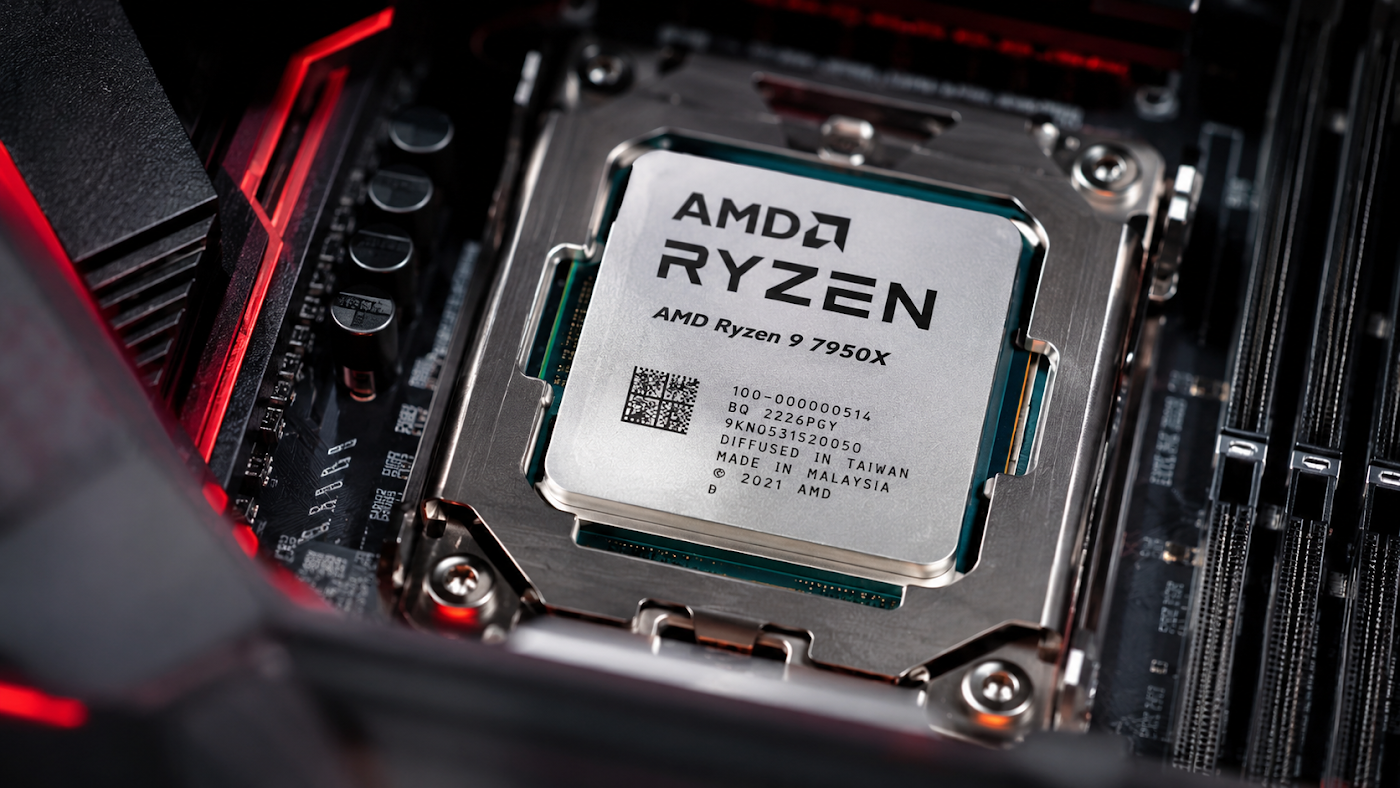
Daybreak Democrats took Congress. Bonds heard restraint. AI stocks heard oversight.Democrats won control of the House and the Senate on Tuesday. Republicans went in holding the Senate 53 to 47 and the House 219 to 214. Democrats flipped seven Republican-held Senate seats, including Texas, North Carolina, South Carolina and Maine, according to the AP, and lost none. Some races are still being counted. Prediction markets had leaned this way, pricing Democratic Senate control near 76 cents on Election Day morning. Much of the result was expected. The overnight stock selling did not last. Now read the split. Bonds, the dollar and gold took one message and held it through the night. The 10-year yield was near 4.92%, about 3 basis points below Tuesday's 4.95% close. The dollar index lost about 0.55% to 101.19. Gold futures rose about 2.8% to about $4,051 an ounce, and silver gained about 4.4%. Stocks changed their minds. Nasdaq 100 futures fell more than 2% at the low. Strategists in Tokyo said investors were pricing tighter oversight of the AI build-out, the trade that has led U.S. markets for most of the year. Before the open, S&P 500 futures were up about 1%. Two readings are now live. In one, divided government is a brake: big tax, spending and tariff bills get harder, so Washington issues less new debt. In the other, it is a new risk, with AI hearings, funding deadlines and debt-limit fights back in play. The market signal? Bonds appear to be pricing less new borrowing. Stocks appear to be pricing more scrutiny of the one trade that has carried the index. Both can be right, but they pay out on different clocks. If the 10-year holds below Tuesday's 4.95% close through today's Treasury refunding plan, the restraint read is winning. If the Nasdaq gives back its overnight reversal in regular trading, oversight just became a line item in AI valuations. PREMIER FEATURE Our proprietary research has uncovered a serious red flag for these 20 stocks. Each one has been given a rare SELL signal or downgrade from multiple Wall Street firms. And you’ll be shocked at some of the big-name stocks on the list. I’m talking about major consumer goods giants…well-known financial stocks…a fintech darling…a blue chip stalwart in the Dow Jones Industrial Average…a supposedly “safe” utility…energy stocks and more. Millions of investors own these stocks, so I’m issuing this alert and making the full list of all 20 stocks completely FREE for a limited time. Pulse Check Bonds rallied on the vote. The December hike bet went up anyway.One market moved the wrong way overnight. Kalshi's contract on a quarter-point Fed hike in December traded near 80 cents early Wednesday, up from 74 cents on Tuesday afternoon. Treasuries rallied at the same time, and the 2-year slipped to about 4.61%. Lower yields usually travel with lower hike odds. This time they split. Europe is showing the same tension. Euro-area inflation rose to 4.0% in October, as expected, with core steady at 2.5%. Sweden's Riksbank raised its rate a quarter point to 2.00%. Yet France's service sector shrank at its fastest pace since May. Its services index was revised down to 46.2 from a flash 48.4, dragging the euro-area composite to 51.7. Read those numbers together. Central banks are still tightening into energy-driven inflation while parts of the economy slow. Several ECB policymakers have signaled that a December increase is likely. Back home, today's data decide which U.S. market blinks first: ADP private payrolls, then the ISM services index, where economists expect 54.8. The market signal? The bond rally is a fiscal trade. The hike bet is an activity trade. A December hike would lift short-dated yields however restrained Congress turns out to be. A services print well above 54.8, followed by firm payrolls, would leave the long-end rally exposed. A soft pair would make 80 cents look expensive. Who Moved the Mic? Lisa Su promised acceleration. The cash flow statement sent the invoice."We expect growth to accelerate further in the fourth quarter as we scale Helios and 'Venice' production," said Lisa Su, chief executive of AMD (AMD). She had the numbers behind her. Revenue rose 45% to $13.38 billion, against $13.09 billion expected. Adjusted earnings were $2.09 a share, against $1.95. Data-center revenue rose 97% to a record $8.5 billion. The guide was bigger. AMD expects about $17 billion of fourth-quarter revenue, plus or minus 3%, against forecasts near $16.2 billion. That is about 27% sequential growth. The stock had lost about 19% in the three sessions through Monday and won back 3.7% on Tuesday before the report. It then traded as much as 7% higher overnight and gave back most of that gain before the open. Then came the line that matters. Free cash flow fell 64% to $554 million, even as net income nearly doubled to $2.43 billion. Inventories rose about $3 billion in the quarter, to $11.46 billion. Receivables grew about $1.9 billion. Long-term debt climbed to about $7.1 billion from $2.3 billion at the end of 2025. AMD was not alone. Supermicro (SMCI) nearly quadrupled revenue to $19.9 billion, and its operations used $434 million of cash. Arista Networks (ANET) grew 58.5% and outlined about $18.5 billion of 2027 sales. Both traded higher before the open, while smartphone-heavy Skyworks (SWKS) fell about 13%. The market signal? Su's sentence moves the debate, and the fade before the open suggests traders heard it. For AI hardware, demand is no longer the question. Conversion is. A company that added $3 billion of inventory in a quarter needs every large customer to take delivery on schedule. Watch year-end inventory and receivables against the $17 billion guide. If cash catches up with profit, the beat was clean. If it doesn't, the next customer delay lands on a much fuller warehouse. FROM OUR SPONSORS Wall Street veteran goes ALL in on Bank of Elon
A 20-year Wall Street veteran – who worked at a $10 billion hedge fund – is putting ALL his money in Elon Musk's new bank. He says he can see the writing on the wall for traditional banks. And he's not the only one. See if you should join him here (not just for the 6% yield). This ad is sent on behalf of InvestorPlace Media at 1125 N. Charles Street, Baltimore, Maryland 21201. If you're not interested in this opportunity, please click here. World, Uncomplicated Iran's words got harder. Oil got cheaper.Iran's national security leadership called the U.S. reply to its seven conditions on the Strait of Hormuz unconvincing and unsatisfactory. On Tuesday, President Trump confirmed the Qeshm Island strike first reported Monday night. He told Fox News that U.S. forces hit a newly built anti-aircraft facility, called it a "minor attack" and played down talk of a wider return to fighting. Brent still edged lower. January Brent was near $102.20 early Wednesday, down about 1.4%, after settling about $1.17 lower on Tuesday. U.S. crude was near $95.10, down about 1%, after a $96.09 settle. Yesterday we flagged WTI back above $100 as the sign the war premium was returning. It is not close. The supply data argued for higher prices too. The American Petroleum Institute reported a 5.27 million barrel drop in U.S. crude stocks last week, against forecasts for a 2.1 million barrel build. Qatar, which is mediating, says both sides remain committed to talks. A weaker dollar and the U.S. election also moved oil overnight, so no single headline explains the session. The market signal? The premium is draining on diplomacy, and that makes it fragile. Brent above $100 still carries plenty of war risk, and it can rebuild fast if the Qatar track stalls. The government's inventory report lands today. If it confirms a large draw and Brent still drifts toward $100, traders have priced the talks over the tankers. A formal Iranian counterproposal through Qatar is the next real test. Beyond the Candles Meta's stock rose. Its borrowing cost told a different story.Meta (META) shares rose 2.4% on Tuesday to $621.03. The bond desk had a different day. Meta sold $15 billion of bonds in five parts, at yields from 5.85% to 7.53%. Its 10-year notes yielded 6.55%, roughly a point above the average for bonds with similar AA ratings. Demand was not the problem. Orders reached as much as $58 billion, Bloomberg reported, about 3.9 times the deal. In April, Meta raised $25 billion on about 3.8 times. Same depth of demand, very different price. The 2056 bond priced about 0.9 percentage point wider than a comparable April bond. S&P Global Ratings cut its outlook on Meta last week, citing the strain of AI spending. Oracle (ORCL) and Alphabet (GOOGL) also borrowed this week, and both paid higher yields to draw buyers. Private credit is moving the other way. Blackstone (BX) said it has closed on about 13 billion euros of investable capital for European direct lending, counting other vehicles and expected leverage. In a Bloomberg Intelligence survey, 56% of investors expected private loans to pay 100 basis points or less over syndicated loans, up from 20% in April. Fund managers expect more. So public bond buyers are charging AI's biggest spenders more, while private credit investors expect thinner premiums on their own loans. The market signal? Meta's shareholders priced a funded build-out. Its lenders priced a riskier one. Every point of extra yield raises the return each new data center must earn. Watch Meta's first euro bond sale, which could come as soon as today. A tighter price than the dollar deal says lenders still pay up for scale. A wider one says the cost of AI capital is still climbing. Under the Hood Crypto's bill got harder to pass. Wall Street is suing over the side door.Crypto's biggest legislative goal just got harder to reach. The Clarity Act, which would set rules for crypto trading, failed a procedural vote in the Senate in September. Before the election, TD Cowen said it would not expect the bill to pass in the next two years under a Democratic Congress. The industry spent more than $300 million in the midterms. In Ohio, crypto groups spent about $63 million opposing Sherrod Brown, one of the industry's sharpest critics. Brown won. Bitcoin fell to about $75,710 as results came in, then recovered to near $78,000. Here is where it gets interesting. Without Congress, crypto policy runs through the regulators, and the CFTC's route just got contested. This week the CFTC cleared perpetual futures on individual U.S. stocks. On Tuesday, a group whose members include Cboe (CBOE) and Citadel Securities sued in Manhattan federal court to overturn that approval. It argues the contracts are security-based swaps that only the SEC can regulate, and it wants trading stopped while the case runs. A CFTC spokesperson fired back: "Our markets should be governed by law, not litigation campaigns intended to block innovation." No exchange has listed one yet. The venues positioned to offer them include Kalshi, Coinbase (COIN) through its derivatives exchange, and a planned retail market from Intercontinental Exchange (ICE). CME Group (CME) already sued over crypto perpetuals in June, so two cases now hang over U.S. perpetuals. The market signal? The rulebook now runs through the agencies, and that route has two new obstacles: a Congress that can hold hearings and slow confirmations, and incumbents willing to sue. Watch whether the alliance asks for a restraining order. A fast injunction would freeze the agency route just as it became the only route. Then watch the first post-election ETF flows, after spot bitcoin funds lost $115.6 million on Tuesday, their third straight day of withdrawals. SPONSOR SPOTLIGHT The Closest Thing to a Virtual AI Monopoly Wall Street Is Ignoring
A little-known company is building what may be the closest thing to a virtual monopoly the AI era has ever seen. Only 3... Yet it beat Apple, Amazon, and the S&P 500 combined... While paying out $146,000 in total dividends on a 1,000-share stake. Kevin O'Leary calls what it controls a "unicorn." Right now, it's trading at a rare discount. >>>Whitney Tilson reveals the name, completely free.<<< This ad is sent on behalf of Stansberry Research, 1125 N Charles St, Baltimore, MD 21201. If you would like to optout from receiving offers from Stansberry Research please click here. What's Brewing - Data first. ADP private payrolls and Treasury's quarterly refunding statement arrive this morning, then the ISM services index, where economists expect 54.8. The refunding tests the bond rally from Daybreak. ISM tests the 80-cent hike bet.
- Then the breakup question. CVS (CVS) beat with adjusted earnings of $2.09 a share and lifted its 2026 outlook to at least $8.20. After Tuesday's close, the Wall Street Journal reported that CVS will split its retail pharmacies from Aetna and Caremark. The results release did not mention a separation, and another report said no final decision has been made. This morning's call has to fill the gap. After the close, Qualcomm (QCOM) and Arm (ARM) extend the chip read, and Circle (CRCL) also reports today.
- Thursday brings the Bank of England and Norges Bank, and Friday brings October payrolls.
- The market signal across all three? Each catalyst tests a price set overnight. The 10-year sits below 4.95%, the hike bet sits near 80 cents, and the AI trade bounced on demand while its cash, credit and politics got more expensive. Whichever cracks first sets the tone into Friday.
That's it for today's Slate. Data this morning, CVS on the breakup question, chips after the bell, and a Congress that changed hands overnight. Stay close to the feed. Today's reply prompt: Does a Democratic Congress change how you value the AI trade, or was last night's dip just noise? Big Pharma Stopped Watching AI Drug Discovery. It Started Paying.Sanofi has paid one AI biotech $144 million in upfront and milestone payments. Eli Lilly invested $40 million in another. Bristol Myers Squibb is putting a third company's AI co-scientist to work inside its own research organization.
The industry's biggest drugmakers used to watch this technology from the sidelines. Now they're customers.
We profiled the 5 companies leading AI drug development in a new FREE Special Report: AI Moves Into the Biotech Lab.
We'll text it straight to your phone. Get the Free Report by Text → | 


