Good morning, Slaters!Oil fell about 4% overnight on peace talk, with no deal signed. Iran says it could reopen the Strait of Hormuz in two days, on conditions Washington hasn't publicly accepted. Its negotiators left Doha on Sunday. A tanker was hit deep inside the Gulf. WTI still slipped under $100. That's the shape of this week. Markets are paying in advance. Oil is pricing a peace. Prediction markets put Democratic Senate control above 70 cents. Futures put a December hike near 70%. And Apple (AAPL) is trading as if the AI hardware selloff can't reach it. Then the bills come due. Apple reports tonight, its first report with John Ternus as CEO. The midterms are tomorrow. Treasury sets its borrowing plan Wednesday. Payrolls land Friday. Somewhere in between, Binance has to prove its reserves. Let's get into it. 
Daybreak Oil priced a peace. Tehran hasn't agreed to one.Brent for January delivery fell about 4% early Monday to near $108 from Friday's $113.43 settle, and West Texas Intermediate slipped back under $100. That erases a slice of October, when Brent gained 13.6% and WTI 15.2%. The weekend brought talk, not terms. Iran's foreign minister, Abbas Araghchi, said Qatari mediation had cut the time needed to reopen Hormuz under Iran's plan from five days to two. Iran's negotiators then left Doha with a draft U.S.-Iran proposal in circulation, an official told Al Arabiya. President Trump has said there will be no new strikes before Tuesday's vote. OPEC+ also held its December targets. No single headline can be shown to have driven the drop, which also followed a month of steep gains. Now read the fine print. Araghchi's two days come with conditions: lifted sanctions, fewer U.S. forces in the region, restored oil waivers and released frozen funds. "We see no need to meet with the Americans at present," he said. On Monday, Tehran added that the strait cannot reopen unless the U.S. naval blockade ends. And the ships kept getting hit. The UK Maritime Trade Operations center logged a tanker struck by two projectiles 72 nautical miles east of Ras Al Khafji, off Saudi Arabia, in the northern Gulf and far from Hormuz. Prices fell as the talk got louder, while the attack map got wider. The betting market stayed calmer than crude. Polymarket's contract on the ceasefire holding through Nov. 15 was near 54 cents early Monday, up about 1.5 points from Friday, still implying roughly a 46% chance of a U.S. strike by Nov. 15. Crude shed about $5 over the same stretch. The strike bet has stayed near even odds. The market signal? The curve already priced a fade: at Friday's settle, Brent for December 2027 was near $88, about $25 under the front. What it hasn't priced is the window after Tuesday. If WTI settles below $100 and the Nov. 15 contract climbs toward 60 cents after the vote, the premium is leaking for real. If WTI holds under $100 while that contract slides, crude is pricing a peace the strike market doesn't believe. Exxon (XOM) and Chevron (CVX) closed Friday near 52-week highs. Today shows whether energy keeps its October gains without the oil behind them. PREMIER FEATURE You've likely seen their faces on Fox Business, CNBC and Bloomberg. One is the economist who told his readers to sell everything a few weeks before Black Monday. The other has written up 50 stocks before they soared 1,000% or more over the past twenty years. They've never sat down together... until now. And what they're seeing in this market, they say could make or break your retirement. Watch their free briefing now, before it's taken offline. Pulse Check October split the market in two. The expensive half is bouncing first.The Nasdaq Composite lost 5.3% in October. The Dow gained 1.5%. The S&P 500 fell 1.2%, and its equal-weighted version beat the standard index by 5.85 percentage points, its second-best relative month since 1990 by one tally. Friday did the damage. The Nasdaq fell 2.86%, its worst day since June, and the Philadelphia semiconductor index dropped 7.2% to finish the month down more than 15%. Intel (INTC) lost 28.6% after its chief executive said customers were signaling a PC slowdown tied to the price and availability of memory chips. Qualcomm (QCOM) fell 11.1% and AMD (AMD) 10.9%. Energy rose 1.9% and staples 1.4%, and the VIX closed at 19.42 after touching 23.93. Most stocks beat the index. One reading: money moving within stocks, not leaving them. Futures opened the week higher, with S&P 500 futures up about 0.5% and Nasdaq 100 futures up about 0.8% early Monday, with AMD and Qualcomm higher in premarket trading. Bonds helped. Three Fed presidents argued for more hikes on Friday. Dallas Fed President Lorie Logan said the FOMC needs "at least two more" quarter-point increases. The 10-year yield fell to 4.93% anyway, a seven-week low, and futures pulled December hike odds to near 70% from the mid-80s after Wednesday's decision. The market signal? A bounce in chips is not a verdict on chips. AMD reports Tuesday, Arm (ARM) and Qualcomm on Wednesday. If the semiconductor index wins back less than half of Friday's 7.2% by Thursday's close, the equal-weight rotation has more room to run. If chips recover most of it on clean guidance, October was a positioning flush, not a change in leadership. Who Moved the Mic? Binance said "stable." Its own numbers say "early."Binance customers pulled about $4.65 billion off the exchange in the first hours after withdrawals reopened on Sunday and deposited about $1.01 billion, a net outflow of roughly $3.64 billion. Binance put that at 2.1% of its $171 billion in customer assets. Then came the line written for the market: "Rest assured that market conditions are stable." Two other words in Binance's updates matter more. The first is "covered." Binance says it has covered about 95% of the $6.3 billion stolen last week, up from 90%. Covered is not recovered. The exchange filled the hole with its emergency user fund, part of its futures insurance fund and its own treasury. Much of the stolen money is still out there. About $3 billion has been frozen, Binance says, almost all of it stablecoins. Late Sunday, the attacker moved its full stash of about 233 million XRP, roughly $290 million, into new wallets after days of sitting still, according to analysis of ledger data. Unlike a stablecoin, XRP has no issuer that can freeze it. The second word is "stabilising." Binance's 2.1% covers less than half a day and is its own measure. A DefiLlama tally showed about $5.8 billion of net outflows over 24 hours, a different window and method. Then there is the proof. An updated reserves report is due Monday and the full zero-knowledge proof, which lets customers verify one-for-one backing, by Tuesday. Withdrawals reopened first. Verification comes second. The market signal? Bitcoin sits near $77,800, about 3% above the roughly $75,446 average cost of Strategy's (MSTR) stack. Coinbase (COIN) fell 10.6% on Friday. If Tuesday's proof shows full backing and outflows keep fading, crypto stocks have the most room to recover. If the proof slips again or that XRP reaches an exchange, the 3% cushion under the largest corporate bitcoin holder becomes the next headline. World, Uncomplicated Seoul's chip boom is Intel's customers' bill.South Korea's exports rose 93.7% in October to $115.3 billion. Chip exports jumped 259% to $56.44 billion, about half of everything the country shipped. Shipments to the U.S. nearly tripled. Here is where it gets interesting. The trade ministry's own price table shows the contract price for a standard DDR5 memory chip rising every month from June to October, from $40 to $50. That is the cost Intel's chief executive blamed late Thursday for a PC slowdown. Seoul's export boom is the hardware industry's margin squeeze. There is a plateau hint, too. October fell short of September on total and chip exports, and NAND flash prices have barely moved since August. China's official factory index fell to 49.3, with export orders at 47.0, though the private RatingDog survey held near 52 on Monday. Cheaper metals eased input costs. Oil did not: Korea bought 6.3% less crude than a year ago and paid 62% more per barrel. The market signal? Memory pricing is now the hinge for the AI hardware trade. If Apple flags memory costs in its margin outlook tonight, the line the market drew between Apple and the PC supply chain closes fast. If it doesn't, Friday's roughly 10% drops across PC and chip stocks start to look like Intel's problem priced onto everyone. Beyond the Candles OpenAI held its price. The money did the moving.OpenAI has cut the target for its latest round to as much as $20 billion from as much as $30 billion, keeping its $1.25 trillion valuation, itself trimmed from $1.4 trillion earlier in October, according to reports. About $11 billion had been committed by Friday's deadline. That is roughly 37% of the original goal. The headline price didn't move this time. That's the point. In private markets, price moves last and slowly. Size moves first. Baseten shows the other trick. The AI inference company is set to raise about $2 billion in two tranches, at $26 billion and $30 billion, against $13 billion in June. Two prices let the headline anchor at the top while earlier money pays less. And OPay showed what happens when a public market gets a vote. The Nigerian payments company priced its New York IPO at $19, the bottom of its range, valuing it near $4 billion. By Friday evening, OPay and its underwriters had terminated the deal over an inquiry in a jurisdiction it has not named. Not one share traded. The apparent doubling of its $2 billion 2021 private valuation went with it. The market signal? Watch the size of OpenAI's first close and where its shares trade on secondary platforms. If the close lands nearer $11 billion than $20 billion, the $1.25 trillion mark rests on a much smaller check than planned, and every private AI valuation benchmarked to it gets harder to defend. Under the Hood Amazon can borrow up to $80 billion against its hardware, starting in 2027.Amazon's (AMZN) third-quarter filing adds a new way to pay for AI: a secured loan facility of up to about $80 billion, available from early 2027 through late 2028. Nothing is drawn, and the $80 billion is a ceiling. Amazon will grant lenders a security interest in certain equipment it buys. Its two revolving credit lines and its $17.5 billion term loan are unsecured. Collateral is the tell. The build-out ran on cash, then unsecured bonds. Now the hardware itself can back the debt. Long-term debt reached $173.1 billion at Sept. 30, up from $65.6 billion at the end of 2025. Over the past year, $168.3 billion of operating cash flow ran into $210.7 billion of net spending on property and equipment, leaving free cash flow at negative $42.4 billion. Meta (META) got its own grade Friday evening. S&P moved its AA- outlook to negative, saying leverage could cross its downgrade threshold as early as 2027. The driver is not bonds. It is leases: Meta's future lease obligations reached $355.7 billion at the end of September, up about $77 billion in one quarter. S&P's math already counts the $37.5 billion stock sale. On S&P's numbers, Meta stays under the threshold only if its planned $60 billion share program happens. Put those side by side. The AI build keeps adding funding layers: cash, bonds, new stock, leases, now collateral. The market signal? Today is the first session to price S&P's Meta call. Then watch whether Amazon's next bond stays unsecured and whether Moody's follows S&P. All October, equity investors graded AI on what it earns. Credit is now grading it on how it pays. SPONSOR SPOTLIGHT WARNING: A Major Market Shift Could Hit Stocks in 2026If you have any money in the stock market, you may want to pay attention. New research points to a massive market-moving event that could send hundreds of popular stocks into a sudden free fall. Holding the wrong stocks when this hits could erase years of gains. That’s why analysts have now identified a list of stocks investors may want to avoid as this event unfolds. If you want to see what’s coming — and which stocks could be most at risk — Click here to get the full details before it’s too late. What's Brewing - Apple reports after the close, its first report with John Ternus as CEO. Analysts expect $1.99 a share on $113.4 billion of revenue. Apple fell 1.2% on Friday, in line with the other mega-caps, while PC and chip stocks fell about 10%. The holiday outlook and any memory comment matter more than the quarter. Palantir (PLTR) also reports after a 6.3% Friday drop, with ISM manufacturing and Treasury's borrowing estimates earlier in the day.
- Tuesday is Election Day. Polymarket and Kalshi both price Democratic control of the Senate in the low 70s, and what appeared to be a single order of about 238,000 contracts lifted Kalshi on Sunday evening. Tuesday also brings AMD's results and Apollo (APO), whose funds committed all of the preferred equity and debt behind ADT's (ADT) $15.3 billion buyout. Once the polls close, Trump's promise of no strikes before the vote has run its course.
- Wednesday brings Treasury's quarterly refunding. The provisional November sizes are $42 billion of 10-year notes and $25 billion of 30-year bonds, and any increase would be news. The 30-year cleared at 5.618% at the Oct. 8 auction, well above Friday's close near 5.31%. October payrolls follow on Friday.
- The market signal across all three? This week resolves the prices markets paid in advance. A clean Apple print, a quiet post-vote week on Iran and an unchanged refunding validate October's rotation and oil's fade. A memory warning, a post-vote strike or bigger long-bond auctions would break the three bets made in advance: Apple holding up, oil's premium fading and yields staying down.
Meme of the Day 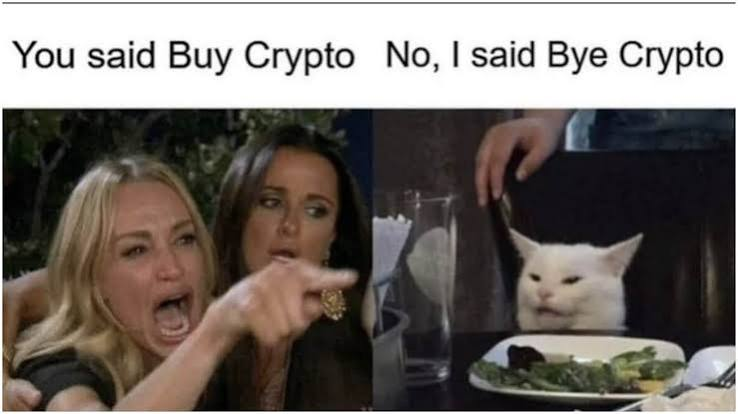
That's it for today's Slate. ISM this morning, Apple and Palantir after the close, and a vote tomorrow that unlocks the oil calendar. Stay close to the feed. Today's reply prompt: Which hits your portfolio harder this week: a post-vote strike on Iran, or Apple confirming that memory costs have reached the biggest names? Rates Just Reset. Who Feels It First?On January 2, the 10-year yielded 4.19%. By September 30, 5.29% — most of it in one quarter. Some companies earn from higher rates. Some pay. Each runs on a different clock. We traced three: IBKR, WRB and FIS. One has already reported. The other two report next, and the report tells you the exact line to check. Free report, texted to your phone. Send the Report to My Phone → (free) |