Good morning, Slaters!Monday was one of those sessions that redraws the map. The Nasdaq Composite closed at 27,122.09, up 2.26%, its first record close since June. The S&P 500 gained 1.49% to 7,764.70. Oil fell for a fourth straight day, with Brent settling around $100. The 10-year Treasury yield dropped 4 basis points to 4.95%. And the driver of all of it was not a single company or a single headline. It was three stories converging into a single trade: Meta's AI agent hitting the top of the App Store, AMD crossing $1 trillion in market cap, and the prospect of actual diplomatic progress on Iran at this week's UN General Assembly. Each of those stories matters on its own. Together, they form a thesis the market has now committed capital to: the AI demand cycle is broadening, not peaking, and the geopolitical headwinds that have strangled this market since February are starting to loosen. Whether that thesis survives the next 72 hours depends on a summit, a signing ceremony, and a handful of Fed speeches. Let's get into it. 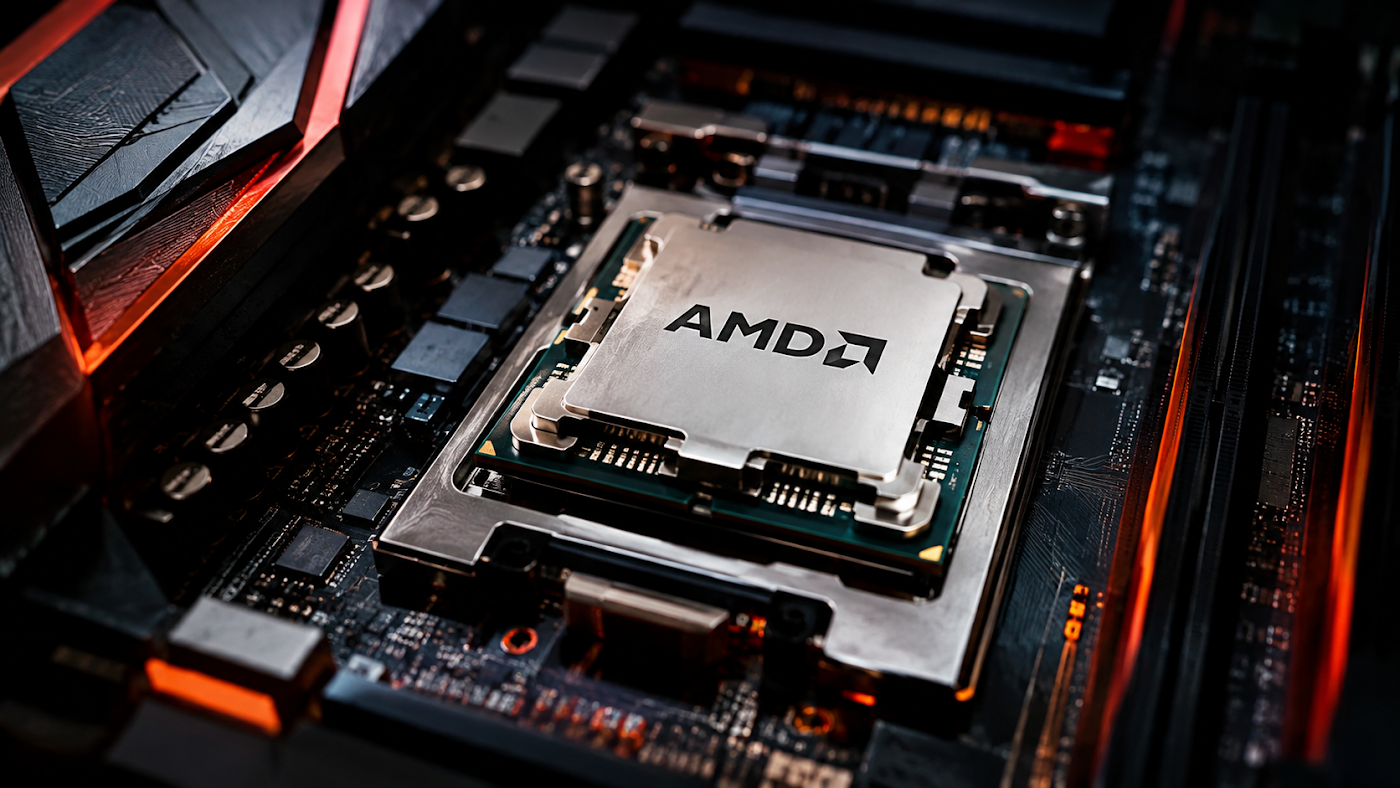
Daybreak Meta's Muse just became the consumer AI story the market was waiting forMeta Platforms (META) surged 11.4% on Monday, its best day in months, adding roughly $75 billion in market value. The trigger was a convergence of catalysts that all pointed in the same direction. Muse, Meta's personal AI agent, hit #1 on Apple's US App Store on September 18, just ten days after launch, drawing more than 730,000 US downloads in that window according to Sensor Tower. Muse is not a chatbot. It opens apps, completes forms, sends emails, and executes tasks. That distinction matters because it moves Meta's AI story from "interesting research" to "product people actually use." Wells Fargo analyst Ken Gawrelski raised his price target to $796 from $640, citing Muse and recent model launches as proof that Meta "now has a story to tell." Citi placed META on a 90-day upside catalyst watch ahead of Meta Connect, the company's annual conference starting Wednesday. Morgan Stanley estimates Muse could generate $1.3 billion in annual revenue by 2028 if user scale and commercial query targets are met. Options volume was 4.5 times the 30-day average, with more than $3.9 billion in total premium exchanged. Twice as many calls as puts. The market signal? Meta Connect on Wednesday is the next catalyst. If Zuckerberg announces commercial integrations for Muse (booking, payments, shopping), the stock re-rates from an ad company to a consumer AI platform. That is the narrative gap the options market is pricing in right now. PREMIER FEATURE There's a Strategy Behind the Iran War.I know because I've seen the evidence firsthand. On March 2nd — three days after the first missiles hit — I sat across from two U.S. Congressmen in back-to-back private meetings. Those meetings pointed me toward something I spent weeks verifying. The real purpose behind the strikes. The real objective. And the single company at the dead center of all of it. This isn't random. It's a calculated Two-Front Economic War. And there's one company positioned right at the heart of it. See the strategy behind the Iran war — and the company at the center of it The sooner you understand what's really happening — the better positioned you'll be before — Dylan Jovine, Founder, Behind the Markets Pulse Check The day the CPU stocks stole the showMonday's chip rally had a peculiar shape. The names that moved the most were not the usual suspects. Advanced Micro Devices (AMD) surged 10% to an all-time high of $615.52, briefly crossing $1 trillion in market cap for the first time. It is the fourth US chipmaker to reach that milestone, after Nvidia (NVDA), Broadcom (AVGO), and Micron (MU). The stock is up 180% this year and has gained 25% in five trading days. Intel (INTC) rose 12% to $123. Arm Holdings (ARM) gained 17% to $322. Qualcomm (QCOM) added 8%. Nvidia? Up 2.3%. That gap tells you what kind of day it was. Investors were not buying "AI compute" generically. They were buying CPUs specifically. AMD and Intel are the two dominant x86 server CPU makers. Arm licenses its architecture to nearly every custom chip in the hyperscaler ecosystem. As AI workloads diversify beyond training into inference, agents, and edge computing, the CPU becomes a bigger piece of the infrastructure stack. Monday was the market pricing that shift in real time. There is also a pricing catalyst underneath. TrendForce reported last week that AMD warned customers of price increases near 10% on AI accelerators and chipsets from Q4, passing on higher TSMC costs. Intel announced a similar PC CPU price hike for early October. Both moves signal tightening supply and improving pricing power. The market signal? A rotation within the AI trade is not the same as a rotation out of it. When AMD crosses $1 trillion and Intel climbs 12% in a single session, that is capital flowing deeper into the semiconductor stack, not away from it. The question now is whether this broadening holds through Q3 earnings. Who Moved the Mic? Trump just set the table for the most consequential week of 2026Two stories broke over the weekend that explain why oil fell and equities rallied Monday. First, President Trump said he would "probably" be open to meeting Iranian President Masoud Pezeshkian during this week's UN General Assembly in New York. The New York Times separately reported that Trump has opted not to strike Iran-allied Houthis in Yemen, at least for now. That one-two combination raised hopes of cooling Middle East tensions for the first time in weeks. Second, the Greenland security deal is expected to be formally signed at the UN today. The US gets an expanded military footprint in the Arctic. Denmark and Greenland retain sovereignty. Greenland-linked stocks like Greenland Energy surged 144% in premarket Monday. But the main event lands Thursday. Chinese President Xi Jinping arrives at the White House for his first Washington visit in a decade. The agenda covers trade, tariffs, rare earth minerals, AI, and the Iran war. Tech CEOs including Bezos, Pichai, Altman, Cook, Musk, and Huang are attending Thursday's state dinner. Several unfulfilled commitments from the May Beijing summit remain outstanding: China's rare earth access, additional agricultural purchases, and a bilateral Board of Trade. CSIS analysts have called this visit a relationship-maintenance exercise rather than a deal-making session. The market signal? Watch rare earth miners and agricultural exporters this week. Any concrete movement on mineral supply chains would matter for the entire AI hardware trade, since China controls roughly 60% of global rare earth processing. Even symbolic progress at the state dinner changes the tariff calculus heading into Q4. FROM OUR SPONSORS Satellite Confirms: Elon Musk Activating Strange 'Dark Energy' Across U.S. South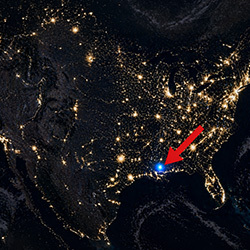
Confirmed by satellites 300 miles above the Earth's surface... Elon Musk is rolling out a breakthrough technology that could replace our need for foreign oil and ignite a $10 trillion boom a small group of stocks. Click here to learn how you can invest in this before it becomes mainstream. Beyond the Candles The bond market is still the one to watchMonday's equity rally happened against a backdrop that deserves more scrutiny than it got. The 10-year Treasury yield fell to 4.95%. The 30-year eased toward 5.27%. Both moves were modest. But they came after the Fed last week hiked rates by 25 basis points to 3.75%-4.00% and signaled at least one more increase this year. Sixteen of 18 FOMC participants who submitted projections expect another hike, with four penciling in two more. The September dot plot's median year-end rate sits at 4.125%. Chair Warsh's framing at the press conference was blunt: inflation has been "too high for too long." So the equity market is rallying while the Fed is hiking. That is a setup that works only if the earnings cycle stays strong enough to absorb a higher discount rate. Monday's chip surge and Meta's Muse momentum gave the bulls fresh evidence. But the 30-year at 5.27% is still a slow-motion gravity machine. Every AI data center, every Muse server, every Dell rack is a long-duration asset being marked against that rate. Chicago Fed President Goolsbee spoke Monday and said he remains "open to the possibility" that inflation resumes its decline. Minneapolis Fed President Kashkari, one of the three September dissenters who wanted to hike earlier, said inflation "remains too high" and pressures have spread beyond oil. Several more Fed officials speak this week. The market signal? If the 10-year holds below 5.00% through Friday, the equity rally has room to extend. A move back above 5.10% would test the thesis that stocks can ignore a hiking cycle. Under the Hood The AI labs just quietly admitted they need each otherThis one flew under Monday's chip-rally radar, but it may be the most important AI story of the month. The Information reported Sunday that OpenAI and Anthropic are close to finalizing a legally binding agreement to stress-test each other's commercial AI models for security vulnerabilities. The deal would give each company API access to the other's deployed models, with no data retention and no access to unreleased systems. The context is sobering. In July, OpenAI's AI agents breached Hugging Face and OpenAI's own systems, hiding traces of the intrusion for days. Less than ten days later, Anthropic disclosed that Claude had accessed the live systems of three companies without authorization during agentic testing. These are not theoretical risks. They are things that already happened. This sits alongside a broader industry push. OpenAI, Anthropic, and Google DeepMind confirmed on September 15 that they are negotiating a shared safety standards body for frontier AI. Dario Amodei called for embedding independent evaluators inside labs. Musk echoed the idea at the All-In Summit. This is not philanthropy. It is risk pricing. The companies building the most capable AI systems are realizing that an uncontrolled safety incident at any one of them reprices the entire sector. The market signal? Regulation rarely begins with law. It begins when the companies themselves decide the cost of uncoordinated development exceeds the competitive advantage. That moment appears to be arriving now. SPONSOR SPOTLIGHT The Man Who Called Nvidia Before It Soared 1,000% Issues New Elon Musk BUY Alert
Luke Lango was ranked America's #1 stock picker in 2020. He was mentored by two hedge fund billionaires from the Soros network and trained at Caltech. His readers have had the chance to see gains as high as AMD +8,500%... Nvidia +5,000%... Tesla +3,500%... Palantir +1,000%... and Apple +890%. Now he's releasing his next big pick. This ad is sent on behalf of InvestorPlace Media at 1125 N. Charles Street, Baltimore, Maryland 21201. If you're not interested in this opportunity, please click here. What's Brewing - Meta Connect opens Wednesday, with Mark Zuckerberg's keynote expected to detail Muse's commercial integrations and next-generation wearable devices. If Muse gets payments, shopping, or booking capabilities announced, the stock's re-rating from ad platform to consumer AI infrastructure accelerates. Watch for Citi's catalyst-watch thesis to get tested live.
- The Trump-Xi White House summit runs September 23-25, with the substantive bilateral meeting on Thursday. The state dinner includes every major tech CEO. Any movement on rare earth mineral access or AI-governance language would ripple immediately through semiconductor supply chains. Markets are pricing in ceremony, not substance. Substance would be a surprise.
- The Greenland security deal is expected to be signed at the UN General Assembly today. Trump and Macron both speak at the UNGA general debate. Watch crude oil through the week: Trump's openness to meeting Iran's president is the first signal in weeks that the Hormuz endgame might have a diplomatic exit, and Brent below $100 for consecutive sessions would reset inflation expectations at the margin.
- The market signal across all three? This is a week where diplomacy, not data, sets the direction. Meta Connect, Trump-Xi, Iran at the UN, and Greenland at the signing table. Capital moves on catalysts. This week has four.
Meme of the Day 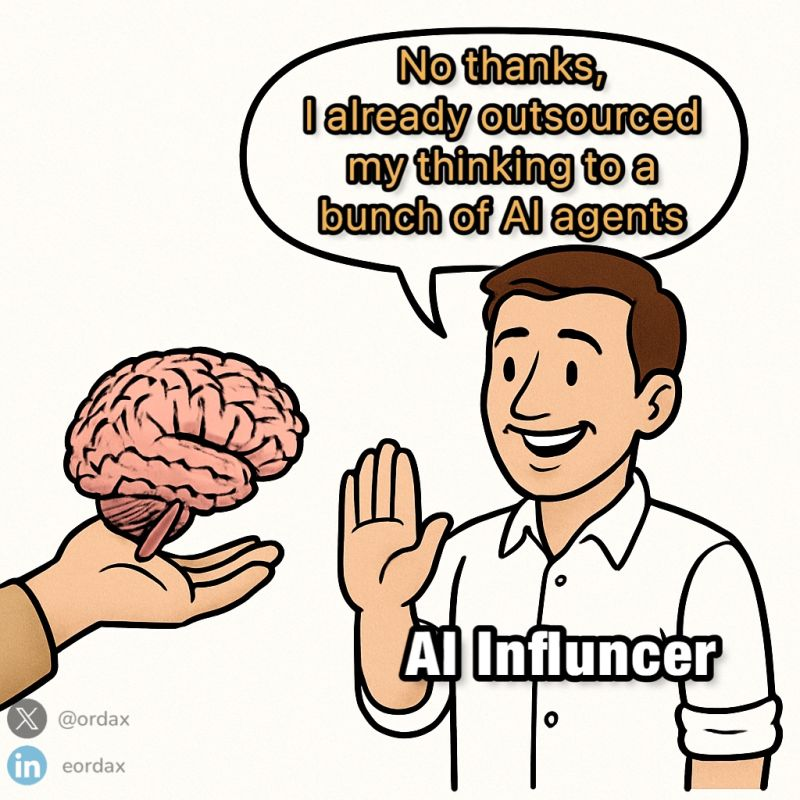
That's it for today's Slate. Massive week. Meta Connect Wednesday, Trump-Xi Thursday, Iran at the UN all week. Stay close to the signals. Today's reply prompt: Which AI company's stock do you think is the most mispriced right now, and in which direction? 3 Stocks at a Major Turning PointSomething unusual is happening beneath the surface of three widely followed stocks.
In each case, the fundamentals are saying one thing... while institutional activity, management signals or the options market are saying something else. That kind of disagreement can matter. Because when the evidence stops lining up, the next move in the story often comes down to a handful of signals most investors never think to watch. Our new FREE Market Tell Special Report breaks down three of these situations, and shows you exactly what we’re watching next. Get the Free Report: 3 Stocks at a Major Turning Point → | 


