


Good morning, Slaters!
Twenty-five years ago today, this city stopped. The markets closed. The country held still.
Today, as it does every year on this date, the NYSE will open with a moment of silence. And then the most consequential economic data point of the month will arrive at 8:30 a.m.
The August CPI report drops this morning, five days before the Federal Reserve meets under Chair Kevin Warsh on September 15-16. The market is pricing in a 71% probability of a 25-basis-point rate hike, up from 44% just a week ago. That shift tells you what this week did to sentiment. Oil surged past $107. The 10-year Treasury yield hit 4.97%, its highest since October 2023. The ECB hiked for the second time since the Iran war started. And the PPI came in hot, with wholesale inflation running at 5.4% annually.
One number this morning reshapes everything. If headline CPI lands at or above 3.4%, a September hike becomes near-certain. If it comes in soft, below 3.2%, the doves get their reprieve.
Let's read the setup.
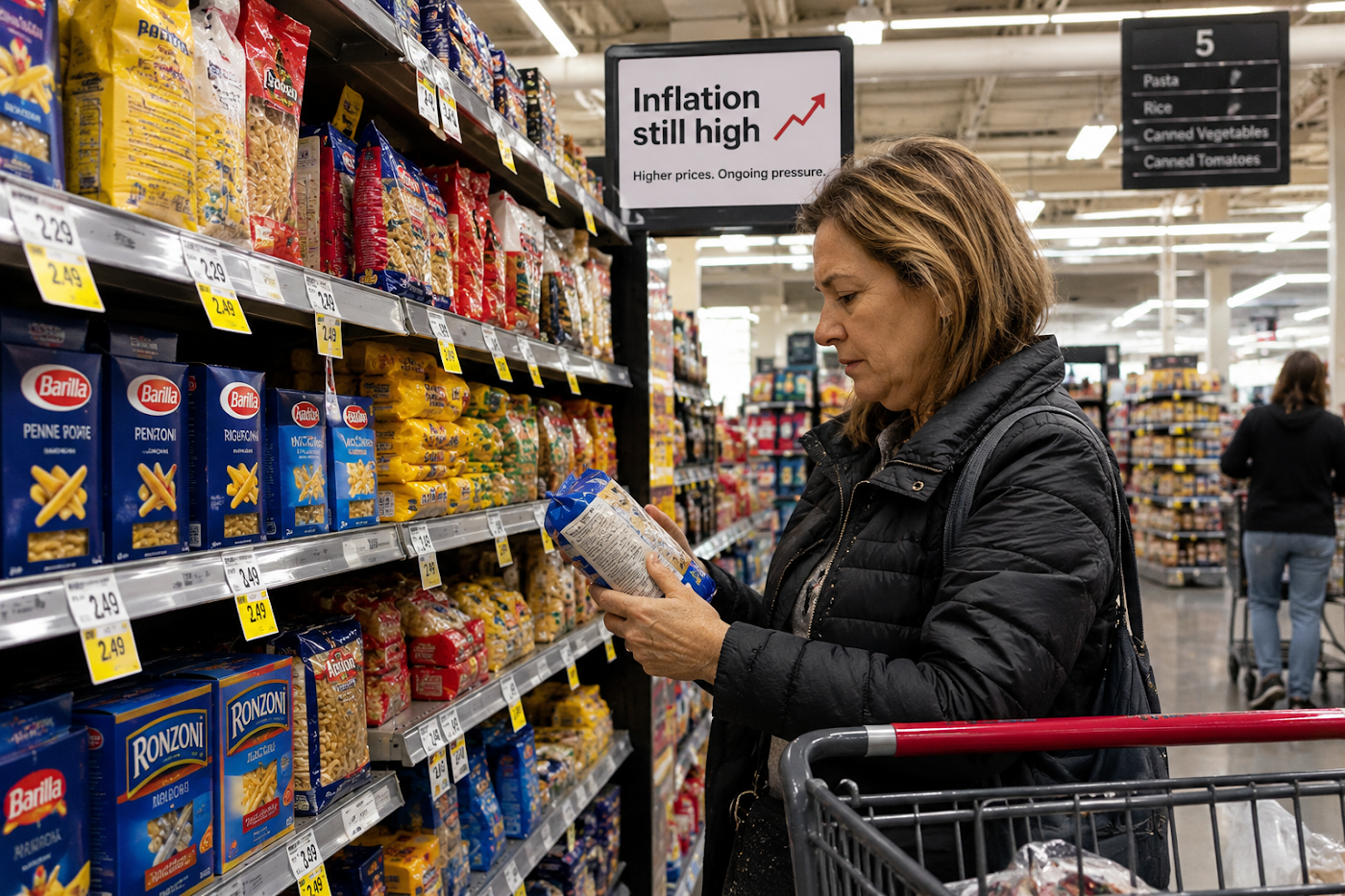
The CPI print that writes the Fed's decision
Here is what the market expects at 8:30 a.m. ET: headline CPI up 0.4% month-over-month and 3.4% year-over-year. Core CPI, which strips out food and energy, is forecast at 0.4% monthly and 2.4% annually. Both numbers land after a week where oil surged from $96 to $107, meaning the energy component in this report is already stale. The September CPI, not today's, will capture the full oil shock.
That is the paradox sitting underneath this morning. Even if August CPI comes in tame, the market knows September's print will be worse. Diesel jumped 24.1% in the August PPI. Gasoline, jet fuel, and home heating oil all rose. Those prices are still climbing.
Warsh has been conspicuously silent. But the July FOMC minutes showed "several" participants wanted a 25-basis-point hike then, more than the three who formally dissented. The doves are losing votes before the data even arrives.
Christopher Hodge, chief economist at Natixis, put the stakes cleanly: an in-line reading would represent the fourth consecutive month of encouraging inflation and ease pressure for a hike. A hot print makes a hike functionally unavoidable.
The market signal?
The options market has priced an outsized move for Friday. SpotGamma notes meaningful support around S&P 7,600, but that floor weakens significantly after this week's expiration. A hot CPI could push the S&P through 7,500 before the Fed even meets. A cool one would trigger a relief rally in rate-sensitive tech and real estate. There is no middle ground today.
The Big AI Story Nobody Knows
|

There's a website called RentAHuman.ai. Its tagline: "Robots need your body."
721,000 people across 100 countries have signed up.
And according to Alexander Green - the man who bought Apple under $1, Netflix at $1.62, Amazon under $2* - this is the clearest signal yet that Phase 2 of the AI supercycle has arrived. (Split adjusted prices)
He's identified three companies set to dominate this next phase.
Four straight days down, and the 10-year is knocking on 5%
The S&P 500 fell 0.58% to 7,591.70. The Dow dropped 316 points to 52,064.10. The Nasdaq slid 0.65% to 26,081.72. Fourth consecutive losing session, the longest streak since early March.
On the week, the Dow is down 2.5%, the S&P 1.6%, the Nasdaq 1.6%. The percentage of S&P 500 stocks above their 50-day moving average plunged to 36%, down from 47% last Friday. Breadth is narrowing. Energy and healthcare are the only sectors up over the past month.
But the real story is in the bond market. The 10-year Treasury yield closed at 4.97%, its highest since October 2023 and one tick away from 5%. Bloomberg reports bond bears are pushing toward that psychologically important level, which risks triggering further selling across global markets. The 30-year remains above 5.25%.
The Treasury's first expanded buyback purchased $5.19 billion of $6 billion offered. Yields rose after the operation anyway, a signal that the market views Bessent's "Treasury Twist" as insufficient against the forces driving term premium higher.
The market signal?
Context matters: the S&P remains up roughly 11% for 2026, and the Nasdaq is still up 12%. This is not a market collapse. It is a repricing around a single question: does the Fed hike next week? CPI answers that in 90 minutes. If it does, the next support level below 7,600 is 7,450.
Oracle just proved the AI buildout survives $107 oil
In the middle of a four-day selloff driven by oil, yields, and inflation fear, Oracle (ORCL) quietly posted a quarter that would have dominated headlines on any other day.
Q1 fiscal 2027: revenue of $19.35 billion, up 30%, beating the $19.14 billion consensus. EPS of $1.92 against expectations of $1.74. Cloud infrastructure revenue doubled, surging 121% to $7.4 billion. Total cloud hit $11.6 billion, up 62%. And remaining performance obligations reached $664 billion, up $209 billion from the prior year and above the $630.6 billion Street forecast.
CEO Safra Catz said the company signed four multi-billion-dollar contracts with three different customers in the quarter alone. Full-year guidance: at least $90 billion in revenue and $8.10 in non-GAAP EPS, both ahead of consensus. Capital expenditure guidance held at $90 billion to $95 billion, confirmation that Oracle is spending at hyperscaler pace.
The stock rose 7% in after-hours trading.
But there is a tension underneath the beat. Oracle completed a $20 billion equity sale through its ATM program in Q1, diluting existing shareholders. Total debt stands at $125 billion. Free cash flow was negative $5 billion. Oracle is building the AI cloud at the cost of its balance sheet, betting that $664 billion in backlog converts before the debt becomes a problem.
The market signal?
Oracle's results confirm that enterprise AI demand is not fading even as the macro deteriorates. But the funding model, issuing equity and loading debt to build data centers, makes Oracle a bet on the AI cycle lasting long enough to outrun its capital costs. At 5% Treasury yields, that race just got tighter.
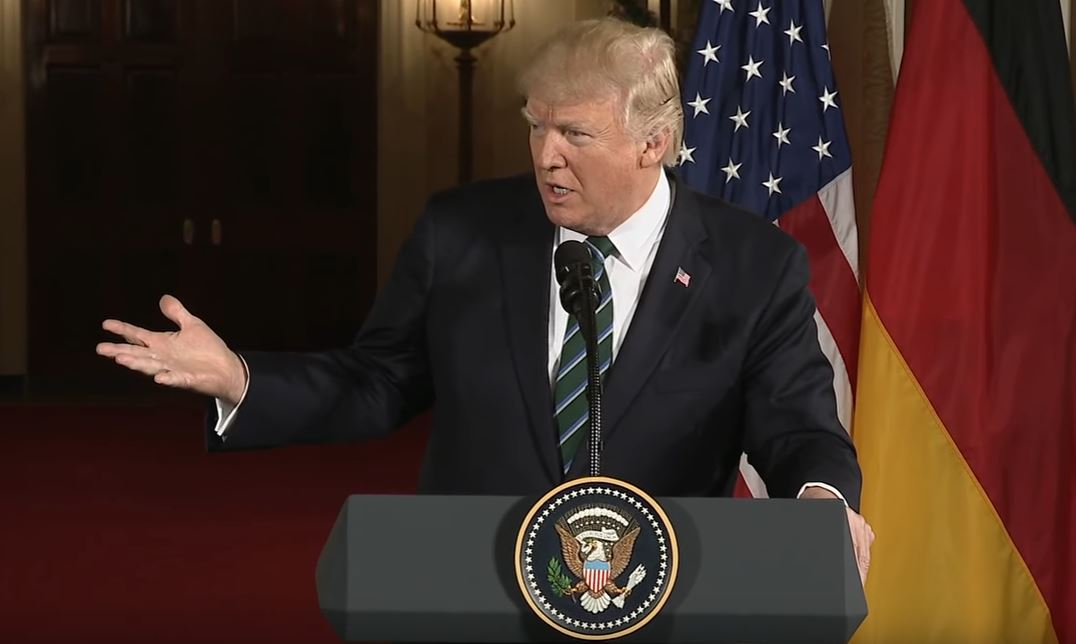
Could This Stock Be “Trump’s Next Big Buy”?
Jim Rickards believes the Trump administration is about to take a direct stake in a tiny $2 stock.
The Trump administration has taken a direct stake in MP Materials, Lithium America, Trilogy Metals, and USA Rare Earth.
Each time, shares sprinted higher. Click here to see why Jim believes this one is next.
The ECB just called its rate hike "a no brainer." Both sides of the Atlantic are tightening at once.
On Thursday, the European Central Bank raised its deposit rate to 2.5%, up 25 basis points, the second hike since the Iran war erupted in February. The main refinancing rate rose to 2.65%. The marginal lending facility hit 2.90%.
President Christine Lagarde's press conference in Berlin left little ambiguity. She called the decision "a no brainer" and said it was unanimous. Markets immediately began pricing in further hikes. A Deutsche Bank poll found more than a third of respondents expect a 2.75% peak, with a quarter seeing 3%.
The rationale: eurozone inflation accelerated to 3.3% in August, the highest since September 2023, driven by energy pass-through from the Iran war. Staff projections revised 2027 inflation upward to 2.5% and 2028 to 2.1%.
Here is the frame that matters. The Fed and the ECB are now both facing the same antagonist: an oil shock feeding into consumer prices that monetary policy alone cannot fix. Lagarde can hike to 3% and Warsh can hike to 4%, but neither of them can open the Strait of Hormuz. That mismatch is why bond markets on both sides of the Atlantic are selling off simultaneously.
The market signal?
When both the Fed and the ECB tighten into an oil shock, the combined effect on global liquidity is significant. Emerging markets that borrow in dollars or euros face a double squeeze. If the dollar strengthens past 106 on the DXY after a hot CPI, the pressure on EM assets accelerates quickly.
Adobe beat earnings, announced a CEO exit, and the stock fell. That is the AI story nobody wants to have.
Adobe (ADBE) reported fiscal Q3 results Thursday after the close. Revenue of $6.76 billion, up 13% year-over-year. Non-GAAP EPS of $6.13, up 15%. The company raised full-year guidance. And then the stock fell 2.14% in after-hours trading.
The numbers were fine. The narrative problem is worse.
CEO Shantanu Narayen, who built Adobe from under $1 billion in revenue to over $26 billion, announced he will step down on December 1 and transition to Executive Chair. His replacement, Anil Chakravarthy, currently heads Customer Experience Orchestration. A CEO change at a company navigating the most disruptive moment in creative software history is not neutral. Investors are wondering whether Chakravarthy can steer the next act, where AI-generated content threatens to compress the value of every tool Adobe sells.
Compare the two earnings calls from Thursday night. Oracle posted 121% cloud infrastructure growth and the stock jumped 7%. Adobe posted 13% revenue growth and the stock dropped. Both beat estimates. The difference is that Oracle is building the thing everyone wants to buy. Adobe is selling the thing AI might replace.
The market signal?
The transition creates a window of uncertainty through Q1 2027. The question is whether Firefly, Adobe's generative AI suite, can generate enough new revenue to offset the threat from free and low-cost AI tools eating into the creative workflow. The next two quarters under Chakravarthy will answer that.
Is Elon About to Create a New Generation of Millionaires?

When Elon took SpaceX public, an estimated 4,400 employees became millionaires – with top executives, welders, and even cafeteria workers getting rich overnight. Sources close to Elon indicate that he's about to hatch a new opportunity to create generational wealth – and you don't have to work for Elon to see massive potential profits. Click here for the full details.
This ad is sent on behalf of InvestorPlace Media at 1125 N. Charles Street, Baltimore, Maryland 21201. If you're not interested in this opportunity, please click here.
- The Fed's blackout period is live. No more speeches, no more hints, no more trial balloons. The September 15-16 FOMC meeting is the only event left. CPI this morning is the last piece of evidence the committee receives before deciding. If Warsh hikes, it will be the first increase since the rate was lifted to 3.50%-3.75% in June 2025, and the most contested decision of his young tenure. A 6-6 split on the committee would leave rates unchanged by default.
- Oil's trajectory matters more than any single CPI print now. Brent rose from $72 in early July to $107.63 on Thursday, a 50% surge in ten weeks. White House advisers reportedly discussed with Trump the possibility that the Iran war could drag past Inauguration Day in January 2029. Saudi production fell by 1.9 million barrels per day in August alone.
- Oracle's after-hours reaction sets the tone for AI infrastructure names at the open. If ORCL holds its 7% gain through the session, AI demand survives even a rising-rate environment. If it fades, the Vertiv pattern, beating estimates then selling off on yield fears, becomes the default for high-capex tech through year-end.
- The market signal across all three? CPI, oil, and Oracle are all answering the same question from different angles: can growth outrun the cost of money? By 9:00 a.m. this morning, we will have the closest thing to a definitive answer the market has received in months.
That's it for today's Slate. CPI at 8:30. Then silence until the Fed speaks on September 16. Stay very close to the feed today.
Today's reply prompt: CPI day. Are you positioned for a hike or a hold?
FREE MARKET ALERTS
Know What’s Moving the Market Before You Miss the Move
Get market-moving news, analyst trade ideas, and key catalysts delivered directly to your phone so you can spot opportunities faster.
READER POLL
CPI drops at 8:30. The Fed meets in five days. Oil is at $107. What do you think happens?
- A) Hikes 25 bps. Inflation at 3.4%, oil at $107 leaves no room to stand pat.
- B) The Fed holds. Core CPI is cooling and hiking into a supply shock is a policy error.
- C) Warsh surprises everyone. He hikes 50 bps to reassert credibility.
- D) It's a 6-6 tie. The committee is too divided and rates stay unchanged.


