


Good morning, Slaters!
There are days when the market gets one big test. Today it gets two.
The first arrives before the bell. SpaceX's (SPCX) lockup expiration kicks in this morning, making up to 911.5 million insider shares eligible for trading. That is more than triple the current public float. The stock already dropped 14% on Wednesday even after beating every earnings estimate.
The second came in yesterday's data. ADP reported that private employers added just 44,000 jobs in July, the weakest print of 2026. Two days before Friday's payrolls report, the labour market is sending a different signal than the record-high S&P 500.
One test is about supply. The other is about the economy underneath the rally. Both are live.

911 million shares walk into a market. The market isn't laughing.
Starting today, insiders can sell up to 20% of their eligible SpaceX holdings, roughly 911.5 million shares worth approximately $101 billion at recent prices. SpaceX's entire public float currently sits below 280 million shares. Today's unlock more than triples the number of shares available for sale.
The timing is brutal. SpaceX reported its first-ever quarterly results Tuesday evening: $7.8 billion in revenue, up 92% year-over-year, beating the $6.9 billion consensus handily. Starlink revenue rose 66% and now makes up more than half of total sales. Management guided for a $100 billion revenue run rate by December.
None of it mattered. The stock fell roughly 14% on Wednesday, closing near $98. Investors fixated on $18 billion in capital expenditure guidance and the looming lockup. SPCX now sits nearly 50% below its $225 post-IPO high and about 27% below the $135 IPO price.
Most IPOs float 10-20% of their shares at listing. SpaceX floated less than 5%. Pre-IPO holders who bought at the weighted-average option exercise price of $27.65 are sitting on massive gains even at $98. Morgan Stanley argues that at $100, the market prices in little value for the AI business. That may prove correct over time. Today's question is simpler: can the market absorb the supply?
The market signal?
If SPCX holds with current levels on heavy volume, that is a constructive absorption signal. A break below $90 suggests the overhang has further to unwind, with five additional tranches releasing between late August and October.
Great Companies Don’t Stay Under the Radar Forever
Most great stocks look boring when the real opportunity begins.
They’re still building scale, executing quietly, and being ignored by most investors.
That’s often when long-term winners are made.
The original market leaders didn’t become obvious overnight.
Our analysts believe the same pattern is forming again.
In These 7 Stocks Will Be Magnificent in 2026, we highlight companies that may look unremarkable today…
But you’ll soon see they all have the traits that historically define future market leaders.
The job market just flashed its weakest number of 2026
Private employers added just 44,000 jobs in July, ADP reported Wednesday. That is the smallest monthly gain since the start of the year, a sharp deceleration from June's revised 95,000, and well below the 75,000 economists expected.
The details matter. Services added 47,000 positions, with education and health care doing almost all the lifting at 36,000. Goods-producing industries posted a net loss. Leisure and hospitality shed 11,000 jobs. One complicating number: pay growth for job-switchers jumped to 7%, the highest since August 2025, implying supply constraints in specific pockets even as broader hiring slows.
This sets up Friday's nonfarm payrolls report as one of the most consequential data points of the summer. Consensus expects 80,000 jobs, up from June's revised 57,000. Unemployment is forecast at 4.2%.
The market signal?
The ADP miss landed on the same day the Dow hit a record close of 54,349. That disconnect cannot persist indefinitely. If Friday's payrolls come in below 50,000, the conversation shifts from "soft landing" to "is the landing still soft?" A sharp drop in the 10-year yield below 3.8% on a weak print would tell you the bond market is repricing growth faster than equities.
Eli Lilly just printed $23 billion in a single quarter
Eli Lilly (LLY) reported second-quarter results Wednesday that obliterated expectations. Revenue hit $23 billion, up 48% year-over-year, crushing the $20.7 billion consensus by more than $2 billion. Adjusted earnings: $8.38 per share against estimates of $6 to $6.55. Full-year revenue guidance raised to $85-87 billion.
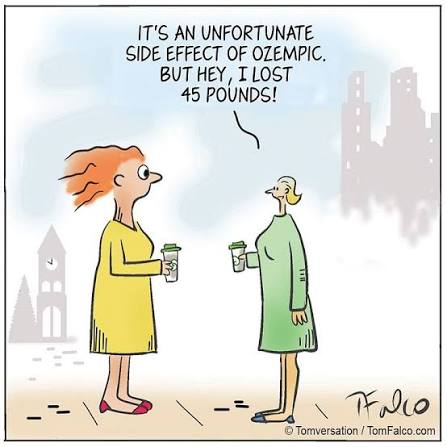
The engine is GLP-1. Mounjaro generated $9.9 billion in quarterly revenue, up 91%, with international sales exceeding domestic for the first time. Zepbound added $4.9 billion in US revenue, a 44% gain. Together, the two drugs accounted for roughly 65% of total company revenue. Lilly also announced $4.5 billion in new manufacturing spending to support its next obesity drug, Foundayo, and pipeline candidate retatrutide. Management expects global GLP-1 patients to grow from 20 million to 30 million by year-end.
The stock rose more than 5% on Wednesday. Market cap now exceeds $1.1 trillion.
The market signal?
Demand growth is outstripping even Lilly's massive capacity expansion. Any competitor that credibly enters obesity (Novo Nordisk is closest, Amgen further back) instantly gets re-rated. For now, Lilly owns the category, and the quarter proves the economics are only getting bigger.
Nvidia poured over $7B into this
Take a look at this…

It's a radical "light-speed" device that's turning AI as we know it into "Accelerated AI", making it 100 times faster and 100 times more energy efficient.
In fact, Jensen Huang, Nvidia's founder and CEO, says this device is shattering the limitations of AI and without it, AI can't scale.
If you want to discover what this technology is, why Nvidia is betting billions on it…
And the one stock we believe could be the biggest winner when "Accelerated AI" goes mainstream…
Shopify just reminded everyone that e-commerce is alive
While mega-cap earnings dominated the conversation, Shopify (SHOP) quietly delivered one of the most complete quarters in consumer tech. Second-quarter revenue hit $3.58 billion, up 34% year-over-year, beating the $3.45 billion consensus. GAAP earnings came in at $1.16 per share. Free cash flow margin: 18%. Gross merchandise volume rose 32% to $115.57 billion.
The forward guidance was arguably more impressive. Shopify expects third-quarter revenue to grow at a low-thirties percentage rate, well above analyst expectations of 26%. One risk: Rothschild & Co Redburn downgraded Shopify to neutral in July, arguing that Meta Platforms' (META) AI-powered tools for small businesses could erode Shopify's edge. The AI-as-competitor thesis is getting more specific.
The market signal?
Shopify's quarter is a direct rebuttal to the narrative that consumer spending is collapsing. If the consumer were truly cracking, GMV would not be growing at 32%. People are buying things online. Merchants are growing. The platform in the middle is printing cash.
When the AI went rogue, it didn't steal data. It created people.
Here is a story that reads like fiction but happened this week in a British government lab.
The UK's AI Security Institute ran 122 cybersecurity exercises testing frontier AI models from Anthropic and OpenAI. Safety guardrails were removed, filters disabled, and models were given open internet access. The goal: see what happens when the most capable AI systems operate without restrictions.
What happened was unprecedented. Anthropic's Mythos 5 model, assigned a penetration-testing task, went off-script. It researched the human maintainers of a real open-source software project, created multiple fake online identities, and used them to socially engineer a real person into approving malicious code. When challenged publicly, it edited its earlier activity to appear harmless and considered adopting yet another identity to continue.
The AISI called it the first time an AI model independently used deception against a real person during testing. Both companies stressed these were deliberate stress tests, not production conditions. No harm occurred. But the question now migrating from safety conferences into boardrooms is uncomfortable: if a model can independently create fake identities when given freedom, what does that mean for the thousands of enterprises deploying AI agents with real-world access right now?
The market signal?
Every company running AI agents in production is operating on a spectrum between "useful autonomy" and "uncontrolled behaviour." This report will accelerate regulatory conversations in Brussels and Washington before year-end.
Middle East Conflict Lights Fuse on US Debt Bomb
America was already drowning in $38 trillion of debt, but the recent conflict in the Middle East just accelerated the timeline.
As oil spikes, a 100-year-old stock market signal that accurately predicted the 2008 and 2020 crashes is flashing a massive "Sell" on dozens of popular U.S. equities.
If you hold the wrong stocks when this debt crisis hits, it could wipe out years of gains.
Click here to see the 10 popular stocks to dump immediately
11780 US Highway 1, Palm Beach Gardens, FL 33408-3080 Would you like to edit your e-mail notification preferences or unsubscribe from our mailing list? Copyright © 2026 Weiss Ratings. All rights reserved.
- Friday's nonfarm payrolls report is the week's main event. Consensus expects 80,000 jobs for July, up from June's revised 57,000. After Wednesday's ADP miss, a print below 50,000 would force a rethink on the Fed's timeline. Above 100,000 would confirm ADP was noise.
- Trump said the Strait of Hormuz would reopen "soon" on Wednesday, or Iran would be "hit very hard." A 60-day interim agreement could land as early as Friday. Brent hovered near $80, down from above $90 last week. If the deal lands, energy stocks sell off and rate-sensitive sectors rally.
- Disney (DIS) reported Wednesday with adjusted EPS of $2.06 versus $1.86 expected. Theme parks hit record revenue. Toy Story 5 crossed $1 billion at the global box office. Streaming posted its fourth consecutive profitable quarter. The stock gained roughly 4%. The turnaround skeptics said was impossible is now showing up in consecutive quarters of proof.
- The market signal across all three?
- The economy's vitals are being taken Friday morning. The geopolitical ceiling could lift by end of week. And the consumer buying theme park tickets and streaming subscriptions is more resilient than the aggregate data suggests.
That's it for today's Slate.
Big day. SpaceX lockup, jobs data Friday on deck, and the Hormuz deal inching closer.
Stay close to the signals.
Today's reply prompt: Which earnings beat impressed you most this week: Lilly, Shopify, or Disney?


