Good morning, Slaters!There is a peculiar kind of calm that settles over markets when the really big thing hasn't happened yet but everyone knows it's coming. Wednesday is that thing. Xi Jinping arrives in Washington for a summit with Donald Trump that will touch AI, tariffs, rare earths, and a trade truce set to expire on November 10. On Sunday, Treasury Secretary Scott Bessent and Chinese Vice Premier He Lifeng spent the day at JPMorgan's Manhattan headquarters hammering out the groundwork. Bessent called it "successful." The two sides proposed a new US-China AI Dialogue, complete with a notification mechanism for AI incidents that rise to national security level. That is not a small development. The world's two largest AI powers are, for the first time, discussing guardrails together rather than just racing past each other. Futures are green this morning. S&P 500 up 0.3%, Nasdaq 100 up 0.4%, the VIX at 14.81. But the 10-year Treasury yield closed Friday at 5.01%, and Brent crude is hovering near $96. The Fed hiked five days ago. Consumer sentiment just printed 47.8, the second-lowest reading on record. The summit sits at the intersection of all of it. A tariff deal eases inflation expectations. A collapse hardens them. Three days away, and every asset class is watching. 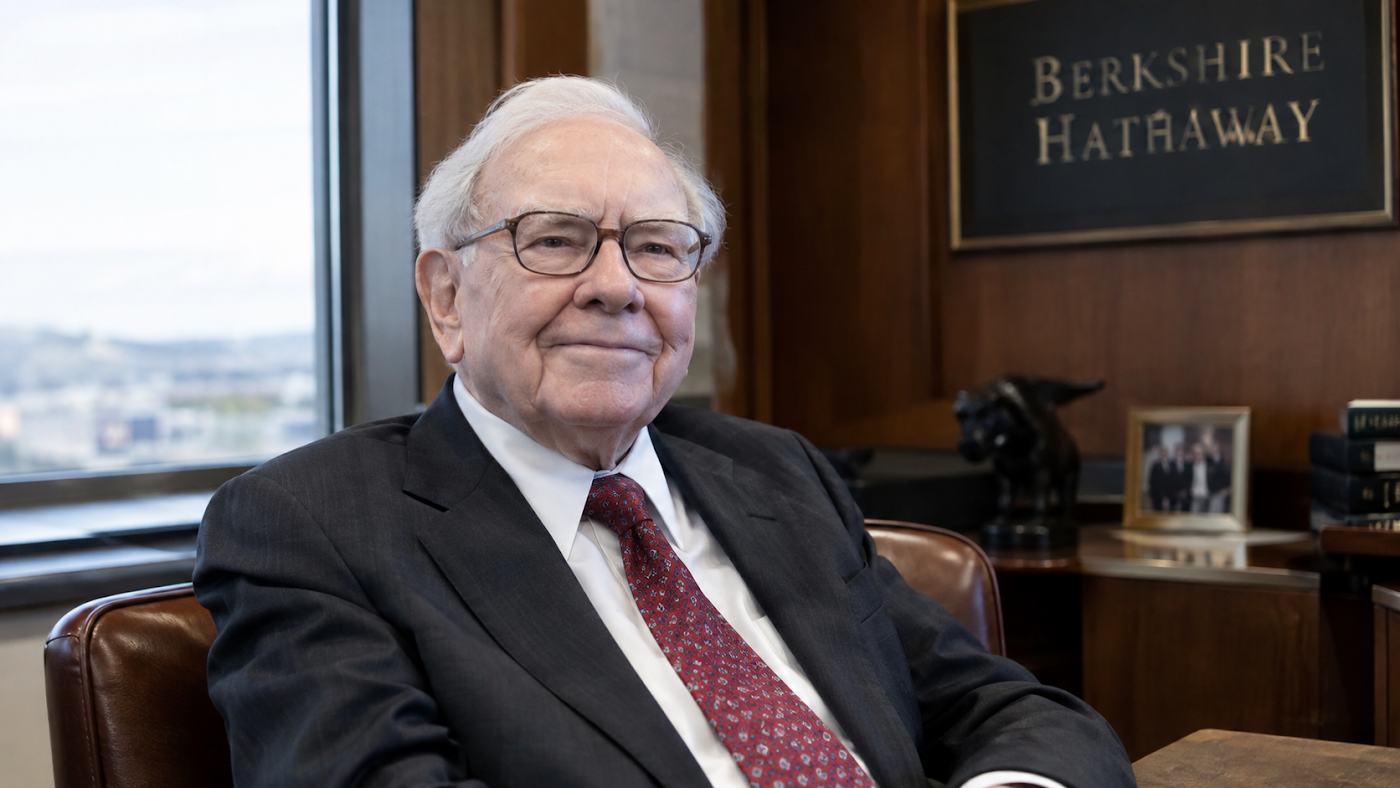
Daybreak Buffett steps down as ChairmanWarren Buffett stepped down as chairman of Berkshire Hathaway (BRK-B) on Friday, effective immediately. He will stay on the board as chairman emeritus. His son Howard, a director since 1993, takes the chair. "Father Time always wins," Buffett wrote in a letter to shareholders. The chairman title, held since 1970, was the last formal thread connecting Buffett to operational authority. Greg Abel has been running the company as CEO since January. That thread is now cut. The timing matters. BRK-B is up just 1% in 2026 while the S&P 500 has rallied more than 11%. The company sits on $365.5 billion in cash. Abel stepped up buybacks to $4.5 billion in Q2 and deployed $17 billion in June across Taylor Morrison and Alphabet. But the market is still waiting for proof that the successor can deploy capital with Buffett-grade conviction over a full cycle. Shares were little changed on Friday's news. That is itself a signal. The transition was priced in. What isn't priced in is what Berkshire becomes without the gravitational pull of Buffett's name on the letterhead. The market signal? Watch whether institutional flows into BRK shift over the next quarter. Buffett's presence was itself a premium. His absence is the test of whether the business earns one on its own. Pulse Check The post-hike week, by the numbersThe Fed raised rates to 3.75%-4.00% on Wednesday, its first hike since 2023. The vote was unanimous, 12-0, after three members had pushed for a hike at the July meeting. Updated projections showed 16 of 18 officials expect at least one more increase this year, with four penciling in two. Friday's close: the S&P 500 at 7,650, up 0.17%. The Dow at 51,682, down 0.18% and 1.69% on the week. The Nasdaq at 26,522, up 0.39%, its third winning week in four. The split is instructive. The Dow, loaded with industrials and financials, lost ground. The Nasdaq, powered by AI names, shrugged it off. This is not a broad market rallying into a hike. It is the AI trade outrunning the macro. The 10-year yield topped 5.04% before the FOMC decision, its highest since 2007, then settled to 5.01%. The 30-year sits at 5.33%. Gold closed at $4,380. Bitcoin topped $81,000. When all three rise simultaneously, the story is debasement risk, not growth optimism. The market signal? The Fed's rate hike removed one source of uncertainty but introduced another. Fed funds futures now price 42% odds of two more hikes by year-end, per CME FedWatch. Until that probability settles, every data point this week gets read through a "will they hike again?" lens. Who Moved the Mic? Bessent just proposed something that didn't exist 48 hours agoThe headline from Sunday's Bessent-He talks was "successful meeting." The substance was more specific and more interesting. Bessent told reporters that the US proposed a US-China AI Dialogue, with an emphasis on a notification mechanism for AI-related incidents that rise to national security level. Think of it as a hotline, not for nuclear weapons but for autonomous systems. "Moving from opaque to more transparency between the number one and the number two AI powers in the world is very important," Bessent said. US Trade Representative Jamieson Greer added that the two sides have "operationalized" the US-China Board of Trade, the framework agreed at the May Beijing summit for identifying potential tariff cuts on non-strategic goods. That Board had stalled over the summer. It is now, apparently, back in motion. The summit agenda for Wednesday is dense: the November 10 tariff truce expiration, rare-earth mineral flows, AI safety guardrails, and Boeing aircraft purchases. CNBC reported that JPMorgan CEO Jamie Dimon and Citigroup chief Jane Fraser are expected at a state dinner during Xi's visit, alongside OpenAI CEO Sam Altman. When the guest list includes both the biggest banker and the biggest AI founder in America, the diplomatic stakes are as high as the commercial ones. The market signal? A tariff truce extension past November 10 is the single most market-moving outcome from Wednesday's summit. If it happens, expect a risk-on move in US-China exposed names. If it doesn't, the market has roughly seven weeks to price in a return to full tariff escalation. FROM OUR SPONSORS The Closest Thing to a Virtual AI Monopoly Wall Street Is Ignoring
A little-known company is building what may be the closest thing to a virtual monopoly the AI era has ever seen. Only 3... Yet it beat Apple, Amazon, and the S&P 500 combined... While paying out $146,000 in total dividends on a 1,000-share stake. Kevin O'Leary calls what it controls a "unicorn." Right now, it's trading at a rare discount. >>>Whitney Tilson reveals the name, completely free.<<< This ad is sent on behalf of Stansberry Research, 1125 N Charles St, Baltimore, MD 21201. If you would like to optout from receiving offers from Stansberry Research please click here. Beyond the Candles The Saudi pipeline is half-alive, and oil doesn't know what to thinkThe Saudi East-West pipeline, the 1,200-kilometre bypass that was carrying 4-5 million barrels per day around the closed Strait of Hormuz, was shut down on September 11 after drone strikes from Iraqi territory hit multiple pumping stations. Brent spiked above $110 on the news. It has since pulled back to around $96. Bloomberg reported that Aramco expects to restore roughly half the pipeline's capacity within days by bypassing the damaged section, with full capacity targeted in about six weeks. US Energy Secretary Chris Wright told Fox Business the pipeline would resume operations "soon." The energy picture in sequence: Hormuz closed since late February. Saudi Arabia rerouted through the East-West pipeline. Pipeline hit by drones. Now Aramco scrambles to bring half of it back while Houthi advances in Yemen threaten the Red Sea route itself. Three chokepoints. Three layers of risk. The EIA's September outlook estimates global inventories have fallen by 400 million barrels this year, with Middle East production below pre-conflict averages until mid-2027. The market signal? Brent falling from $110 to $96 is the pipeline-repair trade. If Aramco delivers on the half-capacity restart this week, oil could test $90. If anything goes wrong, $110 is right there again. Energy is the most event-driven trade in the market right now, and the events keep coming. Under the Hood Consumer sentiment just printed a number that belongs in a history bookThe University of Michigan's preliminary Consumer Sentiment Index for September came in at 47.8, down 7.5% from August and the second-lowest reading on record. Year-ahead inflation expectations surged to 4.6%, the highest since June. Context: the all-time low was 50.0, recorded in June 2022 when inflation was running at 9.1%. Today, headline inflation is 3.4%, the labour market is still adding jobs, and the S&P 500 is within 2% of its record. Consumers feel worse now than when gas was $5 and recession was the consensus call. The disconnect has a name. Schwab's analysts called it a "vibepression" earlier this year: hard data says okay, soft data says terrible, and the gap between them is the widest in the history of both series. Diesel at $6 a gallon, grocery prices that never retreated, housing costs now facing a fresh hike cycle, and five years of compounding instability have left a psychological residue no jobs number can wash away. The personal savings rate sits at 2.6%, near its lowest since before the 2008 crisis. Consumers are spending by depleting reserves, not from optimism. That shows up in restaurant traffic, retail margins, and subscription churn before it shows up in GDP. The market signal? The September 25 final UofM sentiment read will either confirm or soften Friday's preliminary print. If it holds at 47.8, the consumer discretionary trade gets materially harder heading into earnings season. SPONSOR SPOTLIGHT WARNING: A Major Market Shift Could Hit Stocks in 2026If you have any money in the stock market, you may want to pay attention. New research points to a massive market-moving event that could send hundreds of popular stocks into a sudden free fall. Holding the wrong stocks when this hits could erase years of gains. That’s why analysts have now identified a list of stocks investors may want to avoid as this event unfolds. If you want to see what’s coming — and which stocks could be most at risk — Click here to get the full details before it’s too late. What's Brewing - The Trump-Xi summit on Wednesday is the week's gravitational centre. Outcomes on tariffs, AI, and rare earths will set the direction for US-China exposed sectors through year-end. Goldman's Rich Privorotsky put it plainly: "Trump/Xi next week has the potential to be an important moment for the market."
- Flash PMIs on Wednesday morning will give the first September read on manufacturing and services activity after the Fed's rate hike. The August PMIs showed expansion at 55.1, the strongest in four years, but employment fell for the first time in nine months. A soft September print would reopen the "are we slowing?" question just as rates go higher.
- Costco (COST) reports Thursday alongside Darden Restaurants (DRI). Together, they cover the full spectrum of consumer behaviour: bulk-buy value and casual dining. If Costco is strong and Darden is soft, the vibepression thesis gets its earnings confirmation.
- The market signal across all three?
- This is a week where macro and geopolitics are equally weighted. Position sizing matters more than conviction.
- —
Meme of the Day 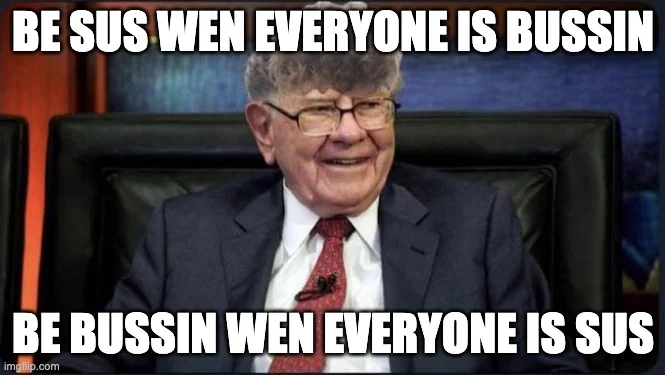
That's it for today's Slate. Summit week. PMIs Wednesday, Costco Thursday, UofM Friday. Stay close. Today's reply prompt: The Fed hiked and Buffett walked. Which headline matters more for your portfolio in December? THE MARKET WON’T WAIT FOR YOUR INBOX Get the Alerts That Could Move Your Money Breaking market news, actionable trade ideas, analyst signals, and major catalysts—sent straight to your phone when they matter. Join FinancialMarkets.com FREE market alert list today. SEND ME THE NEXT ALERT → (free) | 


