


Good morning, Slaters!
This week asked one question: is the AI spending binge actually working?
Wednesday said: maybe not. The Fed held with three dissenters voting to hike, the most fractured hawkish vote since 2016. GDP: 1.5%, below forecast. PCE inflation: 3.7%. An economy running slow and hot, with a central bank too divided to commit.
Thursday said: absolutely yes. Microsoft Azure grew 43%, fastest in four years. Amazon AWS grew 37%, fastest in 18 quarters. Revenue crossed $200 billion in a single Amazon quarter.
GDP at 1.5%. Cloud at 37%. Both are true.
That gap is the market's whole argument right now.
The macro is fraying. The micro, in specific powerful pockets, is not. The question heading into August: how long can those two realities share a zip code?
Let’s take a deeper look…
AWS just put the whole AI debate to rest. For now.
Let's start with the number that cleared the room: 37%.
That is how fast Amazon (AMZN) Web Services grew in Q2 2026, its fastest pace in 18 quarters, well ahead of the 31% analyst estimate. AWS revenue hit $42.2 billion; total Amazon revenue crossed $200 billion in a single quarter for the first time, at $200.6 billion. AWS operating margin: 39.4%, wider than Google Cloud's 35.6%. CEO Andy Jassy said Amazon's AI and custom chips businesses each exceeded $25 billion in annualized revenue with triple-digit growth. The AWS backlog hit $496 billion.
That backlog is the key number. When the pipeline is nearly half a trillion dollars, demand is not the constraint. Supply is. Amazon raised its 2026 capital expenditure guidance to $220 billion to build capacity against orders already in-hand. The stock surged more than 8% after hours, adding to Microsoft (MSFT) gaining roughly $450 billion in market cap Thursday on its own 43% Azure result.
The market signal?
Two hyperscalers, two quarters, one answer: AI spending is generating real revenue at an accelerating pace. Alphabet (GOOGL), Amazon, and Microsoft now collectively have backlog figures that make the capex look rational, not reckless. The open question is whether margins hold as all three scale past $200 billion in annual capital expenditure.
Some companies you only hear about after they IPO.
And some…
Eventual unicorns like Uber, Airbnb and OpenAI…
Forced the world to pay attention long before that.
Mode Mobile could be a new member to that second group.
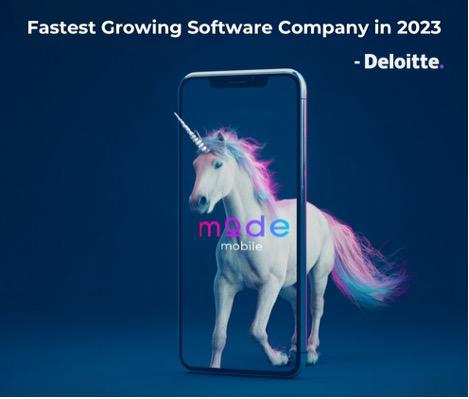
Uber turned cars into taxis, Airbnb turned homes into hotels, and Mode Mobile is turning smartphones into EarnPhones.
With $115M+ in revenue, 3-year growth of 32,481%, and an ecosystem with more than 490M+ users, it’s what investors call a “category disruptor.”
The kind that could turn early capital into generational wealth.
They’re raising privately.
For now.
But investors can get $0.52 pre-IPO shares before their share price changes on August 14.
With a Nasdaq ticker ($MODE) secured, and early backers like Kevin Harrington from Shark Tank, the company has its eyes on potentially going public.
Their previous two raises sold out, and this one is on track to do the same.
⏰Review the offer before August 14.
Disclosures
*Please read the offering circular and related risks at invest.modemobile.com.
*Mode cumulative revenue includes full year revenue of businesses acquired in 2025.
Mode Mobile recently received their ticker reservation with Nasdaq ($MODE), indicating an intent to IPO in the next 24 months. An intent to IPO is no guarantee that an actual IPO will occur.
The Deloitte rankings are based on submitted applications and public company database research, with winners selected based on their fiscal-year revenue growth percentage over a three-year period.
The Fed's most divided vote in a decade just made September very interesting
Wednesday's Fed decision was technically a hold. In practice, it was a warning.
The FOMC voted 9 to 3 to keep rates at 3.5% to 3.75%, the fifth straight meeting without a move. The three dissenters (Cleveland's Beth Hammack, Minneapolis's Neel Kashkari, Dallas's Lorie Logan) each wanted a quarter-point hike. Most hawkish fractured vote since 2016.
Chair Warsh described the Fed as in "watchful thinking" rather than "watchful waiting." Waiting implies patience. Thinking implies reconsideration.
Thursday's data landed simultaneously. June PCE came in at 3.7%, down from May's 4.1%. But most of that improvement came from one month of lower energy prices tied to the brief Iran pause. Core PCE held at 3.3%, still 130 basis points above target. Q2 GDP: 1.5%, below the 1.8% forecast. Stocks ignored the macro and rallied on Microsoft. The 30-year Treasury yield hit 5.21%, a 19-year high. Bond investors are not ignoring it.
The market signal?
CME FedWatch shows a September hike above 57%. Warsh at Jackson Hole in four weeks is the next major signal. One sentence about September being live reprices housing, utilities, and small-cap fast.
Apple's best quarter ever. Down 4% after hours. This is what expectations do.
Apple (AAPL) reported what Tim Cook called the company's "strongest June quarter ever." Revenue grew 16% to $109.4 billion. iPhone revenue rose 22% to $54.3 billion. Mac jumped 29% to $10.4 billion. Gross margin hit 50.1%.
The stock fell more than 4% after hours.
Two line items did the damage. Services grew 12% to $30.7 billion; analysts expected $31.2 billion. Greater China grew 22% to $18.82 billion, below expectations of $19.5 billion. September quarter guidance landed at the low end of Street models.
Apple ran up 15% in July, touching an all-time high near $344 this week. A stock priced for perfection has no tolerance for small misses. The 4% drop is not a verdict on Apple's business. It is a verdict on what a near-$5 trillion market cap does to the expectations bar.
The more durable question is AI discipline. Apple has not ramped infrastructure spending the way Amazon, Microsoft, or Alphabet have. That restraint has protected margins. The risk is whether investors start reading it as hesitation.
The market signal?
If AAPL opens near $320 and holds, this is an expectations reset. If it keeps going through $310, the Services and China story is bigger than one quarter.
AI CEO Issues Code Red: Prepare for Meltdown
The CEO of this AI company (click here to get the name, 100% free) just issued a CODE RED in an internal memo…
Warning his employees that they’re dealing with a critical situation.
Another company executive even implied they might need a government bailout.
And now Jim Rickards is predicting this company is about to go bust, in a full-blown AI meltdown that could be 10 times bigger than Lehman Brothers.
Trump is selling millisecond access to his own posts. And Wall Street is buying.
This one is not about earnings. It is about who gets to know first.
On July 16, Trump Media and Technology Group (DJT) announced Truth API, a paid data feed giving institutional clients machine-readable access to Truth Social posts in milliseconds. It launches tomorrow. Customers have already signed up.
The product name is unremarkable. The product is not. Trump has used Truth Social to announce tariffs, Iran strikes, ceasefire updates, and trade reversals, each of which moved markets within minutes. The Financial Times reported oil traders placed more than $500 million in bets minutes before Trump announced "productive" Iran talks. The White House denied insider knowledge.
Truth API makes the information edge formal and commercial. Firms that subscribe get presidential policy posts faster than firms that do not. What was an informal advantage is now a subscription tier.
The conflict-of-interest framework governing government speech was not built for a president monetizing official communications through a company his family controls.
The market signal?
Desks not subscribed by August 1 carry a latency disadvantage on some of the most market-moving content in the world. The SEC has been quiet. It will not stay quiet forever.
Ticker Revealed: Pre-IPO Access to the "Next Elon Musk" Company
We’ve found The Next Elon Musk… and what we believe to be the next Tesla.
It’s already racked up $26 billion in government contracts.
Peter Thiel just bet $1 Billion on it.
And you can get exposure — pre-IPO — through a 4-letter ticker symbol revealed in this free briefing.
- The University of Michigan's final July sentiment reading drops this morning. The preliminary came in at 54.4, a sharp jump from May's record low of 44.8. But more than 70% of that survey was completed before the US resumed Iran strikes on July 7. The final print may show the optimism was front-loaded. A downward revision would put the "two straight months of 10% gains" story in doubt immediately.
- ExxonMobil (XOM) and Chevron (CVX) both report pre-market today. Q2 oil averaged $96 per barrel, up 23% from Q1. Exxon's preliminary disclosures flagged roughly $5 billion in earnings improvement, partly from unwinding hedging losses that hit Q1. These are the reports where war-driven oil prices show up in profits.
- Warsh at Jackson Hole is four weeks away. Wednesday's 9-to-3 dissent makes that speech the most consequential Fed communication this year. One line about September being live reprices housing, small-cap, and long-duration bonds fast. The Fed futures market already prices a hike above 57%. Jackson Hole is where speculation becomes a signal.
- The market signal across all three?
- If sentiment holds, energy beats, and Warsh sounds patient, July ends clean. If any one disappoints, the macro the stock market has been ignoring all week starts to matter.
That's it for today's Slate. Big morning with energy earnings and sentiment data before the open. Stay close.
Today's reply prompt: AWS at $496 billion in backlog. Microsoft guiding 45% Azure growth next quarter. Is the AI infrastructure trade the most crowded or most justified trade in the market right now?


