


Good morning, Slaters!
There are days when the market has one story to process. Then there are days when it gets three completely unrelated catalysts delivered simultaneously, each loud enough to move prices on its own.
Today is the second kind.
At 1:00 p.m. ET, Apple (AAPL) will unveil the iPhone Ultra, its first foldable device, at the "Surprise and Shine" event in Cupertino. It is the most significant new iPhone form factor since the iPhone X in 2017, and it arrives under a new CEO, John Ternus, nine days into the job. Morgan Stanley estimates the foldable alone could generate $14 billion in revenue in the December quarter.
Meanwhile, Brent crude touched $100 this morning, continuing the momentum from yesterday after the U.S. military destroyed five Iranian oil tankers on Tuesday and Iran fired ballistic missiles at a Jordanian air base in retaliation. Goldman Sachs warned oil could reach $120 if attacks continue.
And at the open, the Treasury begins its first doubled buyback operation, purchasing up to $4 billion in longer-dated bonds in a bid to steady the long end of the curve that has been ignoring the Fed for weeks.
Three stories. Three different asset classes. One Wednesday. Let's get into it.
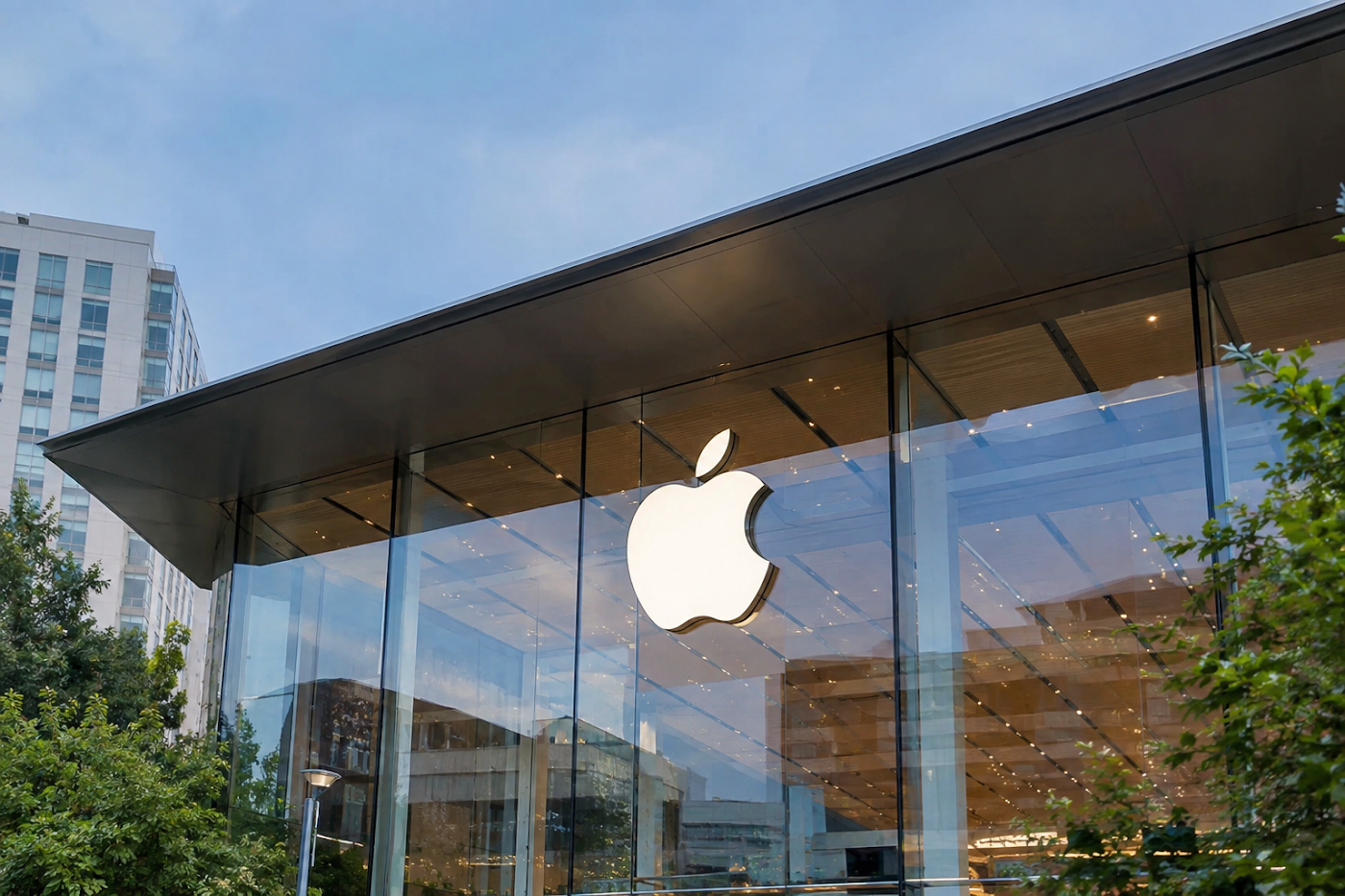
Apple's most expensive iPhone arrives under a brand-new CEO
At 1:00 p.m. ET today, John Ternus will walk onto the stage at Apple Park for the first time as CEO and introduce a product category Apple has never attempted before.
The iPhone Ultra is a book-style foldable with a 5.5-inch outer OLED display that opens into a 7.8-inch inner screen, powered by the A20 Pro chip built on TSMC's 2nm process with 12GB of RAM. TrendForce estimates a starting price between $2,099 and $2,299, with the highest storage configurations exceeding $3,000. Citi projects Apple could sell 7.3 million foldable units by early 2027. IDC expects Apple to capture 40% of global foldable shipments by next year.
Alongside the Ultra, Apple will announce the iPhone 18 Pro and iPhone 18 Pro Max. Pricing across the entire lineup is expected to run 10% to 20% higher than last year's models, driven by the global memory chip shortage that Tim Cook called a "100-year flood" on his final earnings call.
The Ternus debut matters as much as the product. Cook led Apple for 15 years and built it into a $4.6 trillion company. Ternus, a 25-year hardware engineering veteran, took over September 1. This is his first public test. Samsung and Huawei have spent years in foldables. Apple is entering late, at a higher price, with a first-generation product.
The market signal?
Morgan Stanley has Apple at Buy with a $360 target, implying roughly 9% upside. The real number to watch is not the stock price today but the pre-order data Apple reports in the days following. If the Ultra sells through its initial 7-to-8-million-unit production run, the blended average selling price across the iPhone lineup rises by an estimated 11%, and that is a margin story that runs through all of fiscal 2027.
Nuclear Stocks Are Doing Something Unexpected
Nuclear energy is moving back into the spotlight as power demand surges and grid reliability becomes a priority.
Cash flow is improving, long-term contracts are locking in revenue, and capital is rushing back into parts of the sector that were ignored for years.
Our analysts believe this shift is happening faster than most investors realize.
Their FREE report reveals 7 Top Nuclear Stocks to Buy Now — including high-growth uranium plays and steadier contract-backed names.
Get the full list free now before it disappears behind the paywall.
Oil is one dollar from the number that changes everything
Brent crude touched $100 this morning.
The overnight escalation was severe. The U.S. military destroyed five Iranian crude tankers on Tuesday, including one near Kharg Island, Iran's main oil export hub. Iran retaliated by firing ballistic missiles at the Al-Azraq air base in Jordan. Jordan's air defenses intercepted 18 of 20 missiles. Iran's Supreme National Security Council also announced plans for a maritime "exclusion zone" outside the Strait of Hormuz where vessels would need Iranian permission to transit.
Goldman Sachs commodity strategist Francisco Blanch warned that Brent could trade between $95 and $120 if skirmishes continue through year-end. The U.S. Strategic Petroleum Reserve has plunged to less than 290 million barrels, the lowest since 1982, limiting Washington's ability to cushion the price impact.
This is not abstract anymore. American gas prices hit their highest Labor Day levels ever this weekend. Record diesel feeds directly into freight, grocery, and construction costs. With CPI arriving Friday, every cent oil adds writes itself into the inflation print the Fed uses to decide whether to hike on September 15.
The market signal?
If Brent sustains above $100 before Friday morning, the September hike becomes near-certain regardless of what core CPI does. The exclusion zone announcement is the new escalation risk. If Iran enforces it, insurance premiums on Gulf shipping spike overnight, and the inflationary pass-through accelerates.
Qualcomm just became a data center company. Amazon signed the receipt.
Qualcomm (QCOM) shares rose 7% on Tuesday after the company announced a multi-generational product collaboration with Amazon (AMZN) to build custom AI inference chips for AWS data centers. As part of the deal, Qualcomm issued warrants for Amazon to acquire 25 million shares at $161.26, a $4 billion stake that gives Amazon skin in Qualcomm's data center future.
This is the deal that legitimizes Qualcomm's pivot. The company built its empire on mobile phone chips. At its June Investor Day, it laid out a $15 billion data center revenue target for fiscal 2029. But targets without customers are PowerPoint. Amazon is the customer.
The collaboration covers multiple generations of customized inference silicon plus optical connectivity extending to 1.6T speeds. The subtext: AWS wants alternatives to Nvidia (NVDA) for its inference workloads, and Qualcomm's power-efficiency pedigree from mobile gives it a credible edge in energy-constrained data centers.
The market signal?
Qualcomm now has two hyperscaler partners (Amazon and Meta). If it lands a third, the re-rating from "mobile chipmaker" to "AI infrastructure company" accelerates. Watch fiscal Q4 earnings in November for the first revenue attribution from the AWS deal.
The Closest Thing to a Virtual AI Monopoly Wall Street Is Ignoring
A little-known company is building what may be the closest thing to a virtual monopoly the AI era has ever seen.
Only 3...
Yet it beat Apple, Amazon, and the S&P 500 combined...
While paying out $146,000 in total dividends on a 1,000-share stake.
Kevin O'Leary calls what it controls a "unicorn."
Right now, it's trading at a rare discount.
>>>Whitney Tilson reveals the name, completely free.<<<
This ad is sent on behalf of Stansberry Research, 1125 N Charles St, Baltimore, MD 21201. If you would like to optout from receiving offers from Stansberry Research please click here.
Intel just told its customers they're paying more. The stock loved it.
Intel (INTC) surged 10% on Tuesday, closing at $105.48, after DigiTimes reported the company plans to raise PC CPU prices by roughly 10% in early October. Northland Securities simultaneously upgraded Intel to Outperform with a $120 target, citing the Terafab partnership with SpaceX and Tesla and tightening server CPU supply.
This is Intel's third round of price increases since late 2025. The first came in Q1, the second in July (Arrow Lake Refresh up 15-17%), and now a third in October. A company raising prices three times in under a year is either extracting real pricing power or squeezing customers who have nowhere else to go. Probably both.
CEO Lip-Bu Tan has been cutting low-margin product lines and prioritizing profitability over volume. Data center and AI revenue grew 59% year-over-year in Q2, its highest quarterly growth on record. Intel and AMD are effectively sold out of server CPUs for the rest of 2026. Washington's 9.9% Intel stake, purchased in August 2025, is now worth a paper gain of roughly $36 billion.
The market signal?
Intel's ability to raise prices without losing share is the strongest evidence yet that the server CPU shortage is structural, not cyclical. The beneficiaries extend beyond Intel: AMD (AMD), which gained 5.9% in sympathy, and Broadcom (AVGO), which climbed 3%.
Bessent's $4 billion experiment starts today. The bond market is watching.
The Treasury Department's doubled buyback program officially begins this morning. Starting today and running through November 4, the Treasury will purchase up to $4 billion per operation in longer-dated bonds, double the previous $2 billion ceiling, targeting the 10-to-30-year sector where yields have been climbing despite the Fed holding steady.
Secretary Scott Bessent announced the doubling on August 19, calling it a "Treasury Twist" and suggesting the Treasury could tap its nearly $1 trillion General Account to fund the purchases. The initial market response was a bond rally that lasted exactly one day. By Thursday, yields had reversed. Rebecca Patterson of the Council on Foreign Relations called buybacks "more signal than substance", noting they are a plumbing tool, not a policy lever.
Today is the first real test. The 30-year closed Tuesday at 5.25%. If today's operation pulls long yields lower and they hold through Thursday, Bessent's credibility grows. If yields shrug it off, the market reads it as confirmation that fiscal concerns, not liquidity, are driving the term premium.
The market signal?
The overlap with midterm campaign season is not accidental. The buyback window runs through November 4, one day before Election Day. Lower long-term yields mean lower mortgage rates, lower corporate borrowing costs, and a better political backdrop. If it fails, the 30-year at 5.5% becomes a live possibility before voters go to the polls.
WARNING: A Major Market Shift Could Hit Stocks in 2026
If you have any money in the stock market, you may want to pay attention.
New research points to a massive market-moving event that could send hundreds of popular stocks into a sudden free fall.
Holding the wrong stocks when this hits could erase years of gains.
That’s why analysts have now identified a list of stocks investors may want to avoid as this event unfolds.
If you want to see what’s coming — and which stocks could be most at risk —
- Thursday delivers a double shot: Oracle (ORCL) reports fiscal Q1 2027 earnings after the close, with analysts expecting $19.13 billion in revenue and $1.74 EPS. The $638 billion backlog is either the most bullish metric in enterprise tech or the most overcommitted capital deployment story since WeWork. Options are pricing an 11% move either way. The same day brings August PPI at 8:30 a.m. ET, with wholesale inflation expected to accelerate to 5.4% from 4.7%. A hot PPI sets the table for Friday's CPI.
- Friday's August CPI at 8:30 a.m. ET remains the single most consequential data point between now and the Fed's September 15-16 meeting. Core is expected roughly flat near 2.5%, but headline CPI is projected around 3.4%, with energy as the dominant driver. A print above 3.5% combined with August's 162,000-job payroll report would make a rate hike functionally unavoidable. A print below 3.2% is the only scenario that clearly takes September off the table.
- China's August export data showed a 25% year-over-year jump and a $119 billion trade surplus, the widest this year. Exports to the U.S. rose 34.4%. The data lands ahead of a planned Trump-Xi meeting in late September, where trade is expected to dominate. For now, China's export machine is running hotter than the political rhetoric about decoupling would suggest.
- The market signal across all three? Thursday is the rehearsal. Friday is the verdict. And today, between Apple's keynote, Bessent's buyback, and oil flirting with $100, the market has to decide which of its three bosses to listen to first.

That's it for today's Slate. Apple at 1 PM, Bessent at the open, oil at $100. Pick your lane. Stay close to the feed.
Today's reply prompt: Apple's first foldable at $2,000+. Are you in or are you out?
FREE FINANCIALMARKETS.COM ALERTS
The Next Market Move Could Start With One Alert
Get breaking market developments, trade ideas, analyst signals and upcoming catalysts sent directly to your phone.
Markets move quickly. Now your information can too.


