


Good morning, Slaters!
August opened with a split personality.
Amazon just posted its first $200 billion revenue quarter and jumped 15% on Friday. Trump canceled a planned strike on Iran Saturday night and announced negotiations restart this afternoon. If that deal holds, Hormuz reopens and the inflation math changes overnight.
On the other side: Apple lost $430 billion in market value after Tim Cook called the memory chip shortage a "100-year flood." And as of Saturday, an Xbox costs $800. Not a typo. The AI buildout is no longer an abstract data-centre story. It is showing up in your living room.
The winners of AI are getting richer. The consumers downstream of it are paying more. Let's get into the week that could resolve at least one piece of it.
The $400 billion pharma deal that just landed on desks
AstraZeneca (AZN) and Bristol Myers Squibb (BMY) have held preliminary merger discussions, the Financial Times reported Sunday. Bloomberg confirmed separately. The combined entity would be valued at roughly $400 billion, making it one of the largest mergers in corporate history and the world's fourth-largest drugmaker.
The complication: both companies generate over 40% of revenue from oncology, and their immunotherapies directly compete. Antitrust scrutiny is expected. Bristol Myers has a separate urgency: Revlimid has lost patent exclusivity and several other drugs face generics before 2028. A merger with AstraZeneca would be the nuclear option for pipeline renewal.
The market signal?
Watch BMY's opening print. If it gaps above Friday's close, the market is pricing in a premium. Every mid-cap oncology company with a competitive pipeline just became a more interesting acquisition target.
The Government Just Unlocked a $500 Trillion Opportunity
A small government task force just finished a 20-year project.
They probably didn't realize their findings would allow everyday citizens to stake a "claim" on a $500 trillion national treasure.
But they did. And under U.S. law your "birthright claim" is now active.
This opportunity won't stay under the radar for long.
Click here to see how to "claim" your piece before Washington changes its mind.
The data that drops at 10 AM could set the week's tone
The ISM Manufacturing PMI for July releases at 10:00 a.m. ET. June came in at 53.3, down from 54.0 in May. Manufacturing has been expanding for six months, but the trajectory is softening, and the Prices Paid subindex has been running at its highest level in nearly four years.
Why it matters more than usual: June payrolls landed at just 57,000, well below the 110,000 consensus. April and May were revised down by a combined 74,000. The household survey is grimmer: civilian employment has fallen 833,000 since January. Friday's July payrolls report will tell us which survey is lying.
The market signal?
A print below 52 rattles the "soft landing" narrative. A print above 54 with hot prices paid gives inflation hawks fresh ammunition. Today's number sets the tone for the rest of the week.
Andy Jassy's "booming" quarter just reset the cloud hierarchy
Amazon (AMZN) delivered the quarter that redrew the cloud hierarchy. Q2 revenue crossed $200 billion for the first time, up 20% year-over-year. AWS hit $42.2 billion, growing 37%, its fastest rate in 18 quarters. Operating income surged 43% to $27.5 billion.
EPS landed at $5.75 versus $1.81 expected (includes a $53.4 billion Anthropic stake gain, but the operating quarter was still a blowout). AWS operating income hit $16.6 billion. AI and custom chips each crossed $25 billion annualised run rates. The cloud backlog: $496 billion.
Capex guidance raised to $220 billion. Free cash flow swung negative. Stock surged 15.3%. The earnings-week cloud scorecard: Google Cloud grew 82%, Microsoft’s (MSFT) Azure 43%, AWS 37%. All accelerating.
The market signal?
The cloud wars are now about who can sustain the spend long enough to capture the enterprise AI layer. Amazon's willingness to go cash-flow-negative tells you how high the stakes are.
Why are companies flying spy planes over Elon's closely-guarded AI lab?
Elon did the seemingly impossible – far faster than anyone expected...
And it's sent the tech industry into PANIC MODE.
ChatGPT, Claude, Google Gemini, and DeepSeek could soon become obsolete.
And three little-known firms could soar 10X or higher as a result.
Trump cancels Iran strikes. Talks restart this afternoon.
Saturday night, Trump posted on Truth Social that the US was "locked and loaded" for what he called the "biggest attack since World War II" against Iran. Then he canceled it.
Iran and other Middle Eastern countries asked the US to pause, Trump said, because "the perimeters of a deal has been agreed to." The deal would include the opening of Hormuz and an end to Iran's nuclear programme. On Sunday, he said talks restart "tomorrow afternoon." That is today.
Brent fell and closed Friday at $87.93, up 23% over the past month since the June ceasefire collapsed. The State Department issued a fresh travel warning to Americans across the Middle East on Saturday. Kuwait reported Iranian drone attacks. A tanker near Oman was struck Friday.
The market signal?
Both sides have structural reasons to deal: Iran needs sanctions relief, the US needs Hormuz open before the midterms. Watch Brent at the open. Below $85 means the market is pricing in a deal. Above $88 means it is not.
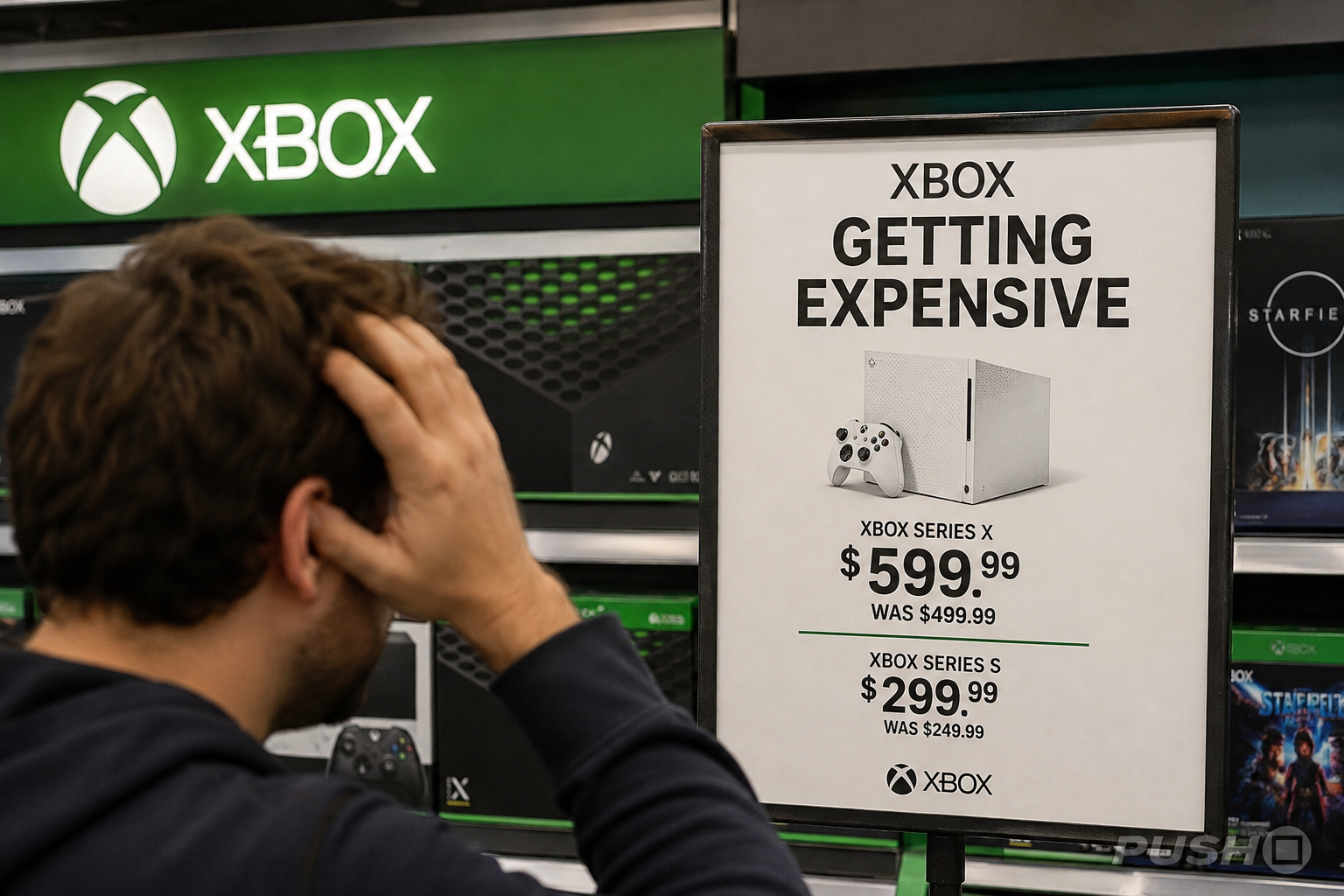
Your Xbox now costs $800. Blame the same thing powering your AI search.
As of Saturday, the Xbox Series X retails for $799.99. Up from $499.99 at launch. The 2TB model was discontinued entirely because crossing $1,000 for a console was a bridge too far. This is the third price increase in 14 months.
Microsoft was unusually candid: "Console storage and memory prices have increased by more than 2.5x and we expect another doubling by the fall of 2027." Windows Central reported Microsoft is still losing $150 per unit even after the hike.
AI data centres now consume 70% of global memory production. Samsung, SK Hynix, and Micron (MU) have pivoted toward high-bandwidth memory for GPUs. Every wafer allocated to an HBM stack is a wafer denied to the DRAM in your console, phone, or laptop. Deloitte calls this "RAMageddon" and projects the shortage until 2029. Sony's PS5 is now $649. The Switch 2 rises to $499.99 on September 1.
The market signal?
Memory makers post record margins. Console and device makers raise prices on consumers already at a 2.7% savings rate. That divergence hits holiday electronics demand hard.
Landmark Executive Order 14241 Unleashes
TRUMP’S NEW DOLLAR
Republican or Democrat – whether you support or oppose Trump’s New Dollar – every American could soon be forced to use it
Discover three critical moves to help you prepare, before it’s too late
- Palantir Technologies (PLTR) reports Q2 after the close today. Wall Street expects $1.81 billion in revenue (up 81%) and EPS of $0.34. A ninth consecutive guidance raise would be the clearest signal that enterprise AI spend is still accelerating outside the hyperscaler club.
- Advanced Micro Devices (AMD) reports Tuesday, the first real test of AMD's data-centre GPU momentum against Nvidia. Also this week: Walt Disney (DIS) Wednesday, McDonald's (MCD), and Friday's July nonfarm payrolls, the most consequential data point of the month. If July confirms June's 57,000 weakness, the September FOMC shifts from "hold" to "cut" in CME FedWatch pricing.
- The market signal across all three?
- Palantir and AMD bookend the AI demand question. The jobs report could reshape the rate-cut timeline. Iran talks resume this afternoon. Position sizing matters again.
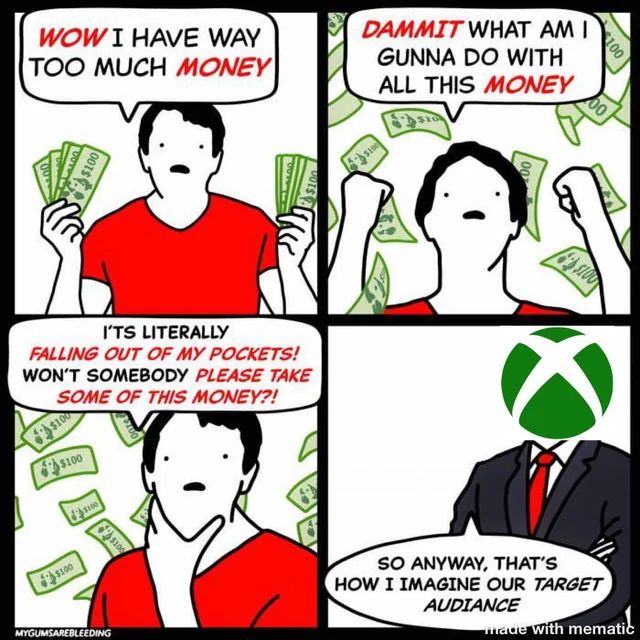
Xbox pricing team:
That's it for today's Slate. Massive week ahead: ISM at 10am, Iran talks this afternoon, Palantir after close, AMD Tuesday, jobs Friday. Stay close to the signals.
Today's reply prompt: Amazon went cash-flow-negative to fund AI. Apple got punished for a chip shortage it can't control. Which company's stock do you want to own for the next five years, and why?


