Good morning, Slaters!The Federal Reserve on Wednesday delivered its first rate hike in more than three years, pushing the target range to 3.75%-4.00%. The Bank of Japan wrapped its own two-day meeting overnight and raised rates to 1.25%, the highest level since 1995. And layered on top of all of it, roughly $6.2 trillion in U.S. options and futures contracts expire by the closing bell. Triple witching Friday. The quarterly event where stock options, index options, and index futures all die on the same afternoon. Each of these alone would make a volatile session. All three arriving simultaneously is the kind of calendar pileup that gives risk managers chest pains. Thursday offered a preview. Stocks bounced hard: S&P 500 up 1.1%, Nasdaq up 1.7%, VIX down 12%. Certainty was better than suspense. But that bounce happened before $6.2 trillion in contracts needed to settle. Today will tell us whether the relief was real or just positioning before the storm. Let's get into what actually matters. 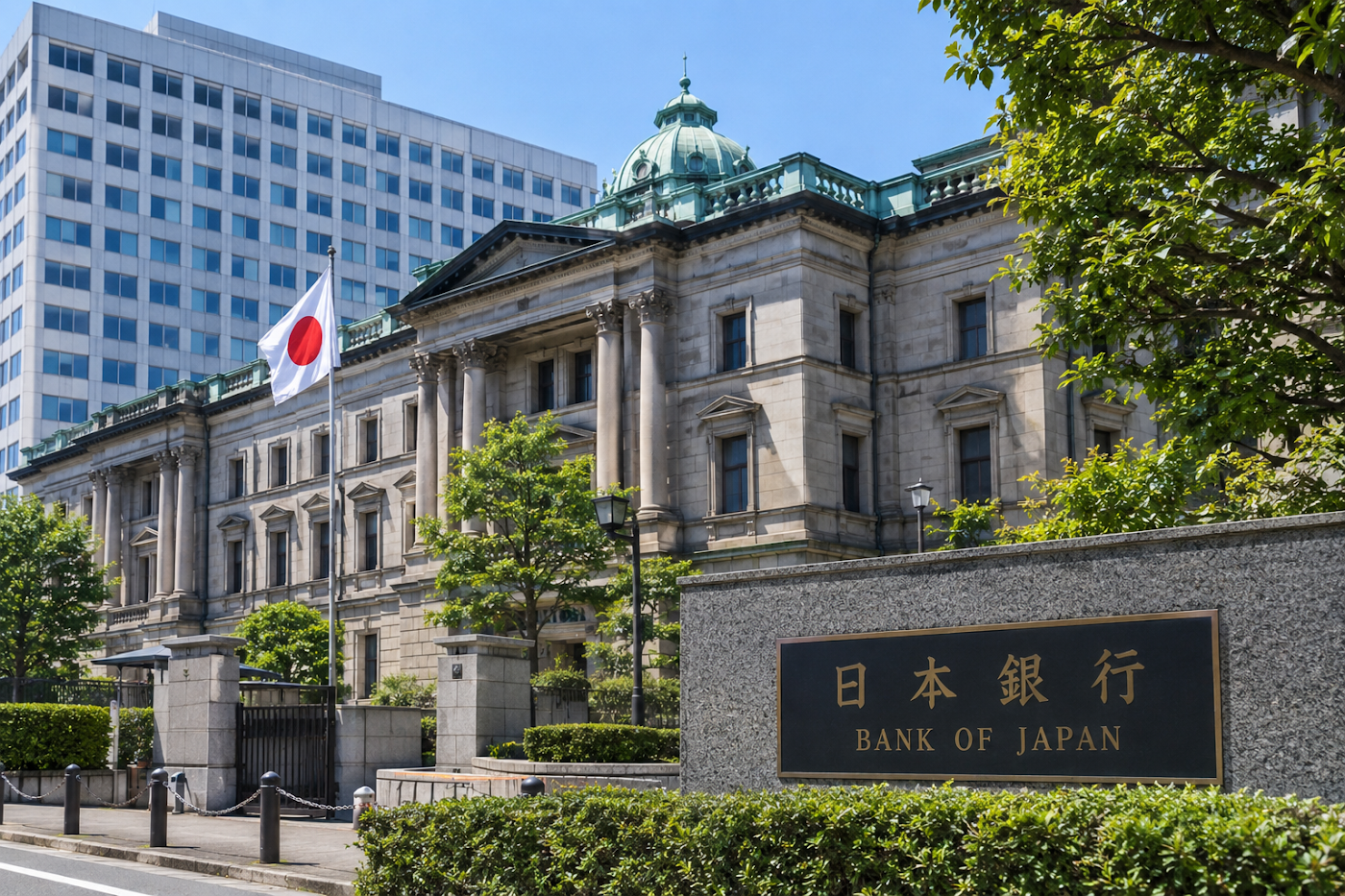
Daybreak The Fed hiked. The dot plot is the real story.The headline was expected. The 25-basis-point increase, the unanimous 12-0 vote, the clipped language about inflation remaining "elevated." Chair Kevin Warsh's press conference delivered the line that will travel: "The plain fact is that inflation is too high and has been for too long." None of that was news. What was news was the dot plot. Sixteen of eighteen FOMC members now project at least one more quarter-point hike before December. The median year-end rate estimate moved to 4.25%, implying a second increase at the October or December meeting. The committee also revised its unemployment forecast downward to 4.1% and nudged GDP growth higher, a combination that suggests the Fed sees the economy as too strong to leave rates alone even as it hikes into an oil crisis. That framing matters. The Fed is hiking because oil prices above $100, driven by the Iran war and the Saudi pipeline shutdown, are feeding through to goods prices and inflation expectations. It is tightening into supply-driven inflation, which is the monetary policy equivalent of using a hammer on a screw. Wednesday's reaction: the S&P 500 fell 0.5%, the Dow dropped 631 points, financials led the losses. Thursday, stocks reversed almost entirely. The Nasdaq Composite climbed 1.7%. The 10-year Treasury yield snapped an eight-day rising streak. The market signal? The hike itself is priced. The second hike is not. Watch the October dot-plot commentary. If the hawks consolidate further, the 10-year yield retests 5.10% and equity multiples compress again. As long as the market reads this as a one-and-done cycle, the relief trade holds. The moment it doesn't, financials crack first. PREMIER FEATURE Nuclear Stocks Are Doing Something UnexpectedNuclear energy is moving back into the spotlight as power demand surges and grid reliability becomes a priority. Cash flow is improving, long-term contracts are locking in revenue, and capital is rushing back into parts of the sector that were ignored for years. Our analysts believe this shift is happening faster than most investors realize. Their FREE report reveals 7 Top Nuclear Stocks to Buy Now — including high-growth uranium plays and steadier contract-backed names. Get the full list free now before it disappears behind the paywall. Pulse Check Triple witching meets central bank weekToday is September's triple witching, one of only four sessions a year where stock options, index options, and index futures expire simultaneously. Citadel Securities estimated $6.2 trillion of U.S. options exposure is set to expire by the close, a figure that has likely grown as the week progressed. Normally, triple witching is a plumbing story. But this quarter, the mechanical event lands in the direct path of two central bank decisions, a Middle East energy crisis, and a market that whipsawed 1.5% in 48 hours. Thursday was constructive. The S&P 500 closed at roughly 7,633, up 1.1%. The Nasdaq led at 26,381. Chipmakers climbed 3%. The VIX dropped to 15.55. But triple witching volume peaks between 3:00 and 4:00 p.m. ET. Any drift toward heavily populated option strikes can trigger cascading hedging flows. The question is whether the post-Fed relief survives the mechanical stress test. The market signal? Intraday swings of 1% or more in the final hour would be consistent with expiration mechanics, not a fundamental shift. The real read comes Monday: if the S&P holds above 7,550 into next week, the post-hike bounce has legs. A break below puts the September lows back in play. Who Moved the Mic? Warsh spoke more by saying lessKevin Warsh has now been Fed chair for less than four months, confirmed 54-45, the narrowest margin the job has ever seen. His predecessor left a legacy of extensive forward guidance, detailed press conferences, and a dot plot that functioned as a commitment device. Warsh has done the opposite. He has halved the post-meeting statement. He declined to submit his own projections to the dot plot, a first since 2012. At Jackson Hole, he described the approach as "a discipline, not a decision." On Wednesday, when a reporter asked whether a second hike was likely, Warsh said simply: "We will look at the data." No hint. No conditional framing. That discipline is itself a signal. By refusing to telegraph, Warsh is forcing the bond market to price its own expectations. The result: the 30-year sits near 5.23%, the 10-year around 4.97%, and the curve is steepening from the long end. Investors are charging more for duration risk, not pricing in cuts. The market signal? Warsh is running the most opaque Fed in a decade. For traders, that means the next CPI print, the next PCE reading, the next jobs report all carry more weight than they did under the prior regime. Every data release is a live decision point. Position sizing should reflect that uncertainty. FROM OUR SPONSORS You’re Being LIED To About The Iran War
Forget EVERYTHING you’ve heard about the Iran war. Especially the reasons why we’re bombing the country. Because THIS is the real reason. World, Uncomplicated Saudi Arabia's pipeline is still down. The backup plan needs a backup plan.The East-West pipeline has been shut since September 11, when drone attacks from Iraq struck pumping stations in the Riyadh and Medina regions. Saudi Aramco is reportedly working to bypass a damaged section and restore half capacity within days, with full repairs potentially taking five to six weeks. The pipeline carries up to 5 million barrels per day to the Red Sea port of Yanbu. It existed as the alternative to the Strait of Hormuz, which has been effectively closed since February. When the backup to the blocked route also goes down, the global oil system runs out of contingency plans. Capital Economics estimated as much as 4% of global oil supply could be affected. Oil hit $108 on Monday before easing. WTI closed Thursday around $102, Brent near $104. Every week the pipeline stays down reinforces the case for that second Fed hike the dot plot projects. The supply shock just lost its Plan B. The market signal? Watch the Aramco capacity restoration timeline closely. If half-capacity is achieved this weekend, Brent drifts below $100 and the energy risk premium shrinks. If the repair timeline slips to the full six weeks, crude retests $110 and the inflation story resets entirely. Beyond the Candles The Bank of Japan just made it a two-hike FridayWhile markets were digesting Warsh on Wednesday, the Bank of Japan opened its own two-day meeting in Tokyo. The decision landed overnight: a 25-basis-point hike to 1.25%, the highest Japanese policy rate since 1995. The vote was 7-2, with board members Toichiro Asada and Ayano Sato dissenting. The move marked the BOJ's sixth hike since exiting ultra-loose policy in 2024, and the fastest pace of tightening in the cycle, just three months after the last increase. Governor Kazuo Ueda had been signalling since summer that tightening would continue, and the BOJ cited upside risks to inflation beyond its 2% target as the reason for acting. Core inflation remains elevated. The yen has been under sustained pressure despite coordinated intervention with the U.S. in July. Here is why this matters beyond Tokyo. Japan is the world's largest creditor nation. Japanese institutions hold roughly $1.1 trillion in U.S. Treasuries. Today's hike narrows the interest-rate differential further, making U.S. bonds less attractive to Japanese buyers. If capital flows home, it adds selling pressure to Treasuries at exactly the moment the U.S. is running a $2 trillion deficit. The yen strengthened on the news. If Ueda's press conference (set for 2:30 a.m. ET) signals a December hike to 1.50%, the move toward 150 per dollar accelerates, historically a trigger for carry-trade volatility across Asia. The market signal? The hike is done. The forward guidance is what moves markets now. If Ueda signals a December hike to 1.50%, expect Treasury selling pressure and a sustained yen rally. If he pauses guidance, the carry trade exhales and the dollar strengthens. Under the Hood Anthropic's public S-1 is coming, and it will redefine how we price AIQuietly, while the Fed and the BOJ grabbed every headline, a different clock has been ticking. Anthropic's confidential S-1 has been under SEC review since June 1. The public filing is now expected in late September, with an institutional roadshow pencilled for mid-October and a potential Nasdaq listing before the November midterms. The numbers are vertiginous. Run-rate revenue crossed $47 billion in May. The last private round valued Anthropic at $965 billion. Secondary markets are bidding above $1 trillion. Morgan Stanley and Goldman Sachs (GS) are leading the underwriting. This will be the first frontier AI lab to go public. Every disclosure, from compute costs to Amazon (AMZN) and Google (GOOGL) dependency, will set the valuation framework for the entire sector. Sam Altman said on September 12 that a 2026 IPO for OpenAI would be "ill-advised", landing the same week Anthropic's roadshow timeline solidified. The race is no longer about who has the best model. It is about who defines the public-market narrative for AI first. The market signal? When the public S-1 drops, the key number to watch is not revenue. It is compute cost as a percentage of revenue. That single ratio determines whether AI is a high-margin software business or a low-margin infrastructure utility. The answer reshapes every AI multiple in the market. SPONSOR SPOTLIGHT Louis: The "Strawberry Problem" Is Stalling the AI Revolution
Billion-dollar tech investor Louis Navellier calls it "AI's darkest secret." Until AI models solve the "Strawberry Problem," they'll never create new breakthroughs in medicine, energy, or quantum computing. The good news? One company is about to solve the crisis… unleashing a new $100 trillion opportunity. Click here for details. This ad is sent on behalf of InvestorPlace Media at 1125 N. Charles Street, Baltimore, Maryland 21201. If you're not interested in this opportunity, please click here. What's Brewing - The BOJ delivered its expected hike to 1.25% overnight. Governor Ueda's press conference is the next catalyst. If he signals a December move to 1.50%, the yen's rally will cascade through carry trades and add early volatility to an already loaded session. The forward guidance language is the real variable.
- Triple witching volume peaks in the final trading hour. The heaviest futures roll has already happened, but options settlement remains. Intraday reversals are probable. The 7,550-7,650 range on the S&P 500 is the battleground.
- Anthropic's public S-1 is expected within two weeks. The mid-October roadshow means institutional positioning in AI-proxy names like Nvidia (NVDA) and Microsoft (MSFT) will start reflecting whether the listing validates or tests sector valuations.
- The market signal across all three? This is the most mechanically loaded Friday of 2026. Central bank decisions, trillions in expiring contracts, and an AI IPO approaching its disclosure moment. The signals that survive this session are the ones worth carrying into next week.
Meme of the Day 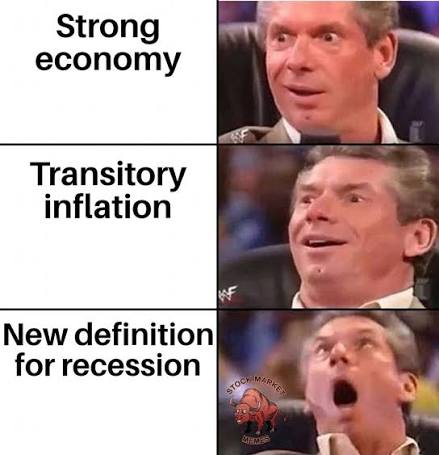
That's it for today's Slate. Massive Friday. Watch the final hour. Today's reply prompt: The Fed hiked for the first time in three years. Is this the start of a cycle or a one-and-done? FREE FINANCIALMARKETS.COM ALERTS The Next Market Move Could Start With One Alert Get breaking market developments, trade ideas, analyst signals and upcoming catalysts sent directly to your phone. Markets move quickly. Now your information can too. START GETTING FREE ALERTS → | 


