


Good morning, Slaters!
There is a version of September that starts quietly. This is not that version.
Yesterday delivered three datasets and one $35 billion deal that together tell a story the market has been trying not to hear. The ISM Manufacturing PMI fell to 54.6 from 55.6 while Prices Paid held stubbornly at 71.1%. The JOLTS report missed for the second straight month at 7.27 million openings, with June revised down 177,000. Oil surged 5.8% to $90.71 after a cargo ship was struck in the Strait. And Anthropic signed a $35 billion computing deal with Nvidia-backed Lambda.
The S&P 500 fell 0.71%. Nasdaq dropped over 1%. VIX jumped nearly 10%. Broadcom reports after the close today. Let's sort through it.
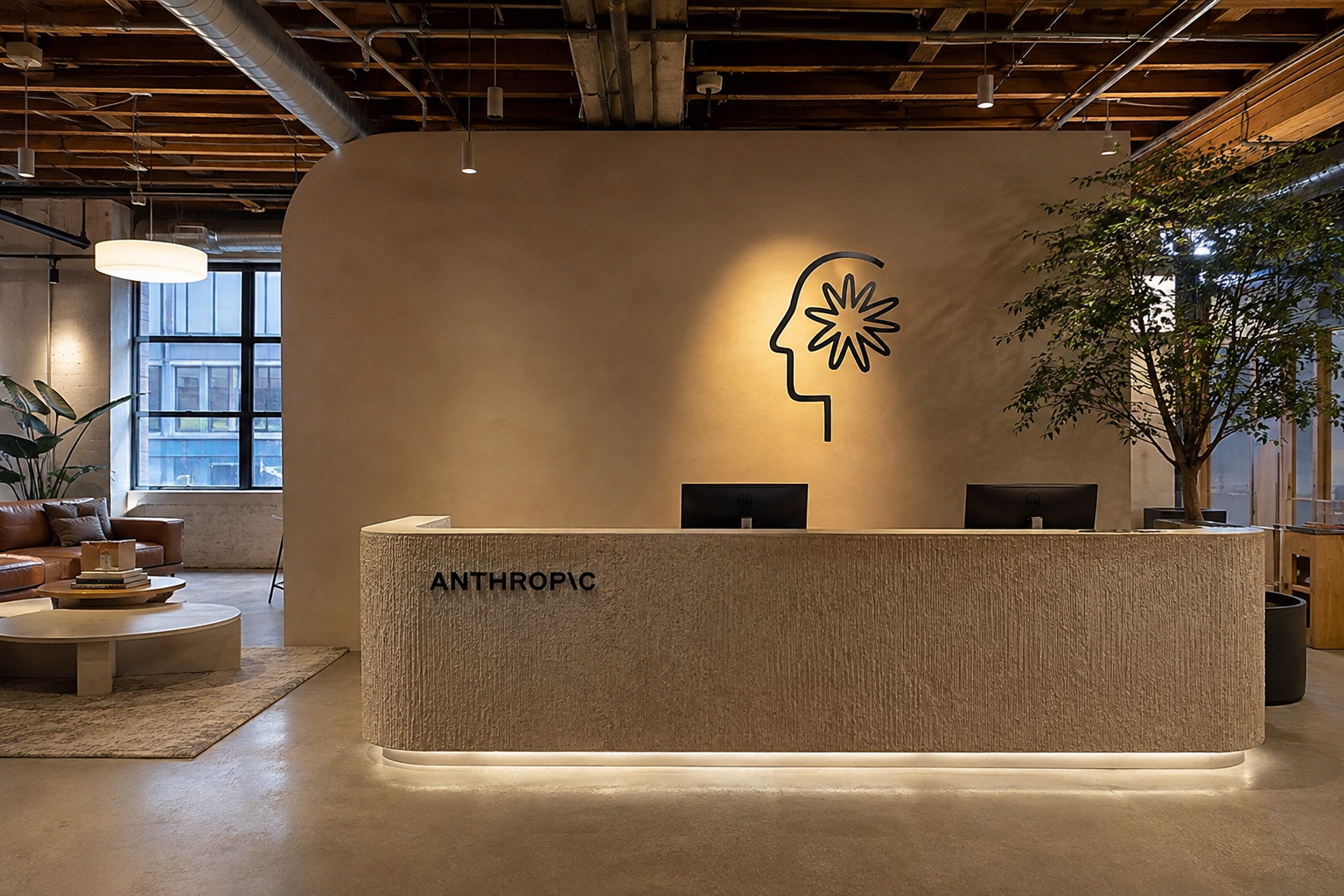
Anthropic just committed $180 billion to compute. In five months.
Here is a number that deserves to sit in the room for a moment: $180 billion. That is the approximate total Anthropic has committed to cloud computing capacity since April. The latest: a six-year, $35 billion deal with Lambda, a cloud provider backed by Nvidia (NVDA). Before that: $45 billion with Nscale in West Virginia. $50 billion with Fluidstack. $45 billion with SpaceX. And a massive expansion with Amazon Web Services (AMZN).
The Lambda deal's structure reveals how the AI infrastructure economy actually works. Hut 8 (HUT), a former Bitcoin miner, builds a data center in Nueces County, Texas. Nvidia leases the facility from Hut 8 for 15 years at nearly $20 billion. Lambda installs Nvidia chips and resells the compute to Anthropic.
Nvidia is the anchor tenant, the chip supplier, and an investor in the intermediary. It underwrites its own demand forecast, which makes the project financeable, which lets Hut 8 build, which gives Lambda a contract it couldn't land alone. The chain is elegant until you ask the question Forbes raised: is Nvidia guaranteeing demand, or manufacturing it?
The 1999 parallel is inevitable. Lucent, Nortel, and Cisco extended vendor financing during the telecom bubble, booking revenue from capacity their own money built. Nvidia's defenders say the comparison breaks because Anthropic's $47 billion annualized revenue is real and Claude Code is embedded in enterprise workflows. Both things can be true. The demand is real. And the financing structure embeds risks that only surface when growth decelerates.
The market signal?
Nvidia dropped 2% yesterday despite being at the center of the Lambda deal. That tells you the market is watching the financing chain, not just the revenue line. If Broadcom's print tonight shows any deceleration in its own AI bookings pipeline, the "who is guaranteeing whose demand" question gets louder fast.
90% of AI Runs Through This Company
The biggest AI wins often come from companies you don’t hear about every day.
Case in point:
The database provider now embedded into the big three cloud platforms - with access to 90% of the market.
You’ll find the name and ticker of this newly-minted giant in our 7 AI Stocks to Invest in Today report, along with:
• The chip giant holding 80% of the AI data center market.
• A plucky challenger with 28% revenue growth forecasts.
• A multi-cloud operator with high-end analyst targets near $440.
Plus 3 other AI stocks set to take off.
Three datasets, one story: slower growth, sticky prices, cracking labor
Yesterday's data dump arrived in three acts that together drew the sharpest picture of the US economy since the July payrolls shock.
Act one: ISM Manufacturing at 54.6, down a full point from July. Still expanding for the eighth straight month, but internals weakened across the board. New Orders fell 3 points to 53.7. Employment slipped to 51.2. The number that didn't budge? Prices Paid, stuck at 71.1%, its 23rd consecutive month of increases driven by steel, aluminum, tariffs, and petroleum costs from the Hormuz blockage.
Act two: JOLTS at 7.27 million, missing the 7.31M consensus. June revised down 177,000. Hires fell. Quits fell to near six-year lows. Two consecutive JOLTS misses with downward revisions is the pattern that precedes negative payrolls prints. July's NFP was already minus 23,000.
Act three: crude surged 5.8% to $90.71 after a cargo vessel was struck transiting the Strait. The S&P 500 fell 0.71% to 7,631.47. Nasdaq dropped 1.03%. Energy led, up 1.3%. Consumer discretionary lagged, down 1.9%. VIX jumped 9.5% to 16.34. Marvell Technology (MRVL), Intel (INTC), Oracle (ORCL), and Tesla (TSLA) all fell roughly 3%.
The market signal?
CME FedWatch puts September hike probability at 68%. ADP drops at 8:15 this morning. If ADP shows private payrolls below 50,000, the labor crack becomes the week's story. Above 100,000, the hike trade stays intact but oil keeps feeding the inflation leg. Friday's NFP is the decision point for September FOMC.
Broadcom's $16 billion test lands after the bell
Broadcom (AVGO) reports fiscal Q3 after the close today. The numbers the market is expecting: approximately $29.4 billion in revenue, up 85% year over year. Non-GAAP EPS around $3.24, roughly doubling the year-ago quarter. AI semiconductor revenue guided at $16 billion, representing over 200% growth.
Morgan Stanley put the setup plainly in a pre-earnings note: "The main risk into the print is expectations rather than fundamentals." Some institutional investors have quietly set an internal bar north of $150 billion in AI revenue for fiscal 2027. Morgan Stanley models $120 billion. The gap is where near-term volatility lives.
Context: Broadcom beat on both lines in Q2 and still fell 12.6% because management declined to raise its fiscal 2027 AI target above "in excess of $100 billion." The stock hasn't recovered its pre-Q2 high. Investors are expecting outstanding numbers while bracing for a guidance non-raise that the market treats as a miss anyway.
The semiconductor sector posted 142% year-over-year earnings growth in Q2. Exclude semis from the IT sector and blended growth drops from 75.3% to 38.3%. That is how concentrated the earnings momentum has become. Broadcom sits at its center.
The market signal?
Watch two things after the bell. Does management raise the $100 billion-plus AI revenue target? Does Q4 gross margin guide hold near 74% or compress further from TPU-heavy custom silicon mix? A beat with a raise is the catalyst for AVGO to reclaim $400. A beat without a raise replays the Q2 movie.
Forget SpaceX, Elon Is Now Powering the Next Hot IPO
|

While everyone was distracted by the SpaceX IPO, Elon Musk quietly started backing a NEW AI startup…
That has been called "the fastest-growing business in the history of capitalism."
Even though this has nothing to do with robots, self-driving cars, and rockets…
It's growing faster than Tesla… faster than SpaceX… and even 23 times faster than Nvidia.
The global inflation sync nobody wanted
Eurozone inflation rose to 3.3% in August, up from 2.9% in July, its highest since September 2023. Energy prices surged 14.3% year over year, driven almost entirely by the Iran conflict and the Hormuz closure. Markets are now 99% priced for the ECB to hike 25 basis points to 2.50% on September 10.
This ties Tuesday's data into something bigger than any single print. US PCE is at 3.7%. Eurozone headline is at 3.3%. The Fed is at 68% odds of a September hike. The ECB is all but certain to hike next week. For the first time since early 2023, both sides of the Atlantic are tightening into the same headwind simultaneously.
The difference is in the core. US core PCE runs at 3.3% and climbing. Eurozone core dipped to 2.4%, services inflation fell to 3.0%. The ECB can argue this is an energy pass-through, not embedded inflation. The Fed has no such luxury.
The market signal? A synchronized tightening cycle across the world's two largest economies, driven by the same energy shock, compresses equity multiples globally. Every asset priced on a discount rate just got more expensive to hold. Watch the 10-year Bund yield alongside the US 30-year this week. If the Bund breaks 3.0%, the tightening is no longer a US-only story. It is a global repricing.
The Bitcoin miner that became AI's landlord
Every infrastructure boom produces a strange conversion story. This cycle's is Hut 8.
Hut 8 (HUT) started as a Bitcoin mining company: buy cheap electricity, fill warehouses with GPUs, hope crypto makes the math work. In July, it doubled a data center lease with an unnamed hyperscaler to 704 megawatts. That customer is Nvidia. That building is where Lambda will install chips for Anthropic.
Hut 8 is also building a campus at River Bend, Louisiana, leased to Fluidstack, which sells compute to Anthropic, backed by Google (GOOGL) guaranteeing the financing through its own TPUs. Two buildings. Two chip stacks. Two financial guarantors. One tenant.
The conversion from Bitcoin to AI isn't just a strategy pivot. It is an economics pivot. Bitcoin mining earns revenue proportional to a volatile commodity's spot price. AI leasing earns revenue from multi-year, take-or-pay contracts with the most cash-rich companies on earth. The risk profile flipped from speculative to contractual. That is why Hut 8's stock has roughly tripled this year while Bitcoin is up about 30%.
The market signal?
The picks-and-shovels trade is no longer just chips. It is the physical layer: companies that own land, power connections, and concrete. Equinix (EQIX), Digital Realty (DLR), and Hut 8 are the AI trade's real estate arm. When long-duration yields rise, data center REITs feel it. But when AI capacity is the scarcest asset in the market, those same REITs have pricing power that offsets the rate math.
Buffett, Gates and Bezos Quietly Dumping Stocks—Here's Why

The world's wealthiest individuals are making huge moves with their money.
Warren Buffett just liquidated billions of shares. Bill Gates sold 500,000 shares of Microsoft. Jeff Bezos filed to sell Amazon shares worth $4.8 billion.
What is going on? One multi-millionaire believes they are preparing for a catastrophic event. But not a crash, bank run, or recession. It’s something we haven’t seen in America for more than a century.
- ADP August private payrolls drop at 8:15 AM ET. After July's NFP shock at minus 23,000 and yesterday's JOLTS miss, this number carries outsized weight. Consensus sits well below 100,000. Under 50,000 would all but eliminate the September hike and flip the narrative from "will they hike" to "should they cut." Above 120,000 hardens the hawk case.
- Broadcom, Snowflake (SNOW), Hewlett Packard Enterprise (HPE), and NetApp (NTAP) all report after the close. The densest AI infrastructure earnings day of the quarter. If all four beat and raise, the hardware trade gets a fresh mandate despite rising rates. If any disappoint, the Vertiv template (de-rating on a beat because of duration risk) becomes the pattern.
- The Federal Reserve Beige Book releases this afternoon covering economic conditions across all twelve districts. Given the JOLTS deterioration and ISM deceleration, language on hiring and price pressures gets parsed harder than usual.
- The market signal across all three? This is the week the September FOMC decision gets written. ADP this morning, Beige Book this afternoon, ISM Services Thursday, NFP Friday. Broadcom's print tonight is the wildcard that determines whether AI earnings can still overpower the macro drag.

That's it for today's Slate. ADP in minutes. Broadcom after the bell. The week's character gets written today. Stay close.
Today's reply prompt: Anthropic has committed $180B to compute in five months. Is this visionary infrastructure or 1999-grade overcapacity?


