Good morning, Slaters!Some mornings the market gets one thing to digest. Today it gets a stack, most of it before the opening bell. The Bureau of Labor Statistics releases September CPI at 8:30 AM. Consensus expects headline inflation to rise from 3.4% to 3.6%. Core CPI, the number the Fed watches most closely in this report, is expected near 2.4% to 2.5%. One number says inflation is getting worse. The other says the underlying engine is still cooling. The Fed meets October 27-28. This is the last major inflation read before it. Earnings pile on top. ASML reported before dawn. Bank of America and Morgan Stanley report before the open. Tuesday's bank results split the room. Goldman posted a quarter far above forecasts. JPMorgan missed. Wells Fargo disappointed. The S&P 500 closed flat, as if the market couldn't decide which story to believe. Then Tuesday afternoon's signal. New York Fed President John Williams told Bloomberg News he still sees one more hike this year as possibly appropriate, but no reason, for now, to expect more in 2027. The setup: inflation data that could reignite the hawks, earnings that test whether AI demand is still accelerating, and a Fed official hinting 2027 could be quieter than feared. Let's see which story wins. 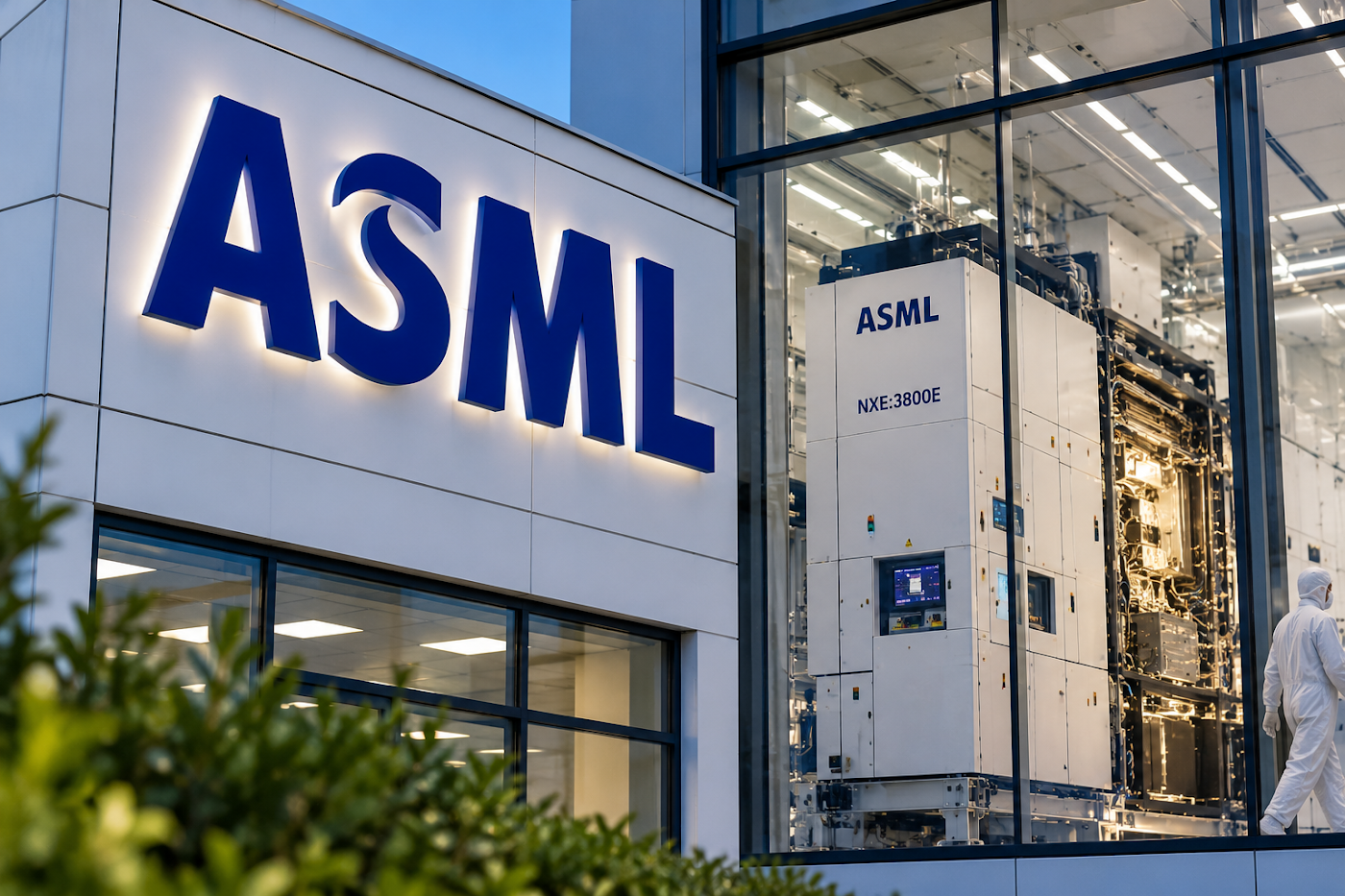
Daybreak The CPI print that could set up October 28Here is what the market needs from this morning's number, and what it fears. Headline CPI is expected to rise to 3.6% annually, up from 3.4% in August. Energy is expected to do most of that work. Core CPI is the real test. It is expected at 0.2% month over month and 2.4% to 2.5% year over year. August core was 2.4%. If core holds there or comes in below, the read is clean: energy is driving the headline, underlying inflation is behaving, and the Fed has room to hold in October. If core ticks to 0.3% or 2.6%, inflation is broadening beyond oil, and the case for a December hike (or even an October move) gets louder. CME FedWatch priced roughly a one-in-five chance of an October hike early Tuesday, down from about 70% in late September after Williams and Vice Chair Jefferson pushed back on urgency. A hot core print could reprice that by lunch. The market signal? Watch the 2-year Treasury yield, sitting near 4.8%. A jump toward 4.9% or higher on a hot print would signal traders are reopening the October hike book. A drift lower on an in-line print cements December as the consensus and gives equities room to run through earnings season. PREMIER FEATURE The markets are in a dramatically different place than they were in January.The Fed is raising rates. Geopolitical instability and energy prices are pushing inflation up. But S&P 500 earnings growth is still expected to continue — and our analysts have identified 10 stocks well-positioned to perform through Q4 and into year-end. From tech powerhouses to fuel cell makers to reliable dividend growers — all 10 vetted by MarketBeat's analysts and featured in our just-updated 10 Best Stocks to Own: Fall 2026 report. Tickers, trends, and growth potential. Yours free. Click here to get it now Pulse Check Goldman printed a masterpiece. JPMorgan did not. The gap ran through trading.Goldman Sachs (GS) posted diluted EPS of $17.01, crushing the LSEG consensus of $13.02. Revenue hit $18.68 billion, up 23% and the second-highest revenue quarter in Goldman's 157-year history. Equities was the engine: revenue surged 72% to $6.44 billion, led by prime brokerage and portfolio financing. Equities financing alone jumped 96%. JPMorgan Chase (JPM) posted a rare miss. EPS of $5.57 included $658 million in net investment securities losses that shaved $0.18 off the number. Revenue of $50.9 billion rose 8% but fell short of the Street. Wells Fargo (WFC) reported EPS of $1.87 on revenue of $21.87 billion, also light on the top line. The stock dropped 3%. Citigroup (C) beat on both lines: EPS of $2.85 and revenue of $23.8 billion. Here is where it gets interesting. This was not trading versus lending. Net interest income rose at all three big lenders: up 13% at JPMorgan, which raised its full-year outlook to about $106.2 billion, up 14% at Citi, and up 5% at Wells. JPMorgan's miss came from securities losses and a softer bond-trading quarter. The stocks didn't sort neatly either. Citi beat and fell 5.6%. Goldman gave back an early 4% gain to close slightly lower. The market signal? Beats aren't being rewarded. The KBW Bank Index was already about 12% below its mid-August peak as of Friday's close. Bank of America reports this morning with a $1.2 billion Treasury fine announced Tuesday in the background. Morgan Stanley's equities desk is the cleanest read on whether Goldman's quarter was a one-off. Who Moved the Mic? Williams just pushed 2027 off the table, for nowTuesday afternoon, New York Fed President John Williams said something the bond market has been waiting to hear. In an interview with Bloomberg News, Williams said: "I haven't changed my view that it may be appropriate to have one more rate hike" this year. Then the new part. On 2027: "I don't think at this time I have any reason to believe that we would need to do more." Williams has said since late September that one more hike is likely enough. What changed is the horizon. He is now saying the cycle may not stretch into next year. He also sees inflation near 2% for 2027 as a whole. Why this matters: the bond market has been pricing not just October but the shape of the whole tightening cycle. The 30-year Treasury yield has held above 5.5% since late September. Some of that is term premium. Some of it is fear that the Fed keeps hiking into 2027. Williams, the FOMC's permanent voting vice chair, just leaned against the second part. Treasuries had already firmed Tuesday before the interview. His comments add to the case that the long end has less reason to keep climbing. The hedge matters, though. "At this time" is doing real work in that sentence. The market signal? If CPI cooperates this morning, Williams' comments become the framework: one more hike, then a long hold. That reprices the duration trade. If CPI runs hot, his dovish lean gets stress-tested in real time. FROM OUR SPONSORS Middle East Conflict Lights Fuse on US Debt BombAmerica was already drowning in $38 trillion of debt, but the recent conflict in the Middle East just accelerated the timeline. As oil spikes, a 100-year-old stock market signal that accurately predicted the 2008 and 2020 crashes is flashing a massive "Sell" on dozens of popular U.S. equities. If you hold the wrong stocks when this debt crisis hits, it could wipe out years of gains. Click here to see the 10 popular stocks to dump immediately 11780 US Highway 1, Palm Beach Gardens, FL 33408-3080 Would you like to edit your e-mail notification preferences or unsubscribe from our mailing list? Copyright © 2026 Weiss Ratings. All rights reserved. Beyond the Candles ASML just aced the AI chip cycle's hardest exam. Now the market grades it.ASML Holding (ASML) reported Q3 early this morning, and the numbers were emphatic. Revenue came in at €11.66 billion (about $13.21 billion), above the roughly $13.16 billion consensus. EPS of €12.95 (about $14.65) beat the roughly $12.13 consensus by nearly 21%, per GuruFocus. Gross margin jumped to 57.5% from 54.0% in Q2. Net income reached €4.96 billion. ASML shipped 113 new lithography systems plus 8 used ones, up from 86 new systems last quarter. Then it raised the bar. Full-year 2026 revenue guidance is €44-45 billion at about a 56% gross margin. Q4 guidance alone: €14.2-15.2 billion at roughly 57%. The bigger line is about supply. CEO Christophe Fouquet said customers are raising short- and medium-term demand forecasts, driven primarily by AI. ASML now expects its supply "as currently planned for both 2027 and 2028 will not fully meet the demand of our customers." The company had already planned 30% more capacity for 2027 and another 30% for 2028. It is now looking at going beyond that for 2028. Some customers are already showing interest in 2029 and 2030 orders. The market signal? The test comes at the open. At about 55 times trailing earnings (GuruFocus), ASML needed more than a beat. It needed a surprise, and "demand exceeds supply into 2028" is the closest thing to one. If Nvidia (NVDA) and Broadcom (AVGO) see the same demand signals, any wobble today looks like a gift. If they don't, the "peak cycle" narrative gets louder despite the numbers. Under the Hood The mood gauge that won't budgeHere is a number that sits awkwardly next to a stock market near record highs: 46.3. That is the University of Michigan Consumer Sentiment Index for October, released Friday. It is a five-month low, the weakest reading since May's record low of 44.8. Meanwhile, the S&P 500 closed Tuesday near 7,805. Sentiment and stocks rarely look this far apart. Read those numbers together. Households feel squeezed. Markets are pricing earnings, not mood. That works as long as people keep paying the bills and keep their jobs. Sentiment surveys are soft data. Spending and payrolls are hard data. For now, the hard data is carrying the market. The market signal? This gap has a shelf life. As long as employment holds, consumers keep spending and the market keeps climbing. One labor-market crack and the spending engine stalls. Consumer discretionary is the sector most exposed. SPONSOR SPOTLIGHT What is Elon Building in Texas?
Elon's mysterious Texas project will be 3X the size of Central Park… Cost $122 billion to build… And singlehandedly DOUBLE American chip production. One investment (not Tesla/SpaceX) is at the center of it all. Click here to get its name and free ticker. This ad is sent on behalf of InvestorPlace Media at 1125 N. Charles Street, Baltimore, Maryland 21201. If you're not interested in this opportunity, please click here. What's Brewing - The Fed's Beige Book drops at 2:00 PM ET with a district-by-district read ahead of the October meeting. If regional reports flag rising input costs or hiring freezes, the narrative shifts from "one more hike" to "one more hike, soon."
- TSMC reports full Q3 earnings Thursday. Revenue already topped its own guidance at $46.71 billion, above the $44.6-45.8 billion range. The call fills in margins, AI demand commentary, and 2027 capex plans. If TSMC raises its outlook again, Nvidia and Broadcom both get a tailwind heading into their own reports.
- Buyback blackouts are lifting company by company as results land. As more of the S&P 500 reports over the coming weeks, the corporate bid returns gradually, which can help cushion volatility.
- The market signal across all three? The Beige Book tests the Fed's patience. TSMC tests AI's demand story. Buybacks test whether corporates still think their own stock is cheap.
Meme of the Day 
That's it for today's Slate. CPI in minutes, ASML at the open, Beige Book this afternoon. Stay close. Today's reply prompt: CPI drops in a few minutes. What's the number that changes your positioning? 3 STOCKS OUR SIGNAL ENGINE SAYS TO WATCH CAREFULLY Three stocks. Three signals. Two weeks later, the story changed.On September 2, we published three market questions around KLAC, HPE and PG&E.
Two weeks later, every one of them produced new evidence. One company delivered record revenue and raised its outlook.
Another saw weakness spread across its entire peer group.
And in the third, a market risk that had only been showing up beneath the surface suddenly became explicit.
Yet none of these stories is finished. That’s why we built Market Tell.
To track the signals that keep moving after the headline is gone — and show you what investors should be watching next. We’ve put the latest analysis into a new FREE Special Report:
3 Stocks at a Major Turning Point See what changed… what still hasn’t been resolved… and the signals we’re watching now. Get the Free Report → | 


