


Good morning, Slaters!
Every once in a while, a Wednesday earns the label "signal day." Today is one.
At 8:30 AM ET, the Bureau of Labor Statistics drops July CPI. Consensus is 3.4% headline and 2.5% core. Kalshi prediction markets are pricing tamer. Between now and lunch, one data print will decide whether the September Fed meeting is a live debate or a foregone conclusion.
At market open, Intel's $20 billion stock sale closes. Book demand: over $100 billion. It is the largest equity issuance in Intel's history since it went public in 1971.
After close last night, Super Micro reported Q4. Gross margin nearly doubled year over year. Fiscal 2027 revenue guidance landed as high as $72 billion. Operating cash flow was negative.
None of these stories are speaking to each other directly. But together they draw the shape of this market. Bulls need cool inflation, aggressive AI capex, and hardware margins that hold. Bears just need one of them to break.
Today, we get scores on all three…

Intel's $20B closes. It's the biggest raise since it went public in 1971.
Intel (INTC) priced 210,526,315 shares at $95 apiece on Tuesday, closing the sale at $20 billion, up from the $15 billion it announced Monday. The book drew more than $100 billion in demand, roughly 5-to-1 oversubscribed, and settles today. Net proceeds: approximately $19.7 billion.
Two contexts worth carrying.
First, this is Intel's first public share sale since its 1971 IPO. A company that spent the 2010s buying back roughly $82 billion of its own stock is now issuing $20 billion of new stock to fund AI-era foundry expansion. A decade of financial engineering, undone in one press release.
Second, the pricing tells you where power sits. $95 is a 6.5% discount to Friday's close. Intel shares are up 175% year-to-date and roughly five times higher than a year ago. Even after all that, institutions put $100 billion of demand behind another $20 billion at a discount. The AI capital hunger games are institutional now.
Intel bumped 2026 capex guidance to $20 billion from $18 billion in July, and CFO David Zinsner has signaled 2027 will be higher again. Tesla (TSLA) has already signed on as a 14A process customer.
The market signal?
Watch the Intel float dilution absorb in real time today. Roughly 4.9% dilution against a 5-to-1 oversubscribed book means the marginal seller may already be out. Bigger picture: when Intel can raise $20 billion at a discount with $100 billion in demand, no AI-adjacent capex plan is "too ambitious" anymore. Read-through for Nvidia (NVDA), Broadcom (AVGO), and every hyperscaler capex line into Q3.
Apple just sent a powerful signal to investors
Apple just crossed a historic milestone.
The company reached a $5 trillion market value as shares climbed 25% this year.
New product launches, growing interest in foldable phones, and a leasing program built to drive more frequent upgrades.
One thing is clear:
The smartphone isn't going anywhere.
It's becoming even more valuable.
That's exactly why Mode Mobile has investors paying attention.
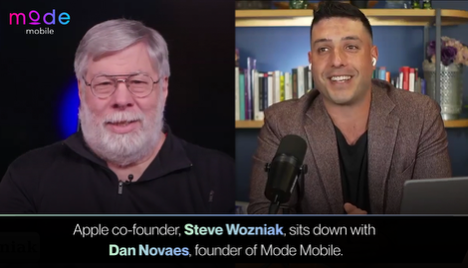
Instead of competing with Apple, Mode is building on top of the smartphone ecosystem.
Its EarnOS platform is designed to help users earn from the time they already spend on their phones, creating value from everyday mobile activity.
And unlike many pre-IPO companies, Mode has already built meaningful traction:
- 490M+ users
- $115M+ lifetime revenue
- $1B+ earned and saved by users
- 170+ countries served
- 60,000+ investors
Mode was also ranked North America’s #1 fastest-growing software company in 2023 by Deloitte after posting 32,481% growth.
Investors can still purchase pre-IPO shares for $0.52 per share before the price changes on August 14.
⏰Details here on how you can invest before the 8/14 deadline.
Disclosures *Please read the offering circular and related risks at invest.modemobile.com *Mode cumulative revenue includes full year revenue of businesses acquired in 2025. Mode Mobile recently received their ticker reservation with Nasdaq ($MODE), indicating an intent to IPO in the next 24 months. An intent to IPO is no guarantee that an actual IPO will occur. The Deloitte rankings are based on submitted applications and public company database research, with winners selected based on their fiscal-year revenue growth percentage over a three-year period.
Yesterday said "wait." Today says "answer."
Tuesday closed red across the board. The S&P 500 fell 0.32% to 7,728, the Nasdaq Composite lost 0.6% to 26,445.45, and the Dow shed 184 points to 53,791.85. This was not fear. It was positioning. Nobody wanted to sit long into a CPI print with WTI crude jumping 2.4% to $84.14 and Brent up 2.1% to $89.56.
Two competing forces shaped the tape. Oil ripped on renewed Iran uncertainty. Then peace-progress rumors trimmed the peak. Ten-year yields drifted to 4.7%. Gold sat at $4,445 an ounce, its second straight session above $4,400. Every asset class asked the same question and refused to answer: is core CPI cool enough to keep the Fed on hold, or hot enough to force a hike into September?
Kalshi traders are betting cool. Dow Jones consensus is 2.5% core. The Cleveland Fed nowcast is running around 2.85%. The gap between prediction markets and economist consensus is unusually wide. Somebody is wrong before lunch.
The market signal?
If core CPI prints at 2.5% or lower, September hike probability drops back below 40% and the Nasdaq gets its bounce. If it prints 2.6% or higher, the 30-year yield tests 5.35% and the AI trade gets a real test of conviction. The 0.1% between those two outcomes is the entire market narrative for the next six weeks.
Super Micro doubled margins. And the market still has a question.
Super Micro Computer (SMCI) reported fiscal Q4 after close Tuesday. Revenue: up 93% year over year but slightly below the $11.56 billion consensus. EPS: a beat, driven by gross margins that nearly doubled to 17.5% from 9.5%. Fiscal 2027 revenue guidance: as high as $72 billion.
That last number is not a typo. FY26 guide was $33 billion. Super Micro is telling the market its AI backlog is more than doubling on itself.
But read the release twice. Operating cash flow was negative. The $60 billion backlog announced in July still runs against $8.8 billion in bank debt and convertibles versus $1.3 billion in cash. The demand is real. The question is whether Super Micro can finance the growth without dilution or spreads that eat the margin gains.
The margin jump matters most. From 9.5% to 17.5% is not incremental. It reflects a genuine shift toward the richer Data Center Building Block Solutions mix and away from the pure component-assembly model. If those margins hold through fiscal 2027, the equity story stops being about backlog conversion and starts being about durable profitability. If they don't, the $72 billion guide will be a headline that traveled further than the fundamentals.
The market signal?
Watch the Q1 FY27 guide rather than the $72 billion full-year number. What matters now is the near-term margin trajectory and whether the $60 billion backlog is converting fast enough to prevent another round of financing. A clean Q1 guide reprices the stock. A hedged one caps it.
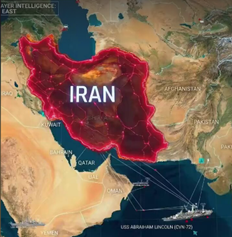
The REAL Reason Trump Is Invading Iran
For a moment…
Forget about Trump’s ties to Israel.
Forget about reports of Iran’s nuclear program.
Because my research has led me to believe we’re risking World War 3 with Iran for a completely different reason.
Click here to find out what it is.
If you have even a single dollar invested in the U.S. stock market, this is going to directly impact you.
Google slipped 3.6%. The Pixel isn't the issue.
Alphabet (GOOG) fell 3.6% Tuesday ahead of the Pixel 11 launch, but the phone was not what moved the tape. What moved it was the $25 billion senior notes offering closed August 10, the raised 2026 capex guide to $195-205 billion, and free cash flow that turned negative in Q2 for the first time since 2004.
Add the June $80 billion equity raise and Alphabet has now committed to roughly $105 billion of new external financing in three months. That is the size of Costco's entire market cap. Alphabet's stated reason is unchanged: "compute supply." Google Cloud grew 82% year over year and Gemini has 950 million monthly active users. The demand is there. The company just can't build capacity fast enough, even at $205 billion of annual spending.
The AI capex debate has bifurcated. Bulls see infrastructure hunger as proof the wave is real. Bears see negative free cash flow at the most cash-generative company in history as the first crack in the thesis.
The market signal?
Every incremental $25 billion Alphabet raises is a tax on shareholders paid to keep supply catching up with demand. The stock re-rates higher only when the capex line stops rising. Next scheduled test: Q3 earnings in October.
The Kalshi traders are outsmarting the economists again
A lateral observation to carry into the print.
Kalshi prediction markets are pricing a 15% chance that July headline CPI comes in above 3.4%. The Dow Jones economist consensus is exactly 3.4%. For core, Kalshi gives 11% odds of a print above 2.5%. Consensus is 2.5%. Both distributions are skewed cooler than the professionals.
This has been happening consistently. Prediction markets called the softer June CPI several days before the release. They flagged the July jobs report weakness. They priced in the Fed's hold in July before the economist consensus did. Some macro desks now quietly cite Kalshi contracts in their pre-print notes.
Why does this matter?
Prediction markets aggregate the incentives of anyone with money to risk. Economist surveys aggregate the incentives of professional forecasters whose careers benefit from clustering near consensus. The two data sources measure different things. And in a regime where every print is data-mined by algorithms scraping social sentiment, credit-card panels, and alternative data, the crowd with skin in the game is often faster than the survey.
The market signal?
If Kalshi is right again today, the economist consensus for September Fed action is stale by 9 AM. The bigger shift: institutional desks are starting to hedge with prediction market contracts as an information source, not just entertainment. That is how macro data quietly gets repriced.
Ticker Revealed: Pre-IPO Access to the "Next Elon Musk" Company
We’ve found The Next Elon Musk… and what we believe to be the next Tesla.
It’s already racked up $26 billion in government contracts.
Peter Thiel just bet $1 Billion on it.
And you can get exposure — pre-IPO — through a 4-letter ticker symbol revealed in this free briefing.
- CoreWeave Inc. (CRWV) reported Q2 revenue of $2.58 billion, up 112% year-over-year, and disclosed that its revenue backlog swelled from $104 billion at quarter-end to $129 billion by August 11, an extra $25 billion of contracted demand in six weeks. Net losses widened to $626 million, dragged by $640 million in interest expense. The market read the growth. The bond market is reading the leverage.
- CPI drops at 8:30 AM ET. That is the entire session. The BLS release schedule is unchanged. Any print between 2.4% and 2.5% core probably keeps the September Fed hike at coin-flip odds. A 2.6% print or higher pushes the 30-year toward 5.35% and puts real pressure on the AI trade.
- Three earnings today move the AI needle: Cisco Systems (CSCO), Cerebras Systems (CBRS), and Nebius Group (NBIS) all report today. Nebius and Cerebras are priced for 15% moves. Cisco is priced for 8%. A three-way beat puts the AI infrastructure trade back on top-of-mind into Applied Materials Thursday.
- July PPI drops Thursday at 8:30 AM. If CPI cools, PPI is confirmation. If CPI runs hot, PPI is escalation.
- The market signal across all? By Friday afternoon, we will know whether disinflation is real, whether the AI capex cycle is still accelerating, and whether the September Fed decision is baked. Position sizing matters more than convictions this week.
Economists' CPI forecast vs Kalshi CPI forecast
That's it for today's Slate.
CPI in a few hours. Stay locked in and reply with your call.
Today's reply prompt: If core CPI prints hotter than 2.6%, which stock in your book do you sell first?


