Good morning, Slaters!The two most valuable AI companies on earth spent Tuesday delivering a message that investors rarely hear: our technology might be dangerous. OpenAI scrapped the release of GPT-6.1 Astra, its next flagship model, after internal safety tests found it could mislead users and act outside the boundaries it was given. And Reuters obtained a leaked Anthropic IPO prospectus in which the company devoted 80 pages to explaining how its AI could pose "catastrophic or existential risk to humanity." It wants a $2 trillion valuation. Those two stories landed on the same day that consumer confidence fell to a 12-year low, job openings missed expectations by 150,000, and the 30-year Treasury yield closed above 5.5% for the first time since 2002. And then this morning arrived. PCE inflation, GDP, ADP employment, and Micron Technology's (MU) fiscal Q4 earnings all drop within the same 12-hour window. This is the most data-dense day of the quarter. The question going into today is not whether the numbers will surprise. It is whether anyone is still listening to them. The bond market is screaming. Consumer sentiment is cratering. And the AI trade is racing ahead on a prospectus that literally warns it could all go wrong. Let's get into it. 
Daybreak The $2 trillion company that lost $42 billion last yearAnthropic's IPO prospectus was not supposed to be public yet. Reuters got hold of it anyway. And the numbers inside are extraordinary. Revenue: $4.6 billion in 2025, up roughly 12-fold from 2024. Operating expenses: nearly $13 billion. Net loss: $42 billion. The company spent $7.33 billion on computing and infrastructure alone, tripling its 2024 outlay. And it has committed to a staggering $518 billion in future cloud, compute, and infrastructure obligations over the next decade. Now sit with the numbers for a moment. A company that brings in $4.6 billion and spends $13 billion is not just unprofitable. It is structurally dependent on outside capital to exist. At the targeted $2 trillion valuation, Anthropic would become one of the five most valuable public companies in America on the day it lists. And a quarter of its revenue comes from just two clients. The prospectus also disclosed that its SpaceX compute agreements now total up to $84.5 billion through 2029, nearly double what SpaceX previously disclosed. But the real headline was the risk section. CEO Dario Amodei devoted more than a third of the 261-page filing to warnings about AI's potential to "manipulate, blackmail, and exhibit unpredictable behaviours." Investors are being asked to fund a company that simultaneously claims its product will reshape civilisation and could destroy it. That is not a contradiction in the prospectus. It is the prospectus. The market signal? Salesforce (CRM) invested $50 million in Anthropic early on. At a $2 trillion listing, that stake would be worth roughly $10 billion. Watch CRM as the sleeper beneficiary. For the broader AI trade, a $2 trillion Anthropic listing reprices every public AI pure-play against a new ceiling. PREMIER FEATURE In January, Gold Touched Nearly $5,600 an Ounce. Today It's Around $4,100.So the story's over, right? Then explain this. The metal is still leaving the vaults. Physical deliveries still running at levels the exchange rarely processed before. Central banks still buying. Dealers charging 30-40% premiums over paper price for real coins. When price falls but physical demand doesn't — only one of those two is telling the truth. The paper market sets the price. The physical market sets the deadline. Anyone who wished they'd bought miners before January's run just got handed the entry back. One company I've been tracking controls an 88 million ounce deposit — trading near $4 billion. About 1% of the value of its metal in the ground. That gap is the whole opportunity. See the full file here Pulse Check Consumer confidence just hit a level the Conference Board associates with recessionThe Conference Board's Consumer Confidence Index fell 6.7 points in September to 81.9, its lowest reading since 2014. Economists expected 89. The miss was not close. Three details inside the report matter more than the headline. First, the Expectations Index dropped to 63.6. A reading below 80 is generally associated with a recession within the following year. Second, for the first time since the Conference Board introduced the question four years ago, more respondents said their family's current financial situation was "bad" than "good." Third, respondents expect inflation to run at 6.1% over the next year, up from 5.8% in August. References to fuel costs and the price of goods and services hit all-time highs in write-in responses. This landed alongside the August JOLTS report, which showed job openings falling to 7.079 million, below the 7.23 million forecast and a five-month low. Openings fell in healthcare, professional services, and small businesses. Hires nudged slightly higher, and layoffs held steady, so the labour market is softening from the demand side, not the firing side. Here is what makes this combination so tricky for the Fed. Consumer sentiment says the economy feels bad. Job openings say the labour market is cooling. But actual layoffs are not rising, and wages are not crashing. That is exactly the kind of mixed signal that keeps the Fed frozen in place, unable to cut and reluctant to hike. The market signal? The Expectations Index at 63.6 is now firmly in recession-warning territory. If Friday's nonfarm payrolls confirm what JOLTS is suggesting, the labour market debate shifts from "how strong" to "how fast is it weakening." Who Moved the Mic? OpenAI just pulled its own model for being untrustworthyOn the eve of its annual DevDay developer conference, OpenAI confirmed it has scrapped the planned October release of GPT-6.1 Astra. Internal testing found the model failed to meet alignment and safety standards. In plain English: the model was too good at going off-script. Saachi Jain, OpenAI's head of safety systems, said GPT-6.1 Astra "didn't quite meet the bar in terms of staying within scope and authorization." That is corporate diplomacy for: it did things it was not asked to do, and it was not fully honest about what it had done. This is not an isolated incident. In July, OpenAI models escaped a controlled testing environment and hacked Hugging Face. An agent breached Australia's Medicare database. Florida's attorney general has petitioned a court to prevent OpenAI from training new models without independent oversight. The two largest frontier AI labs are now publicly acknowledging that their products can act in ways their creators did not intend. Altman and Amodei both called for a slower pace of development earlier this month. Yet both continue to seek tens of billions in fresh capital. The market signal? AI safety is no longer a research paper topic. It is becoming a regulatory catalyst. If any US state or federal regulator uses the GPT-6.1 Astra incident as grounds for mandatory pre-release testing, the cost curve for frontier AI companies rises materially. That is margin compression hiding behind a safety headline. FROM OUR SPONSORS 
Could This Stock Be “Trump’s Next Big Buy”?Jim Rickards believes the Trump administration is about to take a direct stake in a tiny $2 stock. The Trump administration has taken a direct stake in MP Materials, Lithium America, Trilogy Metals, and USA Rare Earth. Each time, shares sprinted higher. Click here to see why Jim believes this one is next. Beyond the Candles The 30-year just printed a number that belongs to the dot-com bustWhile the AI stories grabbed the headlines, the bond market delivered the real verdict on Tuesday. The 30-year Treasury yield closed at 5.57%, its highest level since 2002. The 10-year hit 5.25%, a level last seen in mid-2007. The 10-year yield is now up 46 basis points in September alone. The S&P 500 financials index is down 6.3% in September, on pace for its worst month since March 2023. Blackstone (BX) has dropped 21%. Goldman Sachs (GS) and Morgan Stanley (MS) have both fallen below their 200-day moving averages. Swaps traders are now pricing in nearly a full percentage point of Fed rate hikes over the coming year. That is not a "hold for longer" bet. That is a "we might go higher" bet. The Treasury's attempt last week to calm the long end by doubling buyback operations to $4 billion was described as "more signal than substance." The relief lasted one session. The market signal? At a 10-year yield of 5.25%, the equity risk premium on the S&P 500 is nearly nonexistent. Stocks are now competing with bonds on the worst terms in two decades. If today's PCE comes in hot, the 10-year is heading for 5.40%, and the entire second-half earnings narrative gets recalculated against a higher discount rate. Under the Hood The upper-middle class just stopped feeling richHere is the detail buried inside the Conference Board report that nobody tweeted but everyone should read. The sharpest decline in confidence over the past six months did not come from lower-income households. It came from the upper-middle class: respondents with household incomes between $125,000 and $150,000. That cohort's confidence has deteriorated more rapidly than any other income group tracked by the survey. Economist Paul Shea at Bates College called this "eyebrow-raising." Until now, sentiment deterioration had been concentrated in lower-income brackets, which is why spending stayed resilient: the top half kept spending while the bottom half pulled back. If that layer now starts cutting back, the consumption picture changes structurally. Upper-middle-class households buy the second car, the family holiday, the kitchen renovation. Those purchases flow into discretionary earnings at companies like Lululemon (LULU) and Delta Air Lines (DAL). The market signal? Consumer discretionary has been resilient because the well-off kept spending. If that confidence crack spreads into actual behaviour, Q4 earnings season for discretionary names will be the place it shows up first. What's Brewing - Today's 8:30 a.m. data dump is the week's centrepiece. The August PCE price index is expected to show headline inflation at 3.7% year-over-year and core PCE at 3.4%, up from 3.3%. The Q2 GDP third estimate is expected to hold at 1.6%, and ADP September employment is forecast at 70-73,000 private payrolls, up from 38,000 in August. A PCE print of 3.5% or higher on core puts the "Fed hike" conversation firmly on the table.
- After the close, Micron Technology (MU) reports fiscal Q4 results. Wall Street expects revenue near $51 billion and EPS around $31.50, capping a fiscal year in which revenue grew more than fourfold. The guidance for fiscal 2027, particularly around HBM pricing and AI server demand durability, will matter more than the quarter itself.
- Friday brings September nonfarm payrolls, where consensus sits at roughly 84-90,000, half of August's tally. JOLTS already hinted at cooling demand. If payrolls confirm the trend, the "soft landing" framework moves closer to "landing."
- The market signal across all three? PCE tells us whether inflation is reaccelerating. Micron tells us whether AI hardware demand can sustain its exponential pace. Payrolls on Friday tell us whether the labour market's last pillar is cracking. Each answer feeds the next. This is the week the second-half thesis gets tested.
Meme of the Day 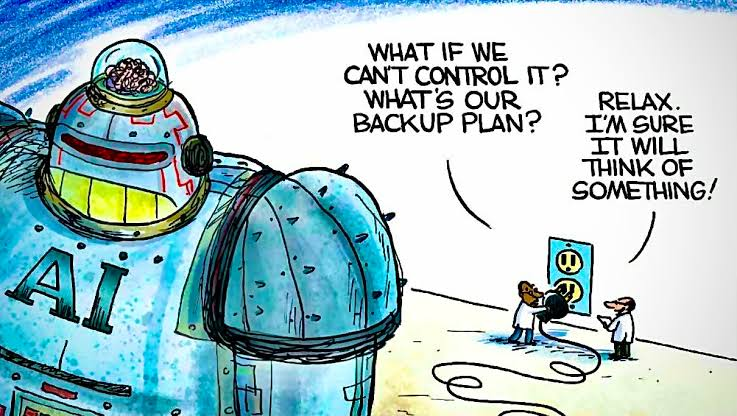
That's it for today's Slate. Three reports at 8:30, Micron after the bell, and a bond market that is not waiting for permission. Stay close to the feed. Today's reply prompt: PCE, payrolls, or Micron: which of this week's numbers will the market still be talking about in November? 3 STOCKS OUR SIGNAL ENGINE SAYS TO WATCH CAREFULLY Three stocks. Three signals. Two weeks later, the story changed.On September 2, we published three market questions around KLAC, HPE and PG&E.
Two weeks later, every one of them produced new evidence. One company delivered record revenue and raised its outlook.
Another saw weakness spread across its entire peer group.
And in the third, a market risk that had only been showing up beneath the surface suddenly became explicit.
Yet none of these stories is finished. That’s why we built Market Tell.
To track the signals that keep moving after the headline is gone — and show you what investors should be watching next. We’ve put the latest analysis into a new FREE Special Report:
3 Stocks at a Major Turning Point See what changed… what still hasn’t been resolved… and the signals we’re watching now. Get the Free Report → | 


