Good morning, Slaters!The American economy added 29,000 jobs in September. That is barely a third of the 90,000 Wall Street expected. July was revised into negative territory. Wage growth hit its slowest pace since 2021. The three-month hiring average has sunk to roughly 51,000 per month. And the Nasdaq closed at a record high. That sentence should feel like a contradiction. But in this market, it is a strategy. Bad labor data lowers the odds of a Fed rate hike. Lower hike odds mean cheaper money for longer. Cheaper money means growth stocks get a longer runway. So the worse the jobs number, the better the tech trade. Until, of course, it isn't. Goldman's Tony Pasquariello named the threat plainly: "The number one clear and present danger for the stock market is the bond market." The 10-year Treasury sits at 5.28%. That is the real price of money right now. Not the Fed funds rate. Not the jobs report. The bond market. Today is one of the busiest structural trading days of the year. An $81 billion Hollywood merger closes. A $22.6 billion industrial deal lands. Two companies enter the S&P 500. Constellation Brands reports after the bell. Let's get into it. 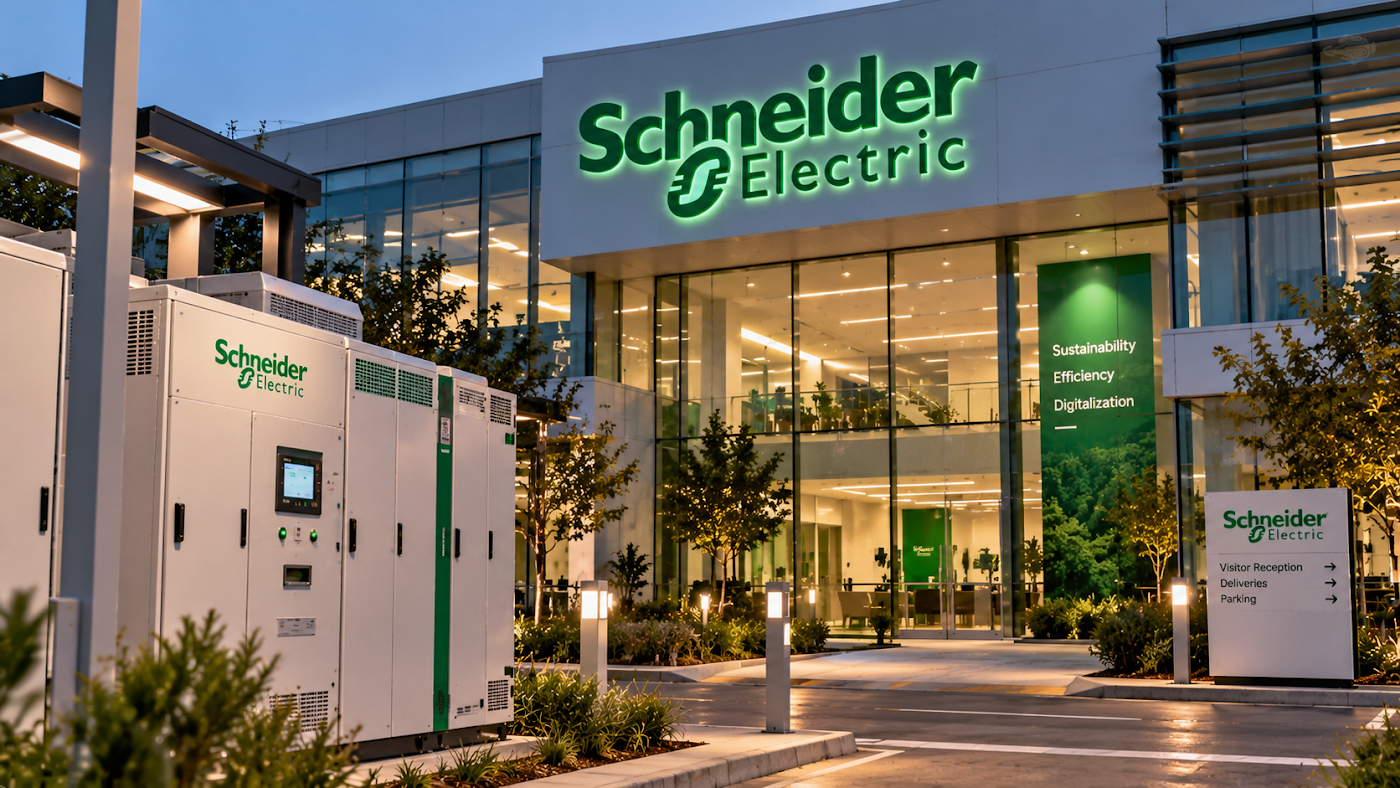
Daybreak Schneider Electric just wrote a $22.6 billion check for the factory of the futureSchneider Electric and PTC Inc. (PTC) announced a definitive agreement on Sunday: Schneider will acquire PTC in an all-cash deal at $205 per share, valuing the company at approximately $22.6 billion. It is Schneider's largest acquisition ever and the second big industrial-software M&A event this year. PTC builds the design and lifecycle software manufacturers use to engineer complex products, from jet engines to factory robots. Creo for design, Windchill for product data, ServiceMax and ThingWorx for IoT. The platforms sit in engineering departments across the Fortune 500. Schneider already owns AVEVA and is closing its $3.1 billion buy of Cognite. Adding PTC completes the vertical: design the product, simulate its performance, run the factory, manage the energy. Autodesk (ADSK) climbed 4% early Monday. When a competitor gets bought at a premium, remaining independents get repriced upward. The market signal? Industrial AI is entering its consolidation phase. The companies building software for physical-world intelligence are being absorbed by the conglomerates that own the physical infrastructure. That pattern accelerates from here. PREMIER FEATURE Your Mortgage Rate, Your Car Loan, Your Savings — All Rest on One Assumption.That the world keeps buying American debt. They stopped. China held $1.32 trillion in U.S. Treasuries at the peak. Today: $659 billion. An 18-year low. That money went into gold. Beijing's central bank has bought gold 20 months straight — its longest streak in a decade. Goldman Sachs put China's real buying at 4.8 times the official figure. And the European Central Bank just confirmed what hasn't been true in generations: gold has overtaken U.S. Treasury bonds as the world's #1 reserve asset. 27% gold. 22% our debt. The world's most conservative money isn't hedging the dollar. It's leaving it. When foreign buyers stop absorbing our bonds, rates rise, the interest bill eats the budget — and you feel it at the pump and the grocery store. Washington's counterattack is already signed, funded, and filed — with one small American gold company at the center of it. See Washington's counterattack here Pulse Check 29,000 jobs and a record Nasdaq. Here's the math.Nonfarm payrolls rose 29,000 in September, less than a third of the 90,000 consensus. Private payrolls added just 46,000. Government employment fell 17,000. Wage growth landed at 0.1% month-over-month, 3.0% annually. Unemployment ticked up to 4.2%. Stocks rallied. The S&P 500 gained 0.74% to close at 7,722.72. The Nasdaq Composite rose 1.19% to 27,190.86, a fresh record. The Dow added 250 points. CME FedWatch now shows a 77% probability the Fed holds at its October 28 meeting. Goldman's Jan Hatzius moved his next hike forecast to December and floated that "additional rate hikes are unnecessary" altogether. But the 10-year closed at 5.28% and has not budged despite the jobs miss. The bond market is pricing something equities are not: persistent inflation, fiscal risk, and term premium untethered from the Fed's short-term rate. The market signal? As long as equities trade the Fed and bonds trade the deficit, both can be right simultaneously. The tension breaks when earnings season forces a convergence. Q3 reports begin October 13. Seven trading days. Who Moved the Mic? Goldman's two voices said opposite things last weekGoldman Sachs (GS) published two notes that perfectly capture the market's internal argument. Ben Snider raised Goldman's 12-month S&P 500 target to 8,700. The thesis: AI-driven earnings growth remains durable, 85% of S&P 500 companies beat Q1 estimates, and the multiple can hold near 21x forward earnings even with elevated yields. Tony Pasquariello went the other direction. He cut positioning from crowded-long to cautious and wrote that the bond market is the single greatest threat to equities right now. Both are right in their own frame. Snider is modeling earnings twelve months forward. Pasquariello is trading risk right now. The question is which timeframe we're actually living in. With the 10-year at 5.28% and earnings season seven days out, that question has a deadline. FROM OUR SPONSORS There's a HUGE Downside to This Bull Market (And It's Not a Crash)It's hard to deny we're in a bull market. Stocks, real estate, gold, and bitcoin are hitting record highs month after month. But one multi-millionaire investor says this is unlike any bull run we've seen before. "There's a dark reason why so many assets are levitating—it's a sign we've entered the Most Terrifying Bull Market in History." For the full story, click here. 
Beyond the Candles The biggest index reshuffle of 2026 happens before the opening bellParamount Skydance's $81 billion acquisition of Warner Bros. Discovery (WBD) is expected to close this morning, creating Hollywood's largest entertainment conglomerate. HBO, CNN, DC Studios, Paramount Pictures, Paramount+, all under one roof. The moment WBD ceases trading, the index dominoes fall. Twilio (TWLO) enters the S&P 500 before the open, replacing WBD. The stock has surged over 200% from its 52-week low. Every index fund tracking the S&P 500 must now buy it. Mechanical demand, not fundamental, but it moves prices. On Thursday, Moderna (MRNA) replaces WBD in the Nasdaq 100 after roughly doubling this year on Phase 3 melanoma vaccine results with Merck (MRK). Vylor (VYLR), spun off from Corteva (CTVA) last week, has already entered the S&P 500. The market signal? Index inclusion is not a buy thesis. But when billions in passive flows are forced into a handful of names on a single morning, short-term price dislocations are real and tradeable. Watch Twilio's volume at the open. SPONSOR SPOTLIGHT What is Elon Building in Texas?
Elon's mysterious Texas project will be 3X the size of Central Park… Cost $122 billion to build… And singlehandedly DOUBLE American chip production. One investment (not Tesla/SpaceX) is at the center of it all. Click here to get its name and free ticker. This ad is sent on behalf of InvestorPlace Media at 1125 N. Charles Street, Baltimore, Maryland 21201. If you're not interested in this opportunity, please click here. What's Brewing - The August trade balance report lands this morning at 8:30 AM ET. The deficit has been volatile all year as tariff-driven front-loading distorts the numbers. A wider-than-expected gap feeds the fiscal-risk narrative holding the long end of the Treasury curve stubbornly high.
- Constellation Brands (STZ) reports Q2 FY2027 earnings after the close today. Analysts expect EPS down roughly 22% year-over-year and revenue down 15%. Modelo and Corona are gaining share, but the broader alcohol market is struggling as consumers trade down.
- September CPI arrives October 14, then the Fed decision October 28. If core CPI holds near 3.3% while payrolls run at 29,000, the Fed has its cleanest argument for standing still. The bond market does not care about the Fed's argument.
- The market signal across all three? The macro data is doing the unusual work of simultaneously arguing for and against risk. Trade data tests fiscal credibility. Consumer earnings test spending resilience. Inflation data in eight days determines whether October's hike odds stay buried or resurface.
Meme of the Day 
That's it for today's Slate. Index reshuffle at the bell, trade data at 8:30, and Constellation Brands after the close. Stay close to the signals. Today's reply prompt: Twilio just entered the S&P 500. What's the next mid-cap name that deserves the call-up? 3 Market Signals Most Investors Aren't WatchingThe headline is usually the last place the story shows up.
By the time everyone is talking about a stock… the signals underneath it may have been changing for weeks. • Institutional money moves. • Options activity changes. • Management confidence shifts. • Fundamentals improve, or quietly begin telling a different story. That’s exactly what our analysts found in three stocks where the evidence stopped agreeing with itself.
And in all three cases, the story is still developing. See the 3 Stocks, Get the Free Report → | 


