


Good morning, Slaters!
There is a version of this story where the AI buildout was starting to peak. CoreWeave down 30% since May. Nebius cut in half in six weeks. Doubts were rising that hyperscaler capex could keep expanding at the pace the multiples require.
Then this week happened.
Super Micro Computer posted a $60 billion FY27 guide. Nebius Group reported 454% revenue growth. CoreWeave narrowed losses, jumped 19%, and lifted capex toward $39 billion. And after the close last night, Cisco Systems, the least sexy name in the group, blew past every expectation and guided next year's AI revenue up 88%.
Four earnings prints. One direction. The AI infrastructure trade did not peak in July. It reloaded.
That is the frame for Thursday. A tame CPI is behind us. PPI drops and rules the morning session today. Retail sales tomorrow. And a networking supercycle just got twelve more months of runway.
Cisco quietly stole the AI infrastructure crown
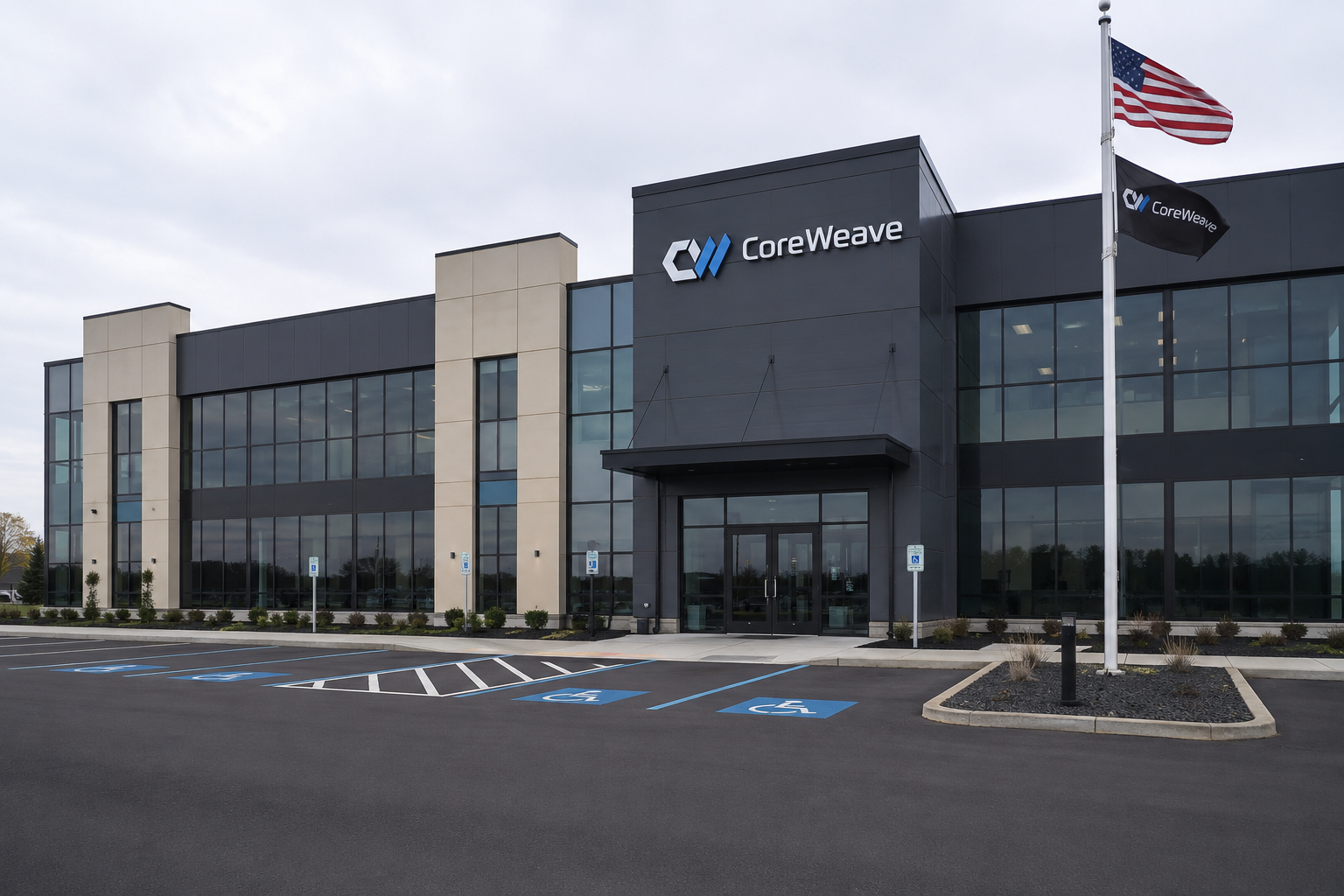
For the past two years, the AI hardware conversation has been a three-name affair. Nvidia (NVDA) made the chips. Dell Technologies (DELL) and Hewlett Packard Enterprise (HPE) built the racks. Cisco Systems (CSCO) was in a fourth bucket entirely: the mature networking company that missed the smartphone era, missed the cloud pivot, and would probably miss AI too.
That story ended after the close on Wednesday.
Cisco reported fiscal Q4 revenue of $17.3 billion, up 18% year-over-year and nearly half a billion above the $16.83 billion consensus. Total product orders were up 35%. Excluding hyperscalers, orders grew 25%, the number that tells you demand is not concentrated in three customers. Networking orders were up 40%, the eighth consecutive quarter of double-digit growth.
Then came the guide that mattered. Cisco booked $4 billion in AI infrastructure orders in the quarter alone, bringing FY26 total AI orders to $9.3 billion, comfortably beating the $9 billion target the company had already raised twice this year. FY26 AI revenue: roughly $4 billion. FY27 AI revenue guidance: $7.5 billion. An 88% jump, and it is management's number, not Wall Street's.
CEO Chuck Robbins used a phrase in the release that will show up in every analyst note today: "networking supercycle." That is not a Cisco word. Cisco does refresh cycles, not supercycles.
Here is what is happening under the number. Every AI cluster Nvidia sells needs Cisco-grade switching, routing, and optical interconnect fabric to function at scale. GPUs sitting on a rack without ultra-low-latency networking are expensive space heaters. As hyperscalers move from single-cluster deployments to multi-cluster architectures spanning campuses and regions, the networking bill grows faster than the compute bill. Cisco is the incumbent quietly capturing that spend.
The market signal?
AI buildout has widened beyond the chip and server names. If Cisco's FY27 AI revenue actually hits $7.5 billion, it validates that hyperscaler capex plans announced this summer are not just projections but bookings. Watch how Marvell Technology (MRVL) and Arista Networks (ANET) trade off the read-through today. The interconnect layer just got a pricing anchor.
SpaceX IPO has come and gone. Here’s what’s next
The SpaceX IPO is officially the largest IPO of all time – setting records by raising a total of $85.7 billion and making Elon Musk a trillionaire. But the excitement over IPOs doesn’t stop with SpaceX – and we’ve identified six more IPOs to watch as we head into the second half of the year.
These IPO candidates have been identified by our analysts as being positioned at the front of the next wave of IPOs. We compiled the data into a report for you:
The Seven Hottest IPOs On Wall Street’s 2026 Watchlist
The report is free for a limited time.
CPI didn't move the Fed. PPI might.
The July Consumer Price Index came in on the nose on Wednesday. Headline 0.1% month-over-month, 3.4% annual. Core 0.2% monthly, 2.5% annual. Both matched the Dow Jones consensus. Both were down 0.1 percentage point from June. Nothing was a miss. Nothing was a shock.
That was enough.
Traders trimmed the odds of a September rate hike. Gold consolidated. Bond yields eased at the front end. Every risk asset that had been pricing in a hawkish surprise breathed out.
But here is the part the tape is not showing. Fed funds futures still price roughly 70% odds of a rate hike by December, and three FOMC members dissented in favor of an immediate hike at the July meeting. Three dissents in one meeting has not happened in over a decade. July CPI bought the doves time. It did not change the underlying split.
Which is why today's Producer Price Index print matters more than it usually would. A hot print, particularly on the core services line, puts the September meeting back on the knife's edge.
The market signal?
A PPI at or below consensus keeps September on hold and the rally intact. A hot print, particularly on services, restarts the hike debate before Powell lands in Wyoming. As long as the 10-year Treasury yield holds below 4.75%, the market can absorb one hot data point. A sustained move above 4.85% changes the conversation.
CoreWeave's Michael Intrator: "an important inflection point"
The morning of August 12, CoreWeave (CRWV) reported Q2 revenue of $2.5 billion, up 112.5% year-over-year. Loss per share was $1.14, narrower than expected. The revenue backlog reached $104 billion, and the company disclosed an additional $25 billion in Q3 commitments not yet in the backlog number.
CEO Michael Intrator's phrasing in the release was careful and deliberate. The quarter, he said, marked "an important inflection point" as scale began to translate into "expanding operating leverage." Adjusted operating income was $128 million, roughly double the $66 million consensus.
That framing matters. Since its IPO, CoreWeave has been the poster child for the "AI is a capex bonfire" thesis. Q2 net loss came in at $626 million, and full-year 2026 capex guidance was raised to $35-39 billion. Historically, that combination (widening losses, expanding capex) is what triggers investor patience to snap.
Instead, the stock closed up 19.28% at $107.73. Truist upgraded from Hold to Buy. Oppenheimer reiterated a $150 target and put a specific number on the supply-demand gap: demand runs roughly 4x current supply. Q3 commitments of $25 billion, secured "early in the third quarter," implies CoreWeave landed roughly a quarter of a year's worth of new business in about six weeks. That kind of order velocity only happens when customers are pre-buying capacity they cannot get anywhere else.
Amsterdam-based Nebius Group (NBIS) reported the same morning: revenue up 454% to $582 million, AI revenue up 514%, $3 billion annualized run-rate, contracted power target raised to 5 gigawatts. CEO Arkady Volozh disclosed that short-term (up to six months) capacity contracts are pricing at $40-50 million per megawatt — roughly double the benchmarks from twelve months ago.
The market signal?
Pure-play AI cloud providers are not just growing revenue. They are gaining pricing power. As long as GPU supply lags demand by roughly 4x, neocloud margins expand quarter over quarter, and the "capex bonfire" thesis becomes a "capex moat" thesis. If Nvidia's late-August earnings confirm 2027 GPU shipments below expectations, that pricing power extends further.
New: Hit Your Retirement Income Goal With 10X Less Money
Financial advisors say you need $1.5M to generate $5,000/month. A revolutionary new investment does it with potentially $150,000.
Kelly G: "I updated my spreadsheet and it seems illegal. The income keeps growing."
Transform non-dividend stocks like Apple and Tesla into monthly income machines. Bloomberg reports they're "entering a golden era."
Simple as buying a stock.
Peltz is coming for Wendy's, and the math is unusual
Nelson Peltz's Trian Fund Management is assembling a consortium to take Wendy's (WEN) private. The stock jumped as much as 17% intraday and was briefly halted for volatility. It settled up more than 13%.
The dollar figures are what make this interesting. Wendy's carries a market capitalization of about $1.44 billion, which is roughly one week of Cisco's fiscal Q4 revenue. Trian and Peltz personally hold a combined stake north of 24%. Reported co-investors include Abu Dhabi's BlueFive Capital and Flynn Group, one of Wendy's largest franchisees. A formal bid could arrive in weeks.
The rationale writes itself. Wendy's has lost quick-service hamburger share for 17 consecutive months, per Consumer Edge. It withdrew 2026 guidance last week after posting a comparable-sales decline. Burger King overtook it as the second-largest US burger chain. Peltz circled this deal in 2022 and walked away. This time, with the stock down significantly and a new CEO (Bob Wright, who ran a similar going-private process at Potbelly), the setup is cleaner.
Peltz is essentially Wendy's fourth attempted operating fix. Fresh Start. China expansion. The current menu-and-marketing plan. Now, private ownership. When four public-market solutions fail, the market's message is that this business needs to be rebuilt away from quarterly earnings scrutiny.
The market signal?
Sub-$2 billion market caps in consumer discretionary are back in play for take-privates. Watch Restaurant Brands International (QSR), Cracker Barrel Old Country Store (CBRL), and Bloomin' Brands (BLMN) for read-through today and activist filings in the next 60 days. The formula works: stagnant sales, undervalued real estate, addressable franchise base.
The chip nobody talks about is running the AI factory
Behind every AI cluster earnings call this week is a very unglamorous fact: the highest-margin, most supply-constrained component in an AI data center right now is not the GPU. It is the optical transceiver.
Optical transceivers convert electrical signals to light and back so data can move across a data center at 800 gigabits per second or faster. A single Nvidia Blackwell GB200 rack needs several thousand of them. Lumentum (LITE), Coherent (COHR), and Fabrinet (FN) make them. Marvell designs the digital signal processors inside them.
The economics have flipped. Transceivers used to be a $1,000 item on a $2 million rack, like a rounding error. In Blackwell-generation deployments, they represent 8-10% of total rack cost. And unlike GPUs, where Nvidia has locked in the supply chain, transceivers depend on specialty component makers who cannot expand capacity as fast as demand scales. Prices are up roughly 40% year-over-year, and lead times for the 1.6 terabit generation stretch beyond 40 weeks.
That is why Lumentum has quietly become one of the best-performing AI-adjacent stocks of the year, and why Cisco's networking margins expanded in yesterday's print.
The lateral read: the AI infrastructure story still has layers repricing. Chips first, servers second, interconnects third, networking fourth. Cooling, power, and land next. Every quarter, the market rediscovers a new bottleneck.
Free Stock Pick: The Company First in Line
for America’s New Super Fuel
The U.S. Army and Department of Energy are about to flip the switch on a revolutionary new fuel — and one obscure defense contractor has a five-year head start on every competitor.
This joint, high-priority initiative — ordered by President Trump — is called Project Janus.
And the first powerplant to run this new fuel is expected to go live before December 18, 2026…
When it does, this company’s name will be everywhere.
Full details — including the name and ticker symbol — are being revealed for free.

Click HERE to get the stock name, ticker, and the full Project Janus story for free.
- The July Producer Price Index prints today. This is the data that either confirms or complicates the "September hold" narrative from Wednesday. Watch portfolio management and healthcare services subindexes for the PCE read-through.
- Retail sales for July land Friday at 8:30 AM ET, consensus 0.4%. After a weak July payrolls print, a soft retail number would revive the "consumer is cracking" narrative that has been dormant since spring.
- Nvidia reports Q2 on August 26. Every neocloud print this week was implicitly a preview of Nvidia's demand picture. The bar is now uncomfortably high: anything short of Q3 guidance north of $60 billion is likely to be sold, even on a beat.
- The market signal across all three?
- This morning's PPI is a live headline risk. Friday's retail sales tells us whether the consumer story is deteriorating or stable. Nvidia is the pin under the entire AI trade for the rest of the month.
That's it for today's Slate.
See you tomorrow.
Today's reply prompt: If you had to buy one AI infrastructure name into Nvidia earnings, which would it be and why?


