Good morning, Slaters!For three weeks, the money in Brazil made one bet: a change of government. On Sunday night, the voters said no. Lula da Silva won Brazil's runoff with 51.79% of the vote. The main U.S.-listed Brazil fund traded about 19% lower on Sunday evening and about 25% lower before Monday's open. Real futures fell nearly 10%. Prediction markets that had Flávio Bolsonaro at 82 cents on Sunday afternoon had him near zero by 11 p.m. Brazil is not the only story being tested. Oil slipped as regional officials arrived in Tehran, while Iran said Hormuz will never be run the old way again. Elon Musk said many independent AI cloud providers face "guppy-level death," days before Microsoft, Alphabet and Amazon report. And four central banks decide this week, with the hike priced in Ottawa, not Washington. The thread is simple. Markets have been paying for stories before the evidence arrives. This week, the evidence arrives. Let's get into it. 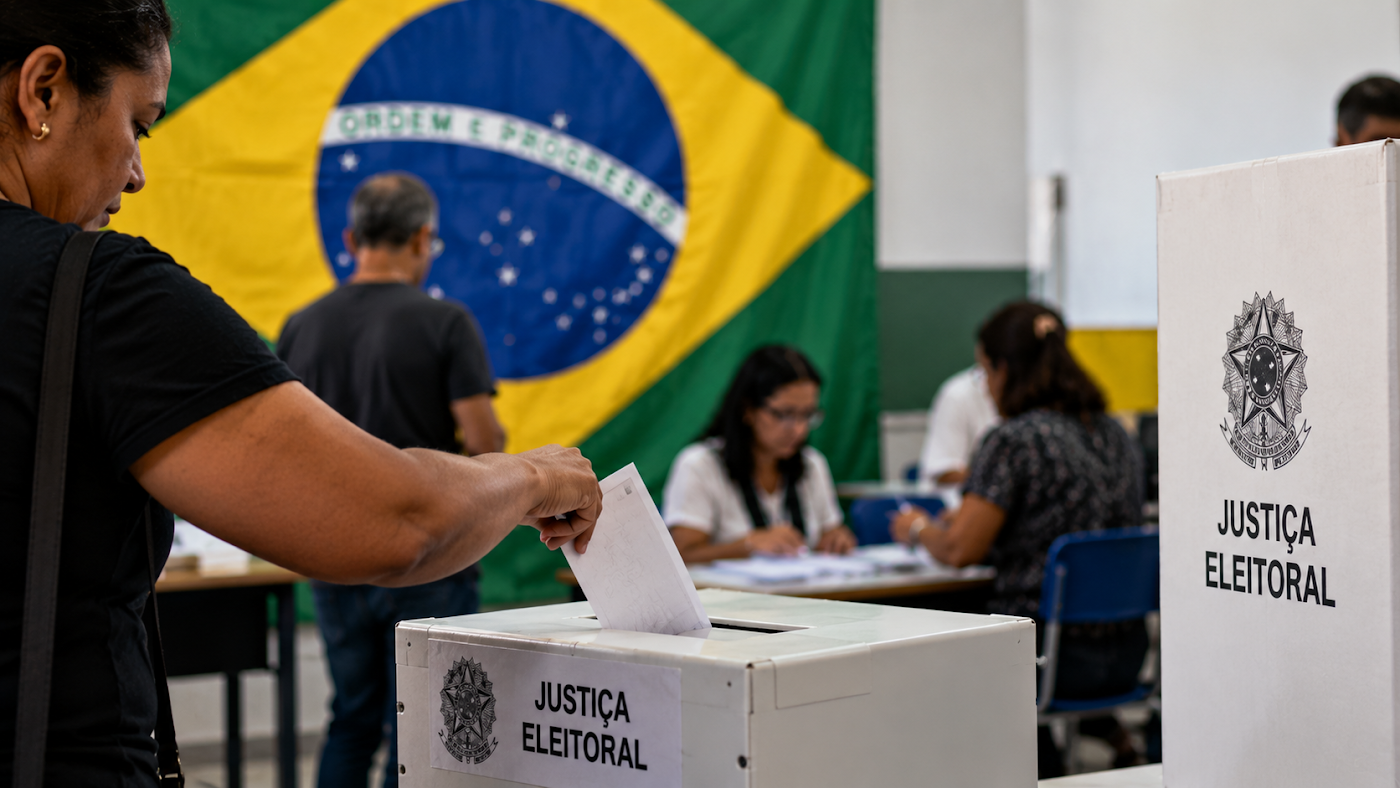
Daybreak Seven percent up, nineteen percent downNo Brazilian candidate who lost the first round had come back to win a runoff since the return to democracy. The final polls had Bolsonaro ahead, 51 to 49, within the margin of error. The trade leaned the same way. After Bolsonaro led the first round on Oct. 4, Brazilian stocks climbed almost 7% and the real gained nearly 5%. The thesis was a tighter fiscal stance under a new government. Then the iShares MSCI Brazil ETF (EWZ), which closed Friday at $42.59, traded about 19% lower on Sunday evening. By Monday morning it was about 25% below Friday's close. Petrobras (PBR) and MercadoLibre (MELI) fell about 14% and 6% Sunday night, and were down about 21% and 14% before the open. Read those numbers together. In dollar terms, the post-first-round rally was worth roughly 12%. The overnight drop was bigger than the whole rally. Investors are not just handing back the bet. They appear to be pricing a fiscal path they had stopped expecting. Public debt is above 82% of GDP, and Lula's team is targeting a primary surplus of about 1.3% of GDP by 2030. One caution. EWZ is priced in dollars, so much of its 19% drop is the real's 10% drop. Evening prints are thin, too. B3 opens around 9 a.m. Eastern with the first real read, and Warren Investimentos expects local rate futures to hit their daily limit soon after. Prediction markets told the same story, faster. Polymarket had Bolsonaro at 81.4 cents at 1:47 p.m. Eastern on Sunday, Kalshi at 82. By 11 p.m., Polymarket was at 0.05 cents. An 82-cent price still implied about an 18% chance of exactly this outcome. The problem was not the math. Traders on both venues appear to have leaned on Bolsonaro's first-round surprise and looked past polls that had the race within the margin. Bolsonaro has not conceded and says he will seek an annulment. Analysts say the 4.4 million vote margin makes that unlikely to succeed. The market signal? The next price-setting event is not the challenge. It is the finance minister pick. A credible name could make last night look like an overshoot, especially for exporters with dollar revenue. A loose one would confirm the fiscal risk premium is back in full. Pulse Check Four central banks decide this week. The hike is not the Fed's.The Fed announces at 2 p.m. Wednesday, and the decision looks settled. Fed funds futures price about a 10% chance of a hike, down from roughly 70% in late September. Polymarket's no-change contract sat at 94.5 cents early Monday. The real bet is December. Polymarket prices a December hike at about 76.5 cents and Kalshi at about 79, against about 72.8% in overnight index swaps as of Friday. Both prediction venues sit a few points more hawkish than rates traders. Small gap, same direction on both platforms. The European Central Bank (Thursday) and the Bank of Japan (Friday) are expected to hold. The central bank expected to move is Canada's. Currency strategist Marc Chandler puts the odds of a Bank of Canada hike at about 80%, up from about 35% on Oct. 16. It decides hours before the Fed. One more detail matters. The dollar has stopped tracking rates. Its 30-day correlation with the 2-year yield has fallen to about 0.35, from about 0.80 in May and June. Something other than rate expectations is moving the currency, most likely the Gulf conflict and the flows it produces, Chandler said. Crypto is trading the week nervously. Bitcoin slipped to about $79,800 in Asian trading, its second test below $80,000 in three days, before recovering to about $80,200. Coinbase estimates spot ETF holders paid about $81,300 on average, so the typical ETF buyer is now under water. The market signal? Wednesday's statement matters more for December than for October. A Fed that sounds worried about oil validates the 79-cent December price and keeps pressure on assets that pay no yield, bitcoin included. A patient Fed plus soft GDP on Thursday would leave the prediction markets as the most hawkish voice in the room. Who Moved the Mic? Musk, on everyone else's balance sheetElon Musk said two things on X over the weekend. The first was about SpaceX (SPCX). "This is primarily callable debt for GPU purchases that will arrive in Q1 and Q2. Not a major factor this quarter," he wrote of a $40 billion financing he said SpaceX had closed. The second was about everyone else. Replying to Chamath Palihapitiya, Musk said many neoclouds, the independent firms that rent out AI computing, face "guppy-level death and consolidation." SpaceX, he added, will not be buying any of them. Why the words land: Musk called the debt "not a major factor this quarter" because the chips arrive in the first half of next year. The scale says something too. Forty billion dollars is about 2% of SpaceX's roughly $2.04 trillion market value, and a company that can borrow that much is building its own compute, not renting it. Neocloud shares have already fallen at least 30% this month. The cost of insuring CoreWeave (CRWV) debt against default has risen above 1,000 basis points, according to data cited by CNBC. It and Nebius (NBIS) traded lower before the open, a move alongside the comments rather than one that can be pinned on them. To be fair, this is an opinion from a company building its own compute, not a disclosure. No neocloud has reported a failed financing tied to it, and SpaceX has not filed terms. The market signal? The AI trade is splitting by balance sheet. Microsoft (MSFT) and Alphabet (GOOGL) report Wednesday, hours after the Fed, and Amazon (AMZN) follows Thursday. All three report into a Nasdaq that closed Friday at its lowest since Aug. 3. Every capex number they print is demand for compute. Whether that demand flows to the neoclouds or around them is the question Musk just put on the table. FROM OUR SPONSORS 
Renowned tech investor James Altucher – the man who called the rise of Nvidia, Apple and SpaceX years in advance – just uncovered Elon Musk’s latest breakthrough idea… And according to James, it’s going to be even bigger than the SpaceX IPO – creating up to 1.8 million new millionaires over the coming years. The pieces behind it are inside this briefcase – which he reveals 100% FREE in this video. Click here now for all the details. World, Uncomplicated Oil eased as diplomats arrived. Iran says the strait stays changed.Brent traded at $114.42 early Monday, down about 2% from Friday's settle of $116.72, its highest close since April 29. Saudi Arabia's defense minister and Pakistan's army chief were in Tehran Monday, the kingdom's first high-level contact with Iran since it became a pressure point in the war. Iran's foreign minister offered the counterpoint: "The shipping routes through the Strait of Hormuz will no longer be the same as before, nor will the Strait be managed as it was in the past." That is about structure, not this week. And the bypass is nearly full. Saudi Arabia's East-West Pipeline can carry about 7 million barrels a day and was pumping about 5.8 million as of Oct. 6. That leaves roughly 1.2 million barrels of headroom. The curve shares the caution. December Brent traded about $4.90 above January late Sunday, a sign traders still see a shortage of prompt barrels. Polymarket's ceasefire contracts imply about a 14.5% chance of a qualifying U.S. strike by Oct. 31, but about 50.5% by Nov. 15, after the midterms. The Oct. 31 contract dropped sharply on Sunday evening, then got it all back by morning. No cause has been established, and no official confirmed a strike. The market signal? The war premium and the Hormuz premium are now two different things. Diplomacy can shrink the first. Only a change in how the strait is run can shrink the second. Beyond the Candles Galp raised its outlook by a quarter. The stock fell 9%.Portugal's Galp Energia lifted its 2026 core profit guidance to about €5 billion from about €4 billion on Monday. By 8:33 a.m. in Lisbon, the shares were down 8.8%. The headline says beat and raise. The interesting part is what did the raising. Galp's refining margin hit $34 a barrel, against $9.50 a year earlier. The new guidance assumes Brent averages $90 for the year, up from $80, and a refining margin of about $25, up from $13. Much of the upgrade is a bet on prices, not volumes. Look under the adjusted number. Net income under international accounting rules fell 24% to €201 million, hit by €453 million of special items, mostly unsettled derivative losses. Free cash flow halved to €271 million. Buybacks in the quarter: €4 million. The same morning, talks to combine its refining business with Moeve ended with "no agreement." The market signal? This is a useful template for the energy prints this week, including Exxon Mobil (XOM) and Chevron (CVX). Investors are not paying for peak margins. They are discounting guidance that assumes those margins last. The winners will turn this window into cash returned, not a higher oil assumption. Under the Hood How a private credit freeze turns into a writedownAustralia's securities regulator issued an interim stop order on the A$573 million Murdoch Clarke Mortgage Fund on Monday, saying its disclosure document may be defective. It is at least the third such order on a private credit product this month. The order itself is narrow. It blocks new money and alleges no losses. The mechanics around it are the story. Here is the sequence. A borrower runs into trouble: property developer Bathla Group appointed voluntary administrators on Aug. 25. A fund freezes redemptions to stop a run: CVS Lane did that the next day for two property-backed funds. Then the freeze becomes a valuation question. CVS Lane has told investors its review "may result in writedowns," the Australian Financial Review reported. It also said tighter real estate credit could further delay reopening. That is the trade-off in a gate. It protects the investors who stay from a run. It also delays the price discovery a public market would force overnight. Metrics Credit Partners revised three trusts' values down by as much as 12% in late September after its auditor challenged them. ASIC says practices are "not where we need them to be." The market signal? Frequency is the signal. Three orders in under three weeks and a pending report point to tighter rules and lower marks for private credit sold to individuals. Watch whether the Bathla property sales close by Dec. 31. That date decides whether CVS Lane's review ends in a reopening or a haircut. SPONSOR SPOTLIGHT A New Way to Save for Retirement)? Meet the 401(ai) Approach
After nearly 60 years on Wall Street, Marc Chaikin just finished a new project for Americans who feel behind on retirement. He calls it the 401(ai). See why. This ad is sent on behalf of Chaikin Analytics, 201 King Of Prussia Rd., Suite 650, Radnor, PA 19087. If you would like to optout from receiving offers from Chaikin Analytics please click here. What's Brewing - Wednesday stacks three decisions into one day. The U.K. budget comes first, around 8:30 a.m. Eastern, with the 10-year gilt ending last week near 5.33% and UBS and HSBC saying a smooth package could take up to 20 basis points off. The Bank of Canada follows at 9:45 a.m. with hike odds near 80%. Then the Fed at 2 p.m., and Microsoft and Alphabet after it. Amazon has already said AWS capacity for 2027 is "largely sold out," so the Big Tech question is cost, not demand.
- Thursday brings Q3 GDP and September PCE at 8:30 a.m., the day after the Fed sets policy without them. Amazon reports, along with Coinbase (COIN) and Strategy (MSTR). Both report with bitcoin below what ETF buyers paid.
- Brazil runs all week: the finance minister pick and any formal Bolsonaro filing. Both prediction contracts already settled at zero late Sunday. Israel votes Tuesday, and OPEC+ meets Nov. 1.
- The market signal across all three? This week turns priced-in stories into reported numbers. Brazil showed what happens when the story is wrong. Wednesday tests whether heavy AI spending and a December hike can both be right.
Meme of the Day 
That's it for today's Slate. Brazil opens at 9 a.m. Eastern, $69 billion of 2-year notes sell today, and Wednesday is two days out. Stay close to the feed. Today's reply prompt: Brazil, Big Tech capex or a December Fed hike: which market do you think is most wrong right now? Same Rate Move. Three Different Bills.The 10-year went from 4.19% to 5.29% this year. Every company on your screen felt that. They don't feel it on the same schedule. Some earn more when rates rise. Some pay more. The difference shows up in earnings, one report at a time. We traced three of them: IBKR, WRB and FIS. FREE Special Report: Rates Just Reset. Who Feels It First? Who earns it fast. Who earns it slowly. Who pays. One has already reported. The other two report next, and the report tells you the exact line to check. We'll text the report straight to your phone. Text Me the Three Names → (free) | 


